


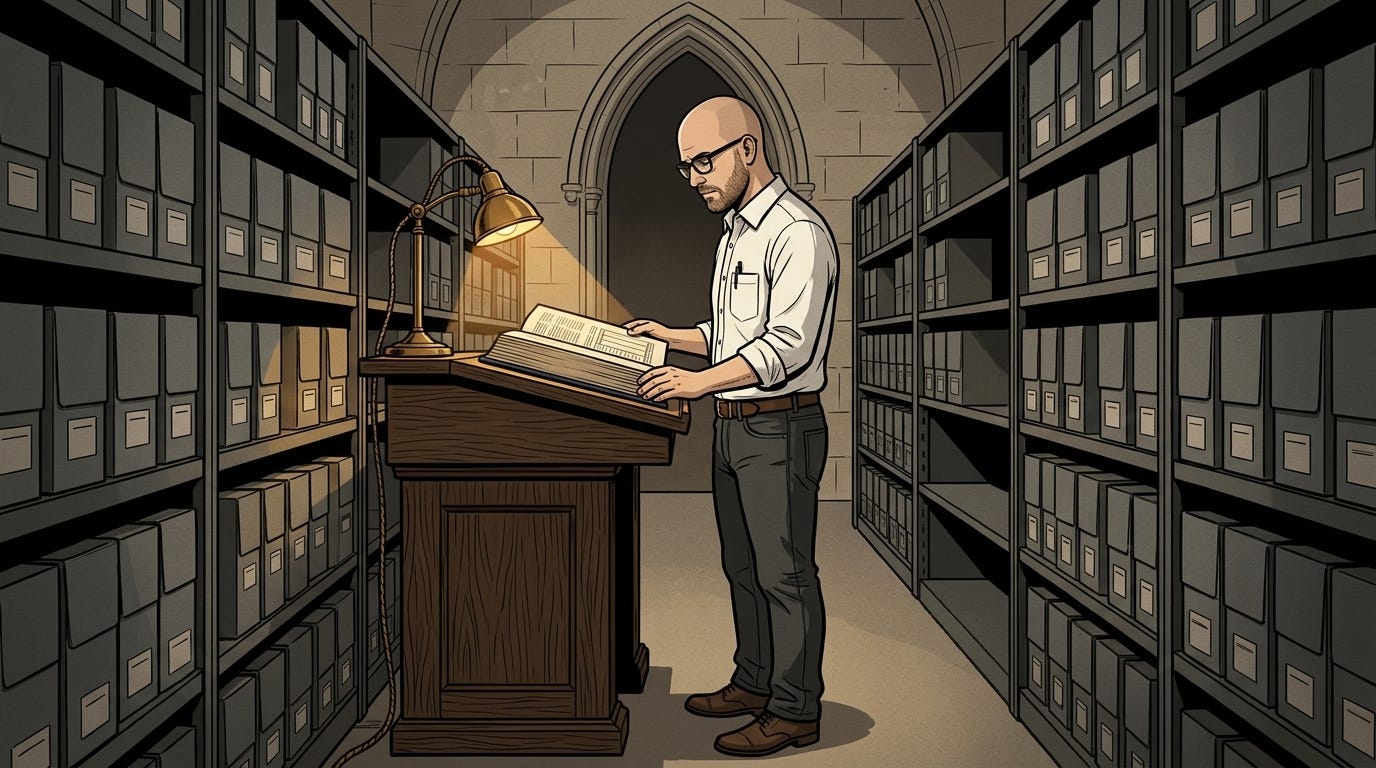
On October 20, 1983, Liberal Member of Parliament Keith Penner rose in the House of Commons to table Issue Number 40 of the Special Committee on Indian Self-Government. Resting in his hands was a 216-page all-party verdict on a century of federal paternalism. After visiting sixty communities across Canada, Penner’s committee delivered an extraordinary finding: the Department of Indian Affairs and Northern Development was an administrative machine that absorbed over $250 million a year managing its own bureaucracy while denying First Nations basic self-determination. The unanimous recommendation of the committee was that the department be dissolved within five years.
The inquiry had begun ten months earlier as a standard parliamentary task force on band government. It grew into the most consequential examination of Indigenous jurisdiction in Canadian history. For the first time on Parliament Hill, Indigenous leaders participated directly as committee members. Roberta Jamieson sat as an ex-officio member representing the Assembly of First Nations, alongside Sandra Isaac from the Native Women’s Association of Canada and Bill Wilson from the Native Council of Canada. Working across party lines with Progressive Conservative vice-chairman Stan Schellenberger, New Democrat Jim Manly, and five other parliamentarians, the committee listened to more than 500 witnesses.
What they heard shattered the comfortable assumptions of official Ottawa. Opening Chapter 1 of their final report, the committee chose an epigraph quoted to them by the Mayo Indian Band in the Yukon, drawn from Leo Tolstoy: “I sit on a man’s back, choking him and making him carry me, and yet assure myself and others that I am sorry for him and wish to lighten his load by all possible means, except by getting off his back.”
The Arithmetic of Paternalism
To understand why federal spending produced so little progress on reserves, the committee hired management consultants Coopers & Lybrand to conduct a forensic audit of departmental finance. The consultants examined the flow of money from Treasury Board through headquarters, regional directors, and district offices down to band councils.
Their findings exposed a staggering administrative toll. In fiscal year 1981-82, out of total spending on the Indian and Inuit Affairs Program, approximately $250 million was consumed solely by departmental administration. Another $39.1 million went to general departmental overhead. More than twenty-five cents of every federal dollar appropriated for Indigenous people was eaten up by the civil service before reaching a community.
The audit revealed an even darker paradox in Ottawa’s policy of “devolution.” For two decades, the department had claimed it was empowering bands by transferring the administration of schools, social assistance, and local public works. In 1971, bands administered just $34.9 million, or 16 percent of the budget. By 1982-83, that figure had climbed to $526.6 million, representing 50 percent of departmental appropriations.
Yet this transfer had not reduced the size or cost of the federal bureaucracy. Instead, Coopers & Lybrand discovered that devolving programs actually increased the total cost of providing services by 20 to 30 percent. Two-thirds of that increase was generated by the department itself, which simply repurposed its personnel into new advisory, inspection, and compliance units. In British Columbia alone, after transferring local services to bands, the department added 100 new staff members to oversee local administration.
Civil servants had constructed an elaborate paper fortress. The consultants noted that while genuine accountability between a band government and its membership could be demonstrated on a single sheet of paper, the reporting requirements imposed by Ottawa generated volumes of complex accounting schedules. Department officials stated in committee evidence that managing reporting paperwork left little time that they had no time to consult bands on budget priorities. Field staff were trapped in an impossible conflict, expected to act as helpful development advisers while simultaneously serving as financial police.
As Coopers & Lybrand concluded in a dry, devastating appraisal quoted in the report, the department was “an administrative machine, not a people-development mechanism.”
Factotums of Federal Control
The root of this administrative dysfunction was the Indian Act. First consolidated in 1876, the statute treated adult Indigenous people as legal wards and reduced band councils to powerless administrative arms of the minister.
Witnesses before Penner’s committee demonstrated that under Section 81 of the Act, a band council possessed fewer legislative powers than a tiny municipality. A council could pass by-laws to control weeds, regulate dogs, or direct local traffic, but even those modest measures could be disallowed by the minister within ninety days. Chiefs could not reallocate funds between line items to meet urgent community needs without formal departmental approval.
The legal obstacles were crippling. Because band councils were not recognized in law as corporate legal entities or governments, they could not easily hold title to property, sign commercial contracts, or obtain bank loans. Creditors routinely demanded federal guarantees because bands were deemed unsuable under Section 89 of the Act. If band members incorporated a private company to bypass these restrictions, the company lost its tax exemption under the Act and fell under provincial regulation.
The committee documented how Ottawa had systematically broken traditional forms of Indigenous government to impose this system. In 1924, Royal Canadian Mounted Police officers raided the Council Hall of the Haudenosaunee at Six Nations of the Grand River, seizing all official documents and wampum belts before the federal government imposed an elective band council by order in council. On the Pacific coast, the potlatch was criminalized until 1951, sending hereditary leaders to prison and scattering ceremonial regalia into private museum collections.
“Stripped of the authority to operate the fundamental functions of government,” the Quesnel Community Law Centre testified, “current band governments are little more than factotums of federal control.”
The Human Ledger
In Chapter 2, Penner’s committee laid out the devastating human cost of this administrative regime. Decades of bureaucratic management had not created stability; it had engineered systemic social distress.
The committee documented that the proportion of Indigenous children in the care of child welfare authorities was more than five times the national rate. Citing Patrick Johnston’s 1983 study, Native Children and the Child Welfare System, the report highlighted what Johnston termed the “Sixties Scoop.” In British Columbia, Indigenous children had accounted for just 1 percent of children in provincial foster care in 1955. By 1964, that figure had climbed to 34.2 percent. Provincial social workers routinely removed children from reserves under Section 88 of the Indian Act, applying non-Indigenous standards of material wealth to justify separating children from their extended families and culture.
The broader statistical ledger was equally stark:
Education: Only 20 percent of Indigenous students stayed in school to the end of secondary school, compared to a national completion rate of 75 percent.
Economic Survival: Unemployment on reserves hovered between 50 and 90 percent.
Incarceration: Indigenous people represented more than 40 percent of the prison population in Manitoba, Saskatchewan, and the North. The proportion of Indigenous juveniles classed as delinquent was three times the national average.
Mortality: Death rates among Indigenous people were up to four times the national rate, with violent deaths among youth aged 15 to 24 running at seven times the Canadian average. Infant mortality was 60 percent higher than the national figure. An Indigenous child who survived infancy could expect to live ten years less than a non-Indigenous child, with life expectancy for Indigenous women falling ten full years behind the national average.
“Indigenous peoples moved from free, self-sustaining First Nations to a state of dependency and social disorganization,” the committee observed, “as the result of a hundred years of nearly total government control.”
A Third Order of Government
Penner’s committee rejected the notion that the Indian Act could be amended, modernized, or repaired. Piecemeal reform was an illusion. The entire premise of delegated authority had to be abandoned.
Instead, the committee proposed that First Nations be recognized as a distinct, constitutionally protected third order of government within Canadian federalism, alongside the federal government and the provinces. Self-government was not a privilege to be granted by Ottawa; it was an inherent right rooted in original sovereignty and international law.
To turn that principle into administrative reality, the committee constructed a detailed blueprint:
Constitutional Entrenchment: An explicit amendment to the Constitution of Canada recognizing the inherent right of Indian First Nations to self-government, with clearly defined legislative jurisdictions over lands, resources, education, child welfare, family relations, taxation, and justice.
Indian First Nations Recognition Act: Immediate interim federal legislation allowing First Nations to adopt their own constitutions, establish their own membership codes without the sex-based discrimination of the Indian Act, and receive formal recognition from the Governor General.
Unconditional Block Grants: Abolishing conditional contribution agreements, line-item vouchers, and intrusive ministerial auditing. Ottawa would transfer statutory, unconditional grants directly to recognized First Nations governments using a modified per-capita equalization formula, letting communities set their own priorities.
Restoring the Land Base: Ending the Crown policy of requiring First Nations to extinguish their aboriginal title to settle claims, and transferring reserve revenue and capital trust accounts directly to First Nations management.
Dismantling the Department: Under Recommendation 55, the committee unanimously recommended that all programs of the Department of Indian Affairs and Northern Development relating to Indian people be phased out and completed within five years. In its place, a small Ministry of State for Indian First Nations Relations would coordinate government-to-government fiscal transfers and defend Indigenous treaty rights against federal and provincial encroachment.
“Just Another Interesting Report”
On November 9, 1983, three weeks after the report was tabled, Minister of Indian Affairs John Munro flew to Calgary to address a joint assembly of the Federation of Saskatchewan Indian Nations and the Indian Association of Alberta.
Munro praised the committee’s courage and conceded that the department’s paternalistic machinery had run its course. “I regard the next three or four months as the most important opportunity to reform the basic terms upon which Indian people govern themselves that I have seen in my parliamentary career,” Munro told the chiefs.
Yet Munro also noted the bureaucratic and political resistance waiting in Ottawa and the provincial capitals. He noted that many premiers remained fiercely resistant to recognizing an independent order of Indigenous government, and that the federal cabinet was deeply divided.
“We also owe it to ourselves,” Munro warned, “to make sure that we do not let their efforts sputter and fail into just another interesting report which is filed with many others in the parliamentary library marked for information only.”
Munro’s warning proved prophetic. The five-year clock recommended by Keith Penner never started.
In 1984, the Trudeau government introduced Bill C-52, the Indian Self-Government Act. Rather than recognizing an inherent constitutional order of government, the bill offered a watered-down framework of delegated municipal powers that First Nations rejected. Months later, the Liberal government was defeated at the polls. Brian Mulroney’s incoming Progressive Conservative administration inherited the report, but four successive First Ministers’ Conferences on Aboriginal Constitutional Matters between 1983 and 1987 failed to achieve provincial consensus on constitutional entrenchment.
The Department of Indian Affairs was never abolished. It expanded, reorganized, and continued administering the Indian Act for another three decades until it was split in 2017 into Indigenous Services Canada and Crown-Indigenous Relations. The $250 million administrative overhead identified in 1983 grew into billions of dollars in federal management spending.
Yet the 216 pages tabled by Keith Penner in October 1983 remain the intellectual foundation of modern Indigenous policy in Canada. From the 1996 Royal Commission on Aboriginal Peoples to the inherent-right negotiations of the modern era, every major push toward self-determination has returned to the core finding of Penner’s committee: that true reconciliation begins not by adjusting the weight of federal control, but by getting off the other fellow’s back.
Revisiting the landmark 1983 Penner Report meant working through all 216 pages of Issue 40 of the Special Committee, analyzing the Coopers & Lybrand forensic audit of departmental finance, and reviewing Minister John Munro’s candid warnings to Indigenous assemblies in Calgary.
Hansard Files is supported entirely by readers. The free archive stays free, with nothing paywalled. If you want to fund the reading time and research capacity required to reconstruct foundational parliamentary investigations and Indigenous constitutional history from the primary record, consider a supporting membership at $5 CAD a month or $50 a year.
Related Hansard Files Articles


Source Documents
Special Committee on Indian Self-Government. (1983, October 12-20). Indian Self-Government in Canada: Report of the Special Committee. House of Commons, Second Session of the Thirty-second Parliament, Issue No. 40. Keith Penner, Chairman. Ottawa: Queen’s Printer for Canada (Cat. No. XC2-321/2-2-2-eng.pdf).
Department of Indian Affairs and Northern Development. (1983, November 9). Statement by the Hon. John C. Munro, P.C., M.P., Minister of Indian Affairs and Northern Development on the Report of the Special Committee on Indian Self-Government. Calgary: DIAND (Cat. No. R5-572/1983, QS-6007-001-BB-A1).
Special Committee on Indian Self-Government. (1983, October 7). Minutes of Proceedings and Evidence of the Special Committee on Indian Self-Government, Issue No. 39. Ottawa: Supply and Services Canada (Cat. No. XC2-321/2-2-1-eng.pdf).