


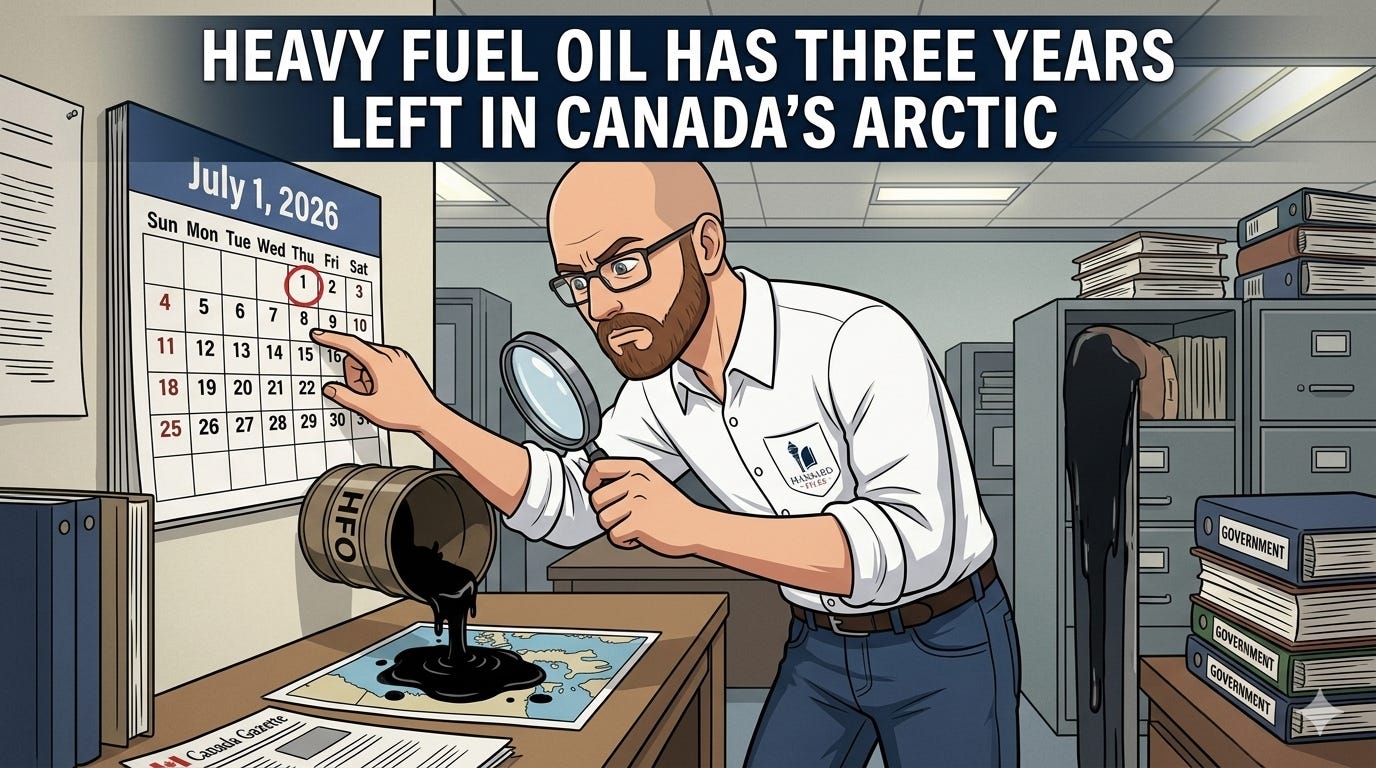
A spill of heavy fuel oil in Arctic waters does not behave like other fuel spills. It doesn’t evaporate. It combines with seawater, expands, and sinks. It sticks to whatever it touches, and in ice-covered conditions, cleanup crews have almost nothing to work with. That is the substance Canada has now set a hard expiry date on, and the date is July 1, 2026.
According to the Canada Gazette, Part I, Vol. 160, No. 25, published June 20, 2026, Transport Canada is proposing regulations to formally write into Canadian law a prohibition that international shipping rules already impose: no heavy fuel oil, known as HFO, used or carried for use as fuel by vessels in Arctic and Antarctic waters. The Antarctic ban has applied internationally since August 1, 2011. The Arctic ban followed on July 1, 2024. What’s changing now is enforcement, and the closing of a loophole that has let some Canadian-flagged vessels keep running on the dirtiest fuel in the fleet a little longer.
The Waiver That Runs Out This Summer
Canadian-flagged marine resupply vessels, the ships that carry fuel, food, and building materials to communities that have no road access, were granted a temporary waiver allowing continued HFO use. That waiver expires July 1, 2026, just days from the Gazette’s publication date. A second, narrower exception remains: vessels built with protected fuel tanks, the kind designed to reduce spill risk if a hull is breached, can keep using HFO until July 1, 2029.
The regulation explains why the fuel itself is the problem, not just the ships that carry it. “The viscous and persistent nature of the fuel, coupled with the remote, cold, and ice-covered conditions of the Arctic and Antarctic marine environment, poses challenges for spill response and potential significant impacts on the sensitive ecosystem,” Transport Canada states in the regulatory record. The document is explicit that the risk extends beyond wildlife. HFO threatens Indigenous food sources in communities where country food, fish, seals, caribou, still makes up a meaningful share of what’s on the table.
What Happens If a Ship Breaks the Rule
The regulations create four new violations tied specifically to the HFO prohibition, each one subject to an Administrative Monetary Penalty. The fines range from $1,250 to $25,000 depending on the violation. That’s the stick. The carrot, such as it is, comes in cost estimates buried deeper in the filing.
Switching a fleet from heavy fuel oil to marine diesel oil is not free. Transport Canada estimates the total compliance cost for authorized representatives, the companies and operators responsible for these vessels, at $10.4 million over 10 years. Against that cost, the filing sets monetized greenhouse gas reduction benefits at $4.3 million. The real financial argument for the switch shows up somewhere else entirely: in what doesn’t happen. The Gazette estimates avoided cleanup costs in the event of a 50 percent fuel spill at between $6.9 million and $20 million, depending on whether the vessel involved is a cargo ship or a bulk carrier. In Arctic conditions, where a heavy fuel oil spill can’t simply be skimmed off the surface or left to evaporate, that range is the price of prevention versus the price of a mess nobody can fully clean up.
A Second Order Arrived the Same Week
The HFO filing wasn’t the only marine environmental action in this Gazette issue. The Minister of Transport also issued Interim Order No. 4 Respecting the Discharge of Sewage and the Release of Greywater by Cruise Ships in Canadian Waters, which came into force June 11, 2026. Under the order, cruise ships are barred from releasing greywater, the wastewater from sinks, showers, and laundry, when a vessel is within three nautical miles of shore, an ice shelf, or fast ice. Sewage discharge faces its own restrictions, with strict limits on fecal coliform counts and suspended solids, tightened further in waters with ice concentration. Every cruise ship operating under the order is required to hold and keep on board an International Sewage Pollution Prevention Certificate.
The two measures, one a years-long phase-out of a single fuel type, the other an immediate operational restriction on cruise traffic, point in the same direction. Canada’s Arctic and near-Arctic waters are being treated less as open shipping lanes and more as an ecosystem with a finite tolerance for what gets dumped or burned in it.
The Clock That Doesn’t Pause for Consultation
What makes the HFO filing notable isn’t the policy goal itself, which has been international consensus since 2011 for Antarctica and confirmed by treaty for the Arctic since 2024. It’s the timing. This Gazette notice is a proposed regulation, meaning it’s open for public input before being finalized. But the waiver it’s meant to formalize expires July 1, 2026, regardless of whether the regulation has cleared that process by then. The protected-tank exception runs three more years, to 2029. For everyone else, the resupply vessels reaching communities that depend on them, the deadline isn’t aspirational. It’s already on the calendar.
Hansard Files spends weeks in the archives so you don’t have to. If stories like this matter to you, subscribe to keep this work independent.
Related Hansard Files Articles


Source Documents
King’s Printer for Canada. (2026, June 20). Canada Gazette, Part I, Vol. 160, No. 25. Government of Canada.
Hopefully the shipping companies knew this was coming and did something reasonable about it instead of just whining about how unfair it was. Regarding cruise ships, they already poison the routes from Fort Lauderdale and Miami to their destination ports in the Caribbean, hopefully this will prevent them from poisoning the Arctic as well.
Let’s hope the government has some inspection or other procedures in place to ensure compliance of the new regulations. If that makes sense.