


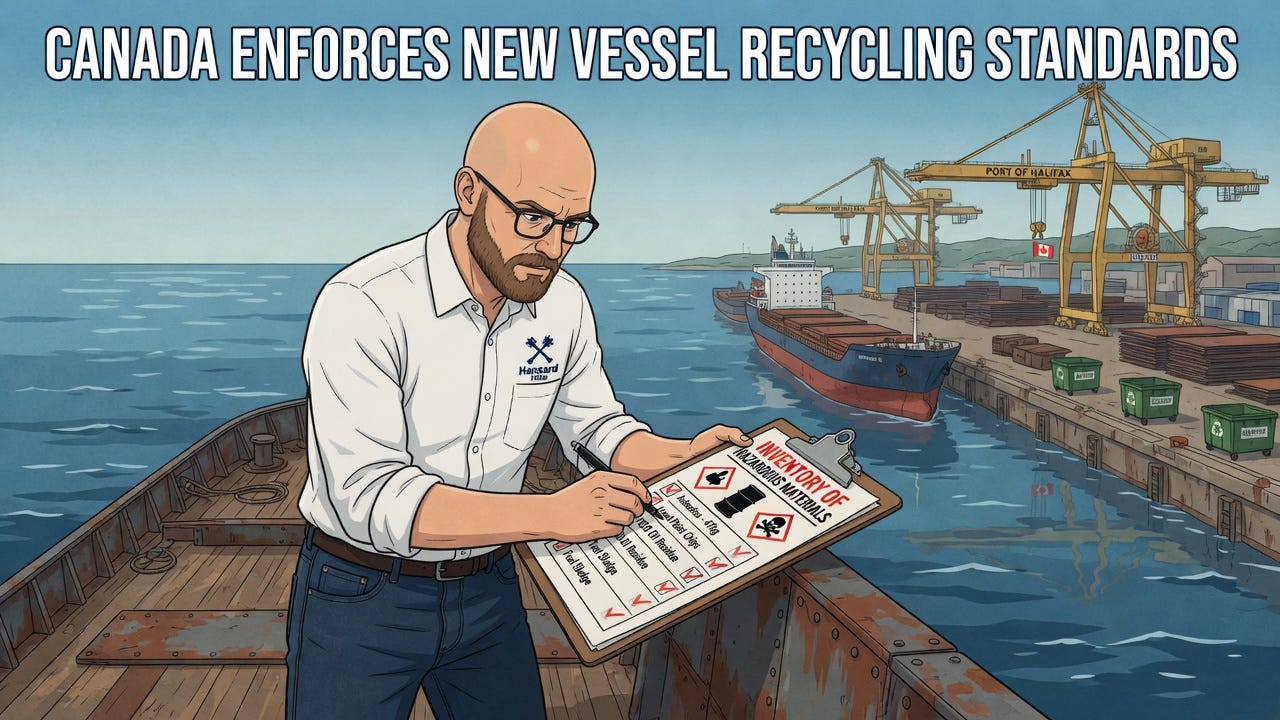
On March 26, 2026, Transport Minister Steven MacKinnon sat in Ottawa and signed an interim order that changed the final chapter for hundreds of Canadian vessels. The document, published in the *Canada Gazette* on April 11, declared an immediate federal response to “a direct or indirect risk to marine safety or to the marine environment.” From that moment, every Canadian ship of 500 gross tonnage or more, and every foreign vessel in Canadian waters, became subject to strict new rules the instant it turned toward a recycling facility.
The order did not arrive in isolation. That same Thursday, Her Excellency the Governor General granted royal assent by written declaration to three major bills: the budget implementation act (Bill C-15), sweeping border security and immigration measures (Bill C-12), and two supply bills (C-23 and C-24). Yet the vessel recycling rules stood apart. They were not debated in the House. They were not proclaimed months later. They took effect on April 1, 2026, because the Minister believed delay could endanger ships, crews, and coastal waters.
The Minister’s Urgent Mandate
The interim order rests on two clear convictions. First, the provisions it contains could later become permanent regulations under the *Canada Shipping Act, 2001*. Second, the risk is real and present. Vessels heading for dismantling often carry fuel residues, cargo remnants, and materials listed in Appendix 2 of the Hong Kong International Convention for the Safe and Environmentally Sound Recycling of Ships, 2009. Without controls, those substances threaten the very waters Canada is sworn to protect.
The order therefore applies to any Canadian vessel anywhere and any foreign vessel inside Canadian waters once it sets course for a recycling facility. Government vessels are exempt. Everything else must comply.
What Ship Owners Must Do Before the Final Voyage
Owners now shoulder three concrete obligations once a vessel is bound for recycling.
They must keep an up-to-date Inventory of Hazardous Materials on board. That inventory records the quantity and exact location of every hazardous substance in the ship’s structure and equipment. It is not a theoretical list. It must be ready for the master, the crew, and any person in charge at the recycling facility.
Owners must also take practical steps to minimize cargo residues, fuel oil residues, and waste before the ship reaches the yard. They must keep a written record of those measures.
Finally, the inventory itself must be physically available to anyone who needs it during the voyage or at the facility. No exceptions. No last-minute scrambling.
The definitions are precise. “Recycling” means the complete or partial dismantling of a vessel at a defined recycling facility to recover components and materials for reprocessing and reuse, while handling hazardous substances with care. Repair and maintenance are explicitly excluded. “Hazardous materials” are exactly those named in the Hong Kong Convention appendix. The owner of a Canadian vessel is the person registered under Part 2 of the *Canada Shipping Act, 2001*.
A National Stake in Every Hull
These rules arrive at a moment when Canada’s marine traffic remains heavy. Ships still carry goods through the Great Lakes, the St. Lawrence, and both coasts. When those ships reach the end of their service life, the way they are dismantled now directly affects the health of harbours, the safety of coastal communities, and Canada’s international reputation for responsible shipping.
The interim order does not ban recycling. It demands foresight and documentation so that the final act of a vessel’s life does not become an environmental or safety incident. By requiring the inventory and the residue-reduction record, Ottawa has placed responsibility squarely on the owner before the ship ever leaves its last commercial port.
The order came into force on April 1, 2026. Any vessel already en route to a recycling facility on or after that date must meet the new standard. There is no grace period. The *Canada Gazette* publication on April 11 simply made the details official for every mariner, every port authority, and every recycling operator in the country.
What This Means for Ordinary Canadians
Coastal families who fish, boat, or simply live beside the water now have a federal guarantee that vessels heading for scrap will not arrive leaking unknown toxins or carrying undocumented hazards. Ship owners and operators face new paperwork, but also clearer expectations that protect both their crews and the marine environment they navigate every day.
The interim order is short, technical, and binding. Its impact will be measured in cleaner shipbreaking yards, safer final voyages, and waters that remain open for the next generation of Canadian shipping.
Hansard Files digs through every page of the Canada Gazette so you don’t have to. Subscribe to support independent reporting on the federal rules that shape daily life in Canada.
Source Documents
Canada Gazette. (2026, April 11). Part I, Vol. 160, No. 15. Government of Canada.
Thank you for sharing this very interesting information. I was not aware that there were loopholes that allowed ships to be recycled without worrying about the hazardous materials aboard. I have read about the efforts to remove these materials from "rescue" ships such as the MSC Baltic III, and for ships intended to be sunk as reef starters or as naval target practice, but I had no idea the same sort of thing was not required for ships that are to be recycled.
Thanks for the great article! Back in the day I was a certified hazardous materials technician and Canada Dangerous Goods certified for handling dangerous goods as we refer to them in Canada.
Any regulations to protect the environment AND workers involved in recycling ships is good.