


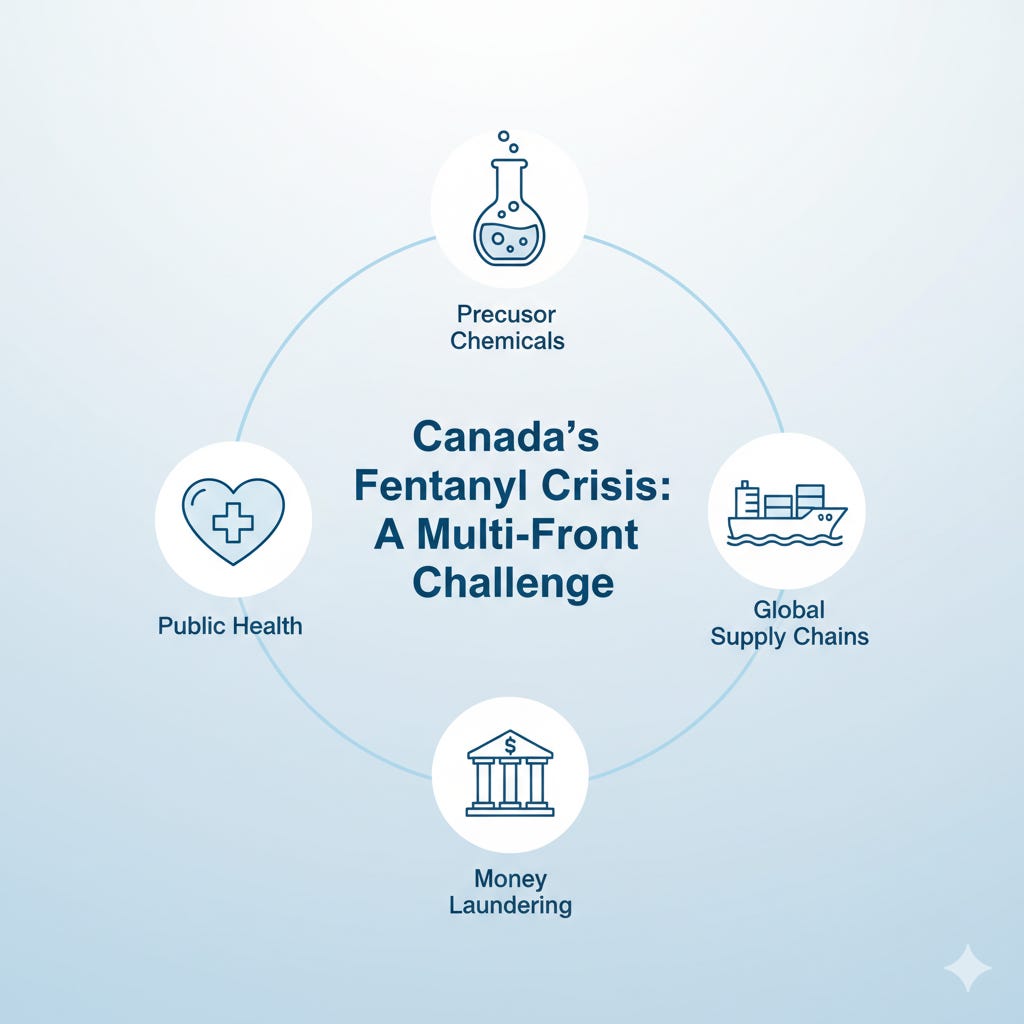
The headlines about the opioid crisis can feel overwhelming. We hear about rising death tolls and a complex cross-border battle against a deadly drug. It is a national emergency that often seems to be happening somewhere else, a problem defined by police seizures and political statements. A recent interim report from Canada's Fentanyl Czar, however, paints a much clearer and more detailed picture. It moves beyond the common narratives to show a fight that is happening not just at the border, but in our financial systems, our postal service, and our public health units.
The report gathers insights from a wide range of experts, including frontline health workers, police agencies, financial institutions, Indigenous leaders, and international partners. Their perspectives reveal that tackling the fentanyl trade requires a sophisticated, multi-front strategy. The problem is not simply about stopping a finished product from entering the country. It involves tracking chemicals with legitimate uses, disrupting complex money laundering schemes, and understanding that solutions must be tailored to the specific needs of different communities.
What follows are some of the most impactful takeaways from the report. They challenge common assumptions and show the true complexity of protecting Canadians from this public health crisis.
1. The Flow of Fentanyl to the United States is Not What You Think
Much of the political conversation frames the fentanyl problem as a continental security issue, with a focus on drugs flowing across the Canada-United States border. While collaboration between the two countries is strong and necessary, the idea that Canada is a major source of America's fentanyl supply is a misconception.
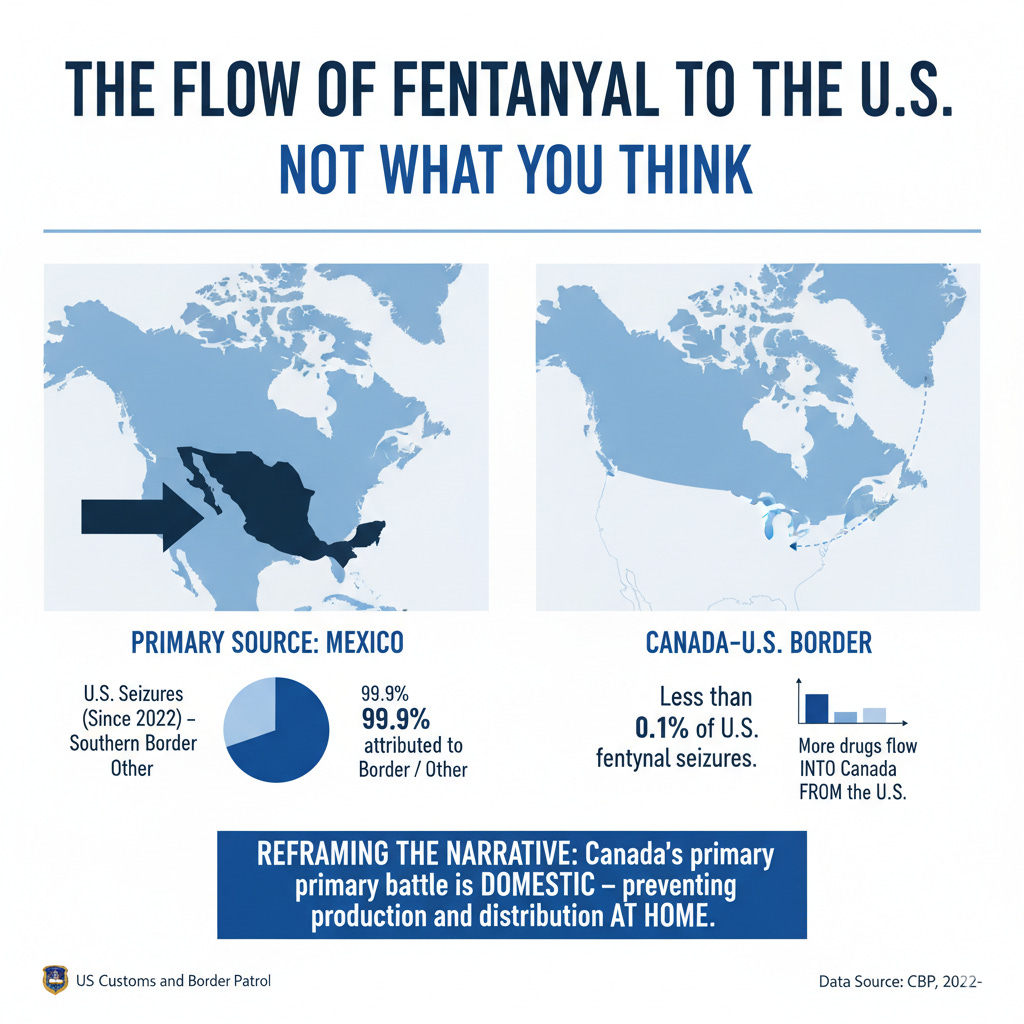
According to data from United States Customs and Border Patrol, since 2022 only one tenth of one percent of all fentanyl seizures have been attributed to the northern border or from someone crossing into the U.S. from Canada. The report notes that these volumes are significantly less than the amount of illegal narcotics that flow into Canada from the U.S. This fact reframes the narrative, showing that while Canada must be a vigilant partner, its primary battle is a domestic one. The country's main challenge is not stopping drugs from leaving, but preventing them from being made and distributed here at home.
2. The Real Fight is Over Precursor Chemicals
The image of police seizing bricks of finished drugs is common, but it does not tell the whole story. Most of the large fentanyl seizures in Canada are linked to domestic production. Transnational organized crime groups are not just smuggling the final product, they are importing the ingredients.
These ingredients, known as precursor chemicals, are often sourced from manufacturers in Asia. Many of these chemicals also have legitimate industrial uses, which makes them difficult to track and control. Criminals divert these legal materials to clandestine labs within Canada to produce fentanyl. This shifts the frontline of the drug war from the border crossing to the regulatory systems that oversee chemical imports and the law enforcement teams that must find and dismantle these domestic labs. The government is responding by creating accelerated ways to control these chemicals, but it is a constant race against criminals who adapt their methods quickly.
3. Mail and E-Commerce Are Major Vulnerabilities
The rise of global e-commerce has created an enormous challenge for officials trying to stop the fentanyl trade. Because fentanyl is so potent, a lethal dose can be as small as a few grains of salt. This means deadly amounts of the drug can be concealed in small, ordinary-looking packages and shipped cheaply through mail or private courier services.
The sheer volume of global trade makes it nearly impossible to inspect every parcel. Distinguishing a legal shipment from an illicit one without specific intelligence is a monumental task. Supply chain partners like postal services and courier companies are willing to help, but they need clearer legal authority and modern tools to screen packages effectively. This reality means your online shopping deliveries share a logistics network that criminals exploit, highlighting the need for advanced data analytics and intelligence sharing to target high-risk shipments without slowing down legitimate commerce.
4. Following the Money is as Important as Stopping the Drugs
The fentanyl trade is a highly profitable business for transnational criminal networks. Those profits must be laundered to be used, which creates another front in the fight: the financial system. Disrupting the flow of money is a key strategy for destabilizing these criminal organizations.
The report notes that financial institutions and government partners see a need for more tools and stronger penalties to combat sophisticated money laundering. Stakeholders point to the American anti-money laundering system as being more responsive and having tougher penalties. In response, Canada is creating new intelligence sharing partnerships between federal departments and major banks.
On June 4, 2025, the Canadian Association of Chiefs of Police stated that the tabling of Bill C-2 (Strong Borders Act) "demonstrates a commitment to modernizing legislation and equipping law enforcement with necessary tools to combat transnational organized crime in an increasingly complex threat environment."
By improving the ability to track and seize illicit funds, authorities can target the core motivation of the drug trade and make it harder for these groups to finance their operations.
5. There is No Single Solution for the Crisis
The report makes one thing abundantly clear: there is no silver bullet. An effective response must address both the supply of drugs and the demand for them. This means a balanced approach that combines strong law enforcement with comprehensive public health strategies.
On the supply side, law enforcement needs modern laws and tools to investigate complex criminal networks. On the demand side, communities need accessible and affordable treatment options, mental health support, prevention programs, and harm reduction services. The crisis also impacts different regions and populations in unique ways. For instance, Indigenous peoples and individuals recently released from correctional facilities are disproportionately affected. This requires flexible, tailored solutions that are developed and delivered at the local level, because what works in one community might not work in another.
6. Better Data is a Powerful Weapon
To win the fight against fentanyl, authorities need a clear and current picture of the threat. The report emphasizes the critical role of data and evidence in shaping effective policies. Reliable, up-to-date information allows officials to monitor the ever-changing drug market, measure the impact of interventions, and save lives.
Innovative techniques are becoming more important. Wastewater testing, for example, can act as an early warning system, detecting the presence of fentanyl in a community before overdose numbers begin to climb. In the lab, new tracing techniques can analyze drug samples to identify their chemical origins. This gives law enforcement valuable intelligence about distribution channels and new variations in the drug supply. By grounding the national strategy in solid data, Canada can ensure its actions are targeted, effective, and responsive to the realities on the ground.
The fentanyl crisis is one of the most complex public safety and health challenges Canada faces. The government's interim report shows that a modern response is well underway, involving everything from new surveillance drones and drug analysis centres to stronger partnerships with financial institutions. The path forward requires a sustained, collaborative effort from all levels of government, law enforcement, and health partners. As this integrated strategy unfolds, the ultimate question is how these national efforts will translate into safer communities and support for the people who need it most.
Sources:
Government of Canada. (2025, June). Canada's fentanyl czar: Interim report. Privy Council Office.