


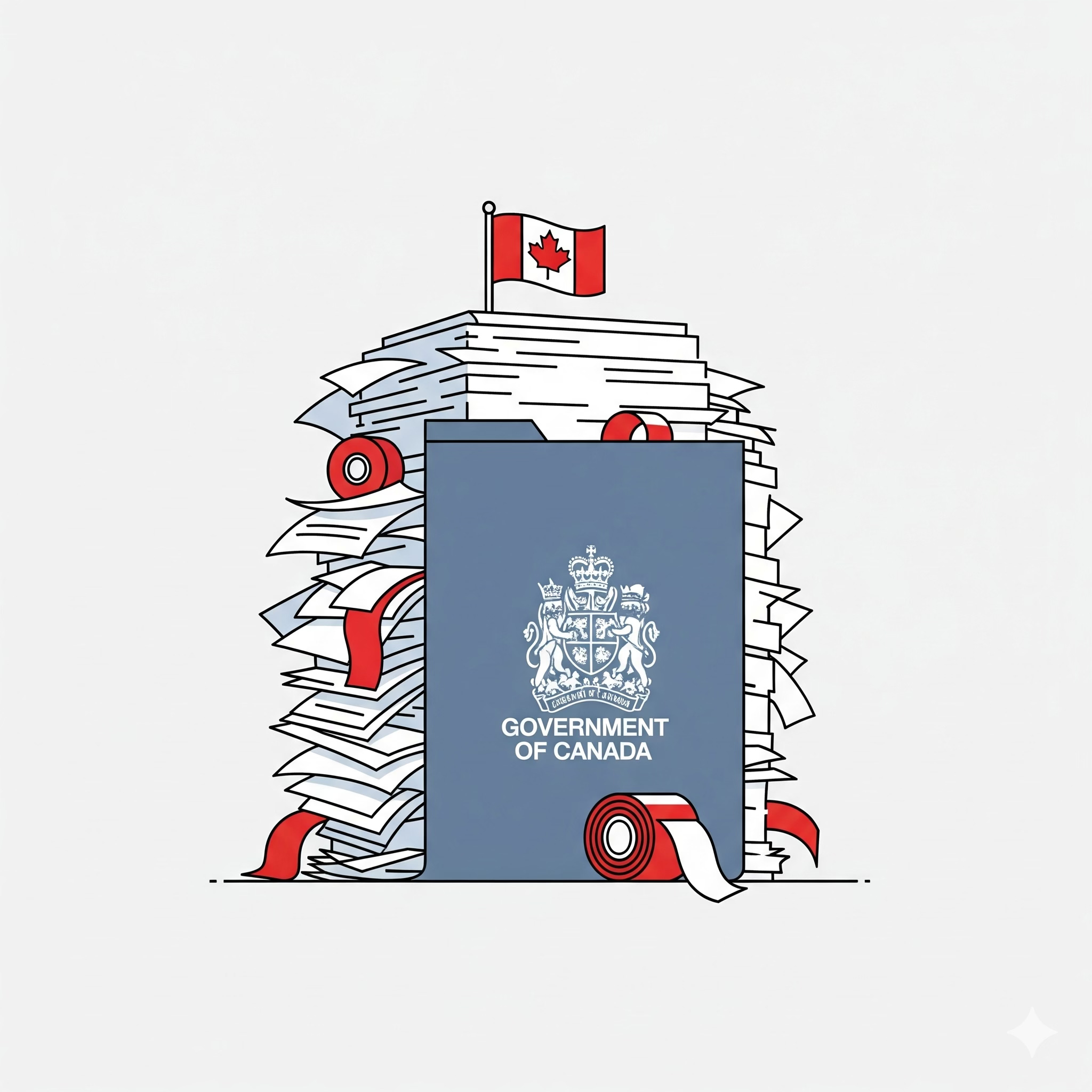
Think of Canada's foreign policy as a high-performance sports car, and the bureaucracy that implements it as the pit crew. For decades, Canada used a foreign policy tool called economic sanctions, but much like that sports car on a leisurely Sunday drive, it didn't require much maintenance or effort. Then, in 2022, everything changed. The Russian invasion of Ukraine put the pedal to the metal, and Canada's pit crew, Global Affairs Canada (GAC), wasn't ready. The result is a system overwhelmed by an exponential increase in workload, leading to legal risks, long delays for Canadians, and a crucial report that pulls back the curtain on the whole operation.
The Big Shift: From a "Tool of Last Resort" to a "Preferred Option"
The core issue, as a March 2025 evaluation from Global Affairs Canada reveals, is a fundamental change in how and why Canada uses sanctions. Traditionally a "foreign policy tool of last resort," sanctions are now a "preferred option" for addressing international issues. This shift means sanctions packages, which can include things like asset freezes, export restrictions, and financial prohibitions, are now being imposed with unprecedented frequency, sometimes as often as weekly or monthly. This wasn't foreseen back in 2018, when GAC first created a dedicated sanctions division.
A New Regulatory Era: GAC, which previously handled sanctions as an "off the side of the desk" affair, now finds itself a federal regulator, responsible for everything from writing the rules to processing public inquiries.
A Tsunami of Work: The Russian invasion of Ukraine alone resulted in 65 rounds of sanctions, creating the "most comprehensive sanctions ever imposed on a major global economy". This created an unforeseen, massive workload on a division that was already understaffed.
Unprecedented Action: In 2022, Canada became the first country to enact an asset seizure and forfeiture regime, a major policy shift that remains largely untested but allows the government to confiscate property from sanctioned individuals.
The Consequences of the Capacity Crunch
This newfound appetite for sanctions has come with a steep price. The evaluation report, titled "Evaluation of Global Affairs Canada's Sanctions Operations, 2018-2024," highlights a significant "disconnect between the political appetite for risk and GAC’s capacity to manage the consequences".
Did You Know?: The urgency of new sanctions packages has meant that GAC hasn't been able to conduct thorough research, sometimes leading to "unforeseen" impacts on Canadian companies, such as challenges in importing key fertilizer components for agriculture.
The report's findings reveal a system struggling to keep pace:
The Backlog: GAC has not been able to process permit and delisting applications in a timely manner. These applications are critical for businesses or individuals who may be inadvertently affected by a sanctions measure.
The Guidance Gap: Unlike its allies, Canada has not published comprehensive, written guidance for the public and private sectors, a major obstacle for compliance and enforcement. Without clear rules, Canadians and Canadian businesses are left guessing, which can weaken the entire sanctions regime and increase legal risks.
A Reactive, Not Proactive, Bureaucracy: The sanctions division has had to focus on day-to-day operations, leaving little time for proactive policy work, such as developing a structured policy framework or conducting a comprehensive legislative review.
A Call for a Major Tune-Up
The evaluation report is clear, the system needs an overhaul. It makes five key recommendations to improve efficiency, capacity, and overall effectiveness. The government's official response, the Management Response and Action Plan (MRAP), agrees with all of them, signaling that Ottawa is finally ready to address the issue.
The plan includes a commitment to:
Publish Comprehensive Guidance: By December 2025, GAC aims to bolster its online guidance and FAQs, providing more detailed information for Canadians. This will help clarify obligations and improve compliance.
Boost Processing Efficiency: GAC will explore strategies like automated systems to speed up the slow and manual process of handling permit applications.
Strengthen Strategic Policy: The newly formed Sanctions Bureau will take on a more strategic role, developing formal policies and procedures to guide internal decision-making and ensure a more cohesive approach.
Why Ottawa's Paperwork is Your Business
Canada's sanctions regime, once a quiet instrument of diplomacy, is now a high-stakes regulatory program that affects everyday Canadians and businesses. The recent evaluation proves that an aggressive foreign policy agenda requires an equally robust bureaucratic engine to back it up. Without it, the system risks becoming a well-intentioned, but ultimately ineffective, instrument.
This isn't just about government red tape, it’s about a foreign policy that has real-world consequences, both intended and, as the report shows, unintended. Being an informed citizen means understanding that the bold headlines about sanctioning foreign regimes are only half the story. The other half is the tireless, and currently overwhelmed, work of the public servants making sure it all works.
Want to learn more about the mechanics of Canadian government? Share this article and follow @OnHansard for more insights into the Ottawa fog.
Sources: Global Affairs Canada. (2025). Evaluation of Global Affairs Canada's Sanctions Operations, 2018-2024.
Global Affairs Canada. (n.d.). Management Response and Action Plan (MRAP): Evaluation of Global Affairs Canada's Sanctions Operations, 2018-2024.