

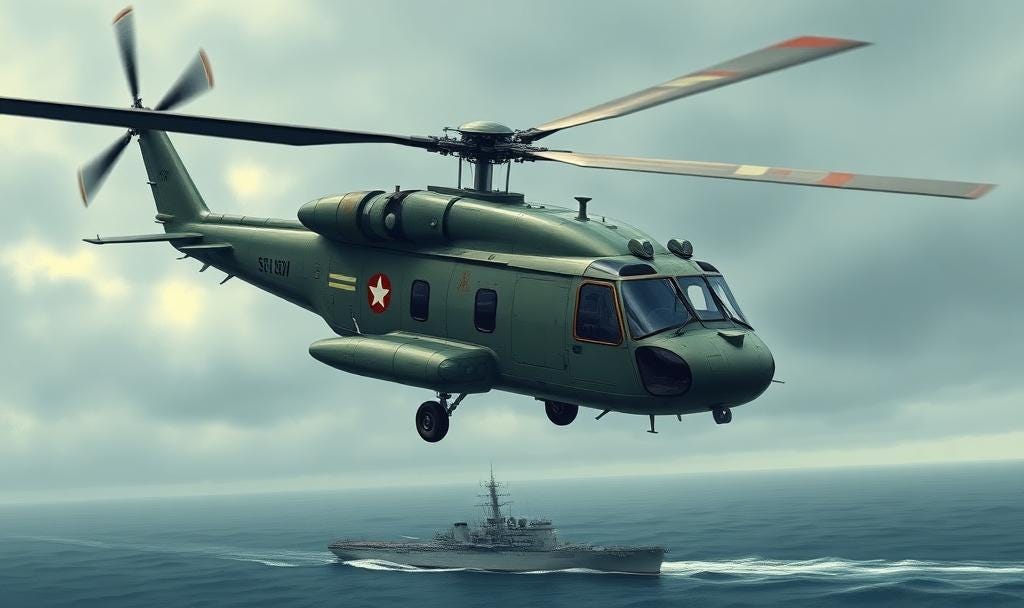
Imagine relying on a car from the 1960s for your daily commute—it's reliable enough with constant fixes, but one breakdown could be disastrous. That's similar to Canada's experience with the Sea King helicopters, which served the military for over 50 years. These aircraft, powered by T-58 engines, were central to naval operations but became a symbol of procurement delays and political wrangling. Understanding this story sheds light on how Canadian governance handles defence spending and military readiness, fostering better-informed citizens about taxpayer-funded decisions.
What Is the Sea King Helicopter?
The Sea King, officially the CH-124, is a maritime helicopter introduced to the Royal Canadian Navy in 1963. Think of it as a versatile workhorse: it hunts submarines, performs search and rescue, and supports troop transport. Its T-58 engines, the focus of a 1989 National Research Council report, were tested at facilities like CFB Shearwater to ensure safety and performance.
Key Specs: Twin-engine design, capable of carrying up to 4 torpedoes or anti-submarine equipment.
Service Life: Over 10,000 built worldwide; Canada's fleet flew until 2018, far beyond the intended 20-30 years.
Maintenance Demands: Required 30 hours of upkeep per flight hour, as noted in parliamentary debates.
This helicopter wasn't just equipment—it represented Canada's NATO commitments and maritime defence strategy.
The 1993 Cancellation: A Political Turning Point
In 1989, the Mulroney government signed a contract for EH-101 helicopters to replace the aging Sea Kings. But during the 1993 election, Jean Chrétien's Liberals promised to scrap it, calling it too expensive at $5.8 billion. Once in power, they did just that, paying $500 million in penalties.
Why Cancel? Critics argued it was overkill for Canada's needs, like buying a luxury SUV when a reliable sedan would do.
Immediate Impact: Left the military with no quick replacement, forcing extended use of Sea Kings.
Parliamentary Echoes: Debates highlighted risks, with opposition MPs warning of safety issues. One 2001 session questioned if new helicopters would be "inferior" to existing ones.
This decision turned defence procurement into a political football, delaying modernization for decades.
Decades of Delays and Parliamentary Debates
The cancellation sparked ongoing Hansard discussions, revealing governance challenges like budget constraints and competing priorities. Governments split the replacement into two programs: maritime helicopters and search-and-rescue, complicating bids.
Timeline Highlights:
1990s: Sea Kings grounded multiple times due to mechanical failures.
2000s: Crashes, including a 2003 incident, fueled urgency. Debates criticized the "40-year-old fleet" needing excessive maintenance.
2004: Contract awarded for Sikorsky Cyclones, but delays pushed delivery to 2015.
2010s: Costs ballooned to $14 billion; full operational status only in 2021.
Procurement is like building a house—delays from changing plans (politics) raise costs and risks. MPs across parties lamented this in sessions, with one 2003 debate noting Sea Kings were "put out of service" temporarily for safety.
Did you know? A 2001 Senate debate questioned "sea state" requirements, showing how technical specs became political fodder.
The Technical Backbone: Engine Testing at CFB Shearwater
Behind the debates was the gritty work of keeping Sea Kings airworthy. A 1989 NRC report details qualifying a new T-58 engine test facility at CFB Shearwater, Nova Scotia. This ensured engines met standards through rigorous checks.
What Happened? NRC compared facility measurements to a reference standard, finding close correlations (e.g., horsepower within 1-2%).
Key Findings: Airflow was stable, noise levels low (65 dBA nearby), and bypass ratios acceptable for turboshaft testing.
Challenges Noted: Minor issues like speed discrepancies and high fuel sulphur (0.43-0.74%, above JP-4 limits) were flagged for fixes.
Think of it as a car tune-up: The facility was like a high-tech garage, verifying engines could handle demands without failing mid-mission. This report underscores DND-NRC collaboration, essential for governance in maintaining military assets amid delays.
Replacement and Lessons Learned
The Cyclones finally replaced Sea Kings in 2018, but not without controversy. Debates as recent as 2012 criticized the split procurement. Today, similar issues arise with F-35 jets, echoing Sea King delays.
Outcomes: Cyclones offer better sensors and range, boosting readiness.
Governance Insights: Procurement needs transparency to avoid politicization, as seen in X discussions criticizing Liberal delays.
Conclusion
The Sea King story boils down to this: Good intentions clashed with politics, costing time, money, and potentially lives. Key takeaways? Defence decisions affect national security; delays strain troops; and parliamentary oversight is crucial. Follow official Hansard for updates, share this to spark discussion, and stay informed—it's how we hold governments accountable.
Source: MacLeod, J. D. (1989). Qualification/correlation report for T-58 engine test facility at CFB Shearwater (Laboratory Memorandum LM-ENG-023). National Research Council Canada, Division of Mechanical Engineering, Engine Laboratory.