


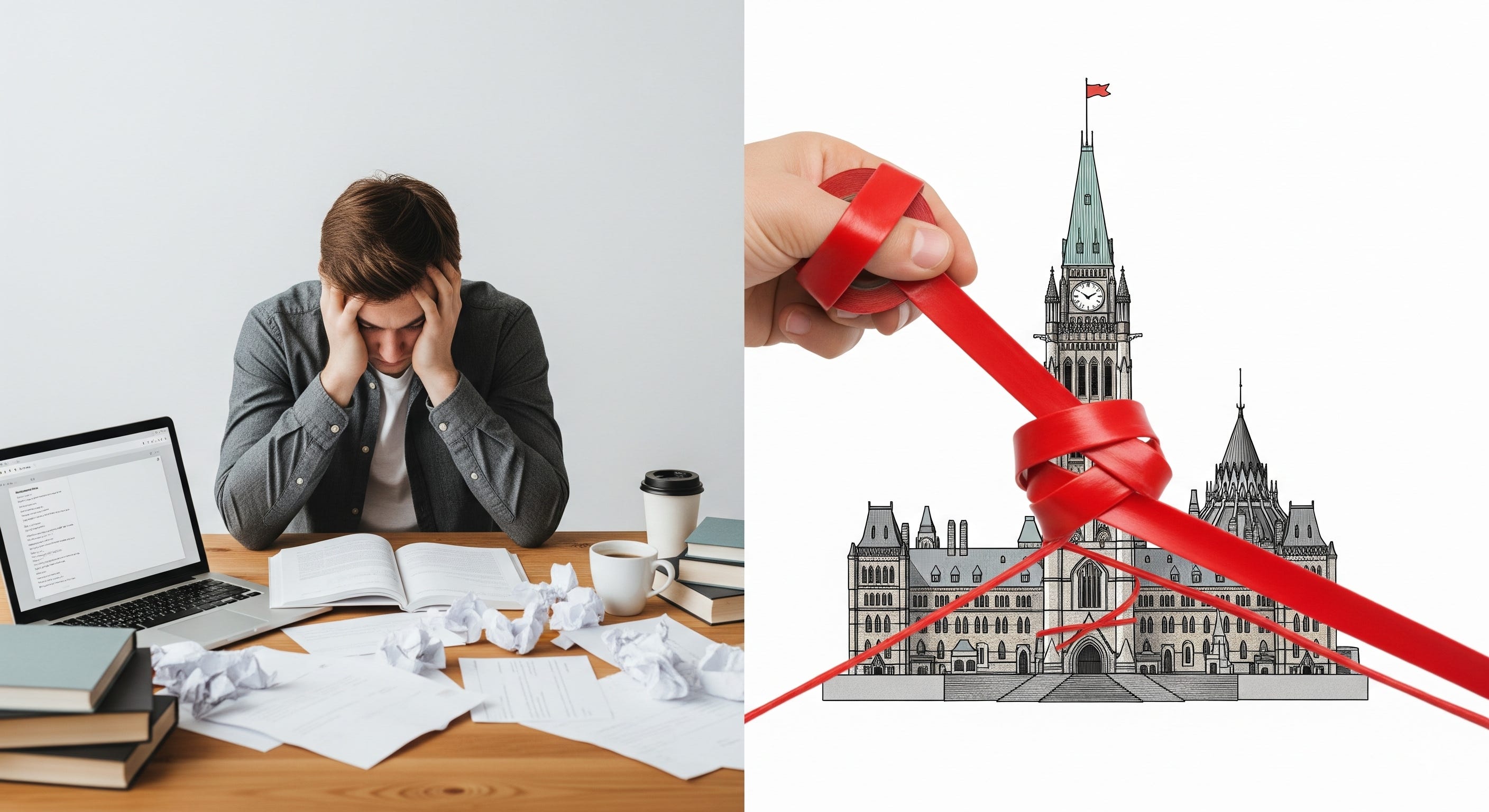
Ever feel like you’re watching a magic trick where you know you’re being fooled, but you can’t quite figure out how? Welcome to a parliamentary committee meeting. Recently, the committee in charge of jobs and social development was presented with a clear problem: according to Statistics Canada, more than one in five returning students are unemployed this summer. A Conservative MP proposed an urgent study to find solutions. Government members said they supported it, successfully changed the timeline to their liking, and then promptly voted the entire study down.
If that sounds confusing, it’s because it is. This isn't just procedural trivia, it's a perfect snapshot of how real-world problems can get tangled in the Ottawa fog. Let's pull back the curtain on the political maneuvering that put a potential solution for student unemployment on ice.
Setting the Stage: The First Day of School
Think of a new parliamentary committee meeting like the first day of a group project. The Standing Committee on Human Resources, Skills and Social Development (HUMA for short) met for the first time on June 18, 2025. The first hour was pure housekeeping. They elected a chair, Robert Morrissey (Liberal) , and two vice-chairs. Then they passed a series of "routine motions" which are essentially the group project's ground rules, covering everything from how long witnesses can talk to who pays for working meals.
With the boring stuff out of the way, the committee got down to business. First, a successful motion to invite several ministers to appear and discuss their priorities. So far, so collaborative. But the spirit of cooperation was about to hit a wall.
The Pitch: An Urgent Plea for Students
Conservative MP Garnett Genuis then took the floor, highlighting the student unemployment crisis. He noted that for students, summer jobs aren't just for cash, they're for building skills and experience for their future careers. He proposed a motion for the committee to immediately study the crisis, holding at least five meetings before July 31st.
His argument was simple: "We are able to participate in hearings from our ridings, using virtual tools," he said. "Parliamentarians must be prepared to get to work this summer so that unemployed students can get to work as well". Another Conservative member, Laila Goodridge, shared stories of high school students in her riding who had applied for hundreds of jobs without a single call back, emphasizing the urgency.
The Twist: A Procedural Pretzel of Votes
This is where the political chess game began. Liberal MP Annie Koutrakis agreed the issue was important but argued the timeline was too rushed. She proposed an amendment: change the study's completion date from July 31st to September 30th. "Let's do it the right way and not rush it through," she argued.
The debate that followed was a masterclass in parliamentary maneuvering.
The Stalemate: The Conservatives argued that waiting until September defeated the purpose of helping students this summer. The Liberals argued a rushed study wouldn't be effective.
The Compromise Attempt: Mr. Genuis offered a sub-amendment, a tweak to the amendment, suggesting the Chair should "endeavour to schedule one or two of these meetings per month" to ensure the work started immediately and wasn't all crammed into the end of September.
The Insight: Bloc Québécois MP Marilène Gill offered a crucial piece of context, suggesting the Conservative motion was a "very clever" way to bypass the usual process where a subcommittee decides which studies get priority. In her view, it was a move to jump the queue.
Then came the votes, and the whole thing fell apart.
What Just Happened? A Step-by-Step Guide to the Vote:
The Sub-Amendment Vote: The Conservative compromise to spread meetings out over the summer failed (Nays 5, Yeas 4). The government and Bloc members voted it down.
The Amendment Vote: The Liberal amendment to delay the study's completion until September 30 passed (Yeas 5, Nays 4). Now, the motion reflected the government's preferred timeline.
The Main Motion Vote: With their own timeline now in the motion, the government members and the Bloc MP voted against the study they claimed to support. The entire motion to study student unemployment, as they had just amended it, failed (Nays 5, Yeas 4).
A visibly confused Mr. Genuis summed it up: "The Liberals amended this motion, and then they voted against it anyway. That's pretty surprising". Before he could get an answer, Ms. Koutrakis moved to adjourn the meeting, which passed, abruptly ending the discussion.
Why This Matters: Process Over People
So, what was that all about? It wasn't really about student jobs. It was about controlling the committee's agenda. As the Bloc MP pointed out, committees usually decide their priorities through a subcommittee. By pushing an urgent motion in the main committee, the Conservatives tried to force the issue to the top of the list.
The government members, not wanting to cede control of the agenda, performed a procedural takedown. They publicly supported the idea (to avoid looking like they don't care about student jobs), amended it to a timeline they knew would weaken its urgency, and then killed it. It was a tactical move to maintain control, but the result is that a critical issue facing young Canadians was kicked down the road.
This is the kind of Ottawa insider game that leaves citizens feeling cynical. A real problem, backed by data, was met not with a collaborative search for solutions, but with a series of procedural moves designed to manage a political problem. While parliamentarians debated timelines and sub-amendments, more than one in five students are still looking for work. Being an informed citizen means understanding not just what politicians say, but what the procedural record shows they actually do.
Sources: Standing Committee on Human Resources, Skills and Social Development and the Status of Persons with Disabilities. (2025, June 18). Evidence, Number 001. 45th Parliament, 1st Session. House of Commons.
https://www.ourcommons.ca/