

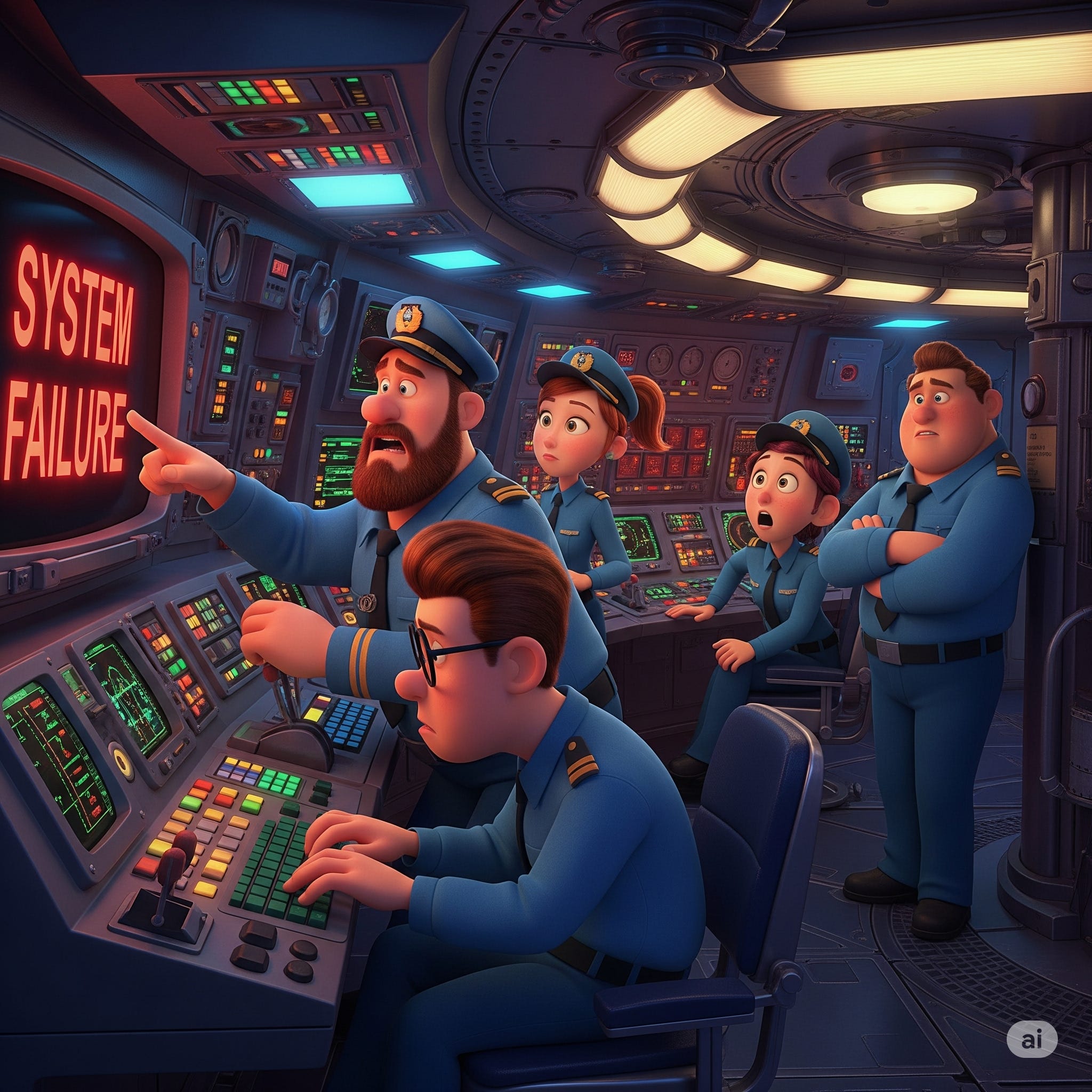
Imagine a submarine, deep beneath the waves on a critical mission. An alarm blares. A key system has failed. This is the scenario that keeps naval commanders awake at night, and it's a scenario that a little-known organization works tirelessly to prevent.
We take it for granted that military hardware is tough. It’s designed to function in the harshest environments imaginable. But that toughness doesn't come off an assembly line. It is brutally and methodically engineered into every component through a process of extreme validation. Before a piece of technology is trusted with the lives of sailors, it must first pass through a chamber of horrors.
This is the world of the Naval Engineering Test Establishment (NETE), a specialized field unit of the Royal Canadian Navy. Its mission is simple but vital: to independently verify and validate the Navy’s systems, ensuring they meet the highest standards of performance, reliability, and safety.
This article will take you inside the hidden system of NETE. We'll decode how its engineers use controlled explosions, custom-built simulators, and high-speed analysis to ensure that naval equipment won't fail when it matters most.
The Gatekeeper of Naval Excellence
NETE is the Navy's ultimate quality control gatekeeper. It provides the tools and data necessary to ensure equipment operates flawlessly under the most challenging conditions imaginable. A key component of this operation is the Electronics Measurement and Control (EMC) group, which focuses on creating innovative and often bespoke electronic testing solutions.
The EMC group's work isn't about running standard diagnostics. It's about inventing new ways to push technology to its breaking point and meticulously measuring the results. Their mandate is to answer one fundamental question: when the worst happens, will this equipment still work?
The Shock Doctrine: Forging Resilience with Explosives
One of NETE's most critical and dramatic capabilities is shock testing. To ensure a ship's structure and the crew's readiness, NETE simulates the extreme conditions of real-world combat, including nearby explosions.
This is far more sophisticated than just setting off a charge and seeing what's left standing.
During tests like a Full Ship Shock Test or an Underwater Explosion (UNDEX) Test, the systems are wired with a vast network of sensors, including accelerometers, strain gauges, and dynamic shock sensors. These are monitored by custom-designed, shock-resistant Data Acquisition Systems (DAS) that capture millions of data points in milliseconds.
It’s like giving the ship a full-body EKG during an earthquake. This data provides a comprehensive, second-by-second insight into how every component responds to the intense shock event. To see what the naked eye misses, high-speed cameras record these violent events, allowing engineers to watch in slow motion how systems bend, flex, and react, identifying weak points that would otherwise be invisible.
Building the Impossible: Custom Test Cells
Many of the Navy's systems are too large, complex, or dangerous to test on a ship. The solution? NETE engineers design and build their own custom testing environments, known as test cells, to perfectly replicate operational conditions.
These are not generic labs. They are purpose-built marvels of engineering designed for a single piece of equipment. Examples from NETE's portfolio include:
A massive, land-based test site built specifically for the Paxman diesel engines that power the Victoria-class submarines.
A specialized test cell to validate the powerful engines used in the Canadian Army's Leopard 2 tanks.
Custom-instrumented diving chambers for the Navy's Experimental Diving & Undersea Group.
The expertise goes down to the smallest component. When a simulation for a submarine escape system required a sensor that didn't exist, the team simply designed and built their own, capable of withstanding extreme underwater pressures. This ability to create tailored solutions is what makes NETE's validation so effective.
The Data is the Deliverable
Ultimately, NETE’s job isn’t to break things, it’s to generate data. Every shock test, every simulation, every custom sensor is designed to produce a clear, objective analysis of a system's limits.
This data creates a crucial feedback loop. It allows engineers to identify potential vulnerabilities and recommend design improvements long before a system is deployed. For instance, the team developed a compact monitoring device called "MiniDAS" to measure the intense shock exposure on sailors in high-speed Rigid Hull Inflatable Boats. The data collected is used directly to improve the boats' design, durability, and, most importantly, the safety of the personnel on board.
The work is a continuous cycle of testing, analysis, and innovation, ensuring that the Navy's fleet is not only ready for today's challenges but is constantly evolving to meet tomorrow's.
A New Perspective
The operational readiness and resilience of a modern navy don't happen by chance. They are forged, out of sight, in places like NETE. This hidden system of extreme testing, custom engineering, and relentless data analysis is the bedrock of naval confidence.
Behind every sailor who trusts their equipment is a team of engineers who have already pushed that gear through hell and back. They do it to ensure that when the alarm sounds and the real-world test begins, there will be no question about the outcome.
What's the most extreme product testing you've ever heard of, military or civilian?
If you found this fascinating, share it with a friend or colleague.
Follow "OnHansard" for more deep dives into the systems that shape our world.
Source: Maritime Engineering Journal, No. 112, Summer 2025