


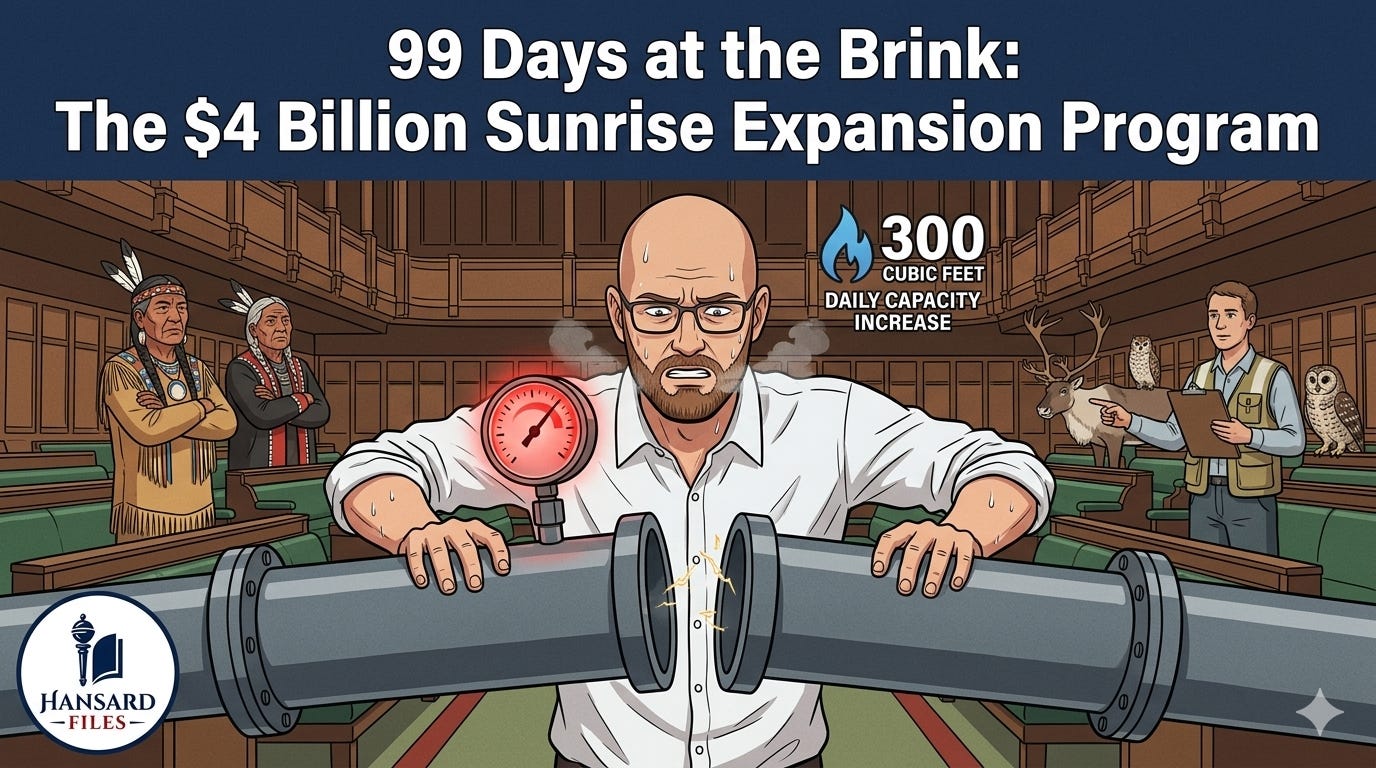
Since November 2022, the Westcoast Transmission South natural gas pipeline has hit its absolute maximum flow capacity 99 times. The system is gasping for air, stretched to the limit by a booming population and the looming energy demands of the Woodfibre LNG export terminal. Enter the Sunrise Expansion Program. With a staggering estimated capital cost of $4 billion, this infrastructure play is designed to keep British Columbia and the American Pacific Northwest from facing a catastrophic winter supply shortfall.
The $4 Billion Blueprint
The math is as brutal as the geography. The Sunrise Expansion Program requires the construction and operation of 11 pipeline looping segments that will run contiguous to the existing infrastructure. That means laying down approximately 139 kilometres of new steel, installing electric-driven and gas-driven compressor units, and stringing up 10 kilometres of overhead power lines.
It is an enormous logistical undertaking. Once complete, the project will add up to 300 million cubic feet per day of capacity to a system already pushing 1,800 million cubic feet daily during peak winter events. The economic gravity is immense. The expansion is projected to contribute roughly $3.4 billion to Canada’s Gross Domestic Product and generate 20,700 full-time equivalent person-years of employment across the country. Seventy-two percent of that workforce will be located directly in British Columbia. Construction is slated to begin in 2026.
The Yahey Shadow
But building 139 kilometres of pipeline is never just an engineering problem. The Sunrise Expansion Program route cuts through the traditional territories of 73 Indigenous groups, including Treaty 8 Nations, a Treaty 6 Nation, and Métis communities.
Throughout the approval process, the ghost of the Yahey v. British Columbia decision hung heavy over the committee rooms. In that case, the British Columbia Supreme Court ruled that the cumulative impacts of industrial development had significantly diminished the ability of Treaty 8 First Nations to exercise their rights. The Commission acknowledged that this project will result in medium adverse cumulative effects on the exercise of Indigenous and Treaty rights.
This friction culminated in a rare, high-level divide. Commissioner Grimoldby issued a separate opinion, arguing that the distinctions between reserve lands, Treaty 8 lands, and unceded lands were not fully accounted for in the consultation process. Grimoldby insisted that Westcoast needed to exert further effort to ensure the duty to consult was met and called for an offset measures plan. The Commission held firm, maintaining that the Crown’s consultation was sufficient, but it did tighten 13 of its 47 binding conditions to demand more transparent reporting from the pipeline operator.
Caribou, Owls, and Carbon
The environmental ledger is equally complex. The project footprint intersects with the critical habitats of the Spotted Owl, listed as endangered, and the Southern Mountain Caribou, listed as threatened. In response, the Commission imposed strict conditions for habitat restoration and monitoring.
Then came the carbon accounting. Building the pipeline will release an estimated 108.9 kilotonnes of carbon dioxide equivalent, primarily from land clearing and heavy machinery. Yet, Westcoast projects that the expansion will ultimately achieve net negative greenhouse gas emissions. By retiring three aging, gas-fueled compressor units, the company anticipates avoiding 228.43 kilotonnes of emissions annually.
The 2028 Horizon
The clock is ticking. The Sunrise Expansion Program has a target in-service date of November 1, 2028. Woodfibre LNG is scheduled to come online in 2027, creating an immediate and massive draw on a system that is already tapping out on cold winter days.
The Governor in Council has accepted the Commission’s recommendation, citing energy security and price stability. The certificate of public convenience and necessity will be issued. The legal and regulatory battle is largely over, but the physical reality of laying 139 kilometres of steel through rugged terrain and fragile habitats is just beginning. The pipeline will be built, but the true cost of keeping the lights on is something you will ultimately have to measure for yourself.
Hansard Files spends weeks in the archives so you don’t have to. If stories like this matter to you, subscribe to keep this work independent.
Source Documents
Government of Canada. (2026, May 2). Canada Gazette Part I, Vol. 160, No. 18
Most of the "objections" to resource projects, pipelines, and developments are from foreign funded eco-wacko groups who want to "save Mother Gaia" via green communism (with them in charge). Like the "Coastal First Nations" formerly known as the "Great Bear Initiative Society" whose principle works are fund-raising, propaganda generation, and obstruction of industry.
CFN depends on the venality of eight First Nations to leverage the appearance of credibility. Kind of genius rebranding, actually, in an evil sort of way.
If it wasn't for MakeWay (formerly the Tides Foundation) funding their advocacy (aka priming the pump) until CFN could start getting gubbermint funding, CFN would have disappeared years ago. CFN does not get involved in direct conservation activities; they are grifters. CFN does not plant trees, conserve wildlife, zero "feet on the ground" for anything other than protests.
Yet our Great and Wise Dear Leader King Carney boasts of meeting with CFN like he's doing something wonderful for the country. Sadly most Canadians won't look past the headline and CFN gets an undeserved boost of visibility they'll leverage for MORE grifting.