


On the afternoon of September 17, 2025, members of the Standing Committee on Access to Information, Privacy and Ethics gathered for their third meeting of the session. On the agenda was a motion that, on its surface, seems fundamental to the committee’s purpose. It was a proposal to conduct a review of the Conflict of Interest Act, the very legislation that governs how ministers, the Prime Minister, and other senior officials must conduct themselves to maintain public confidence.
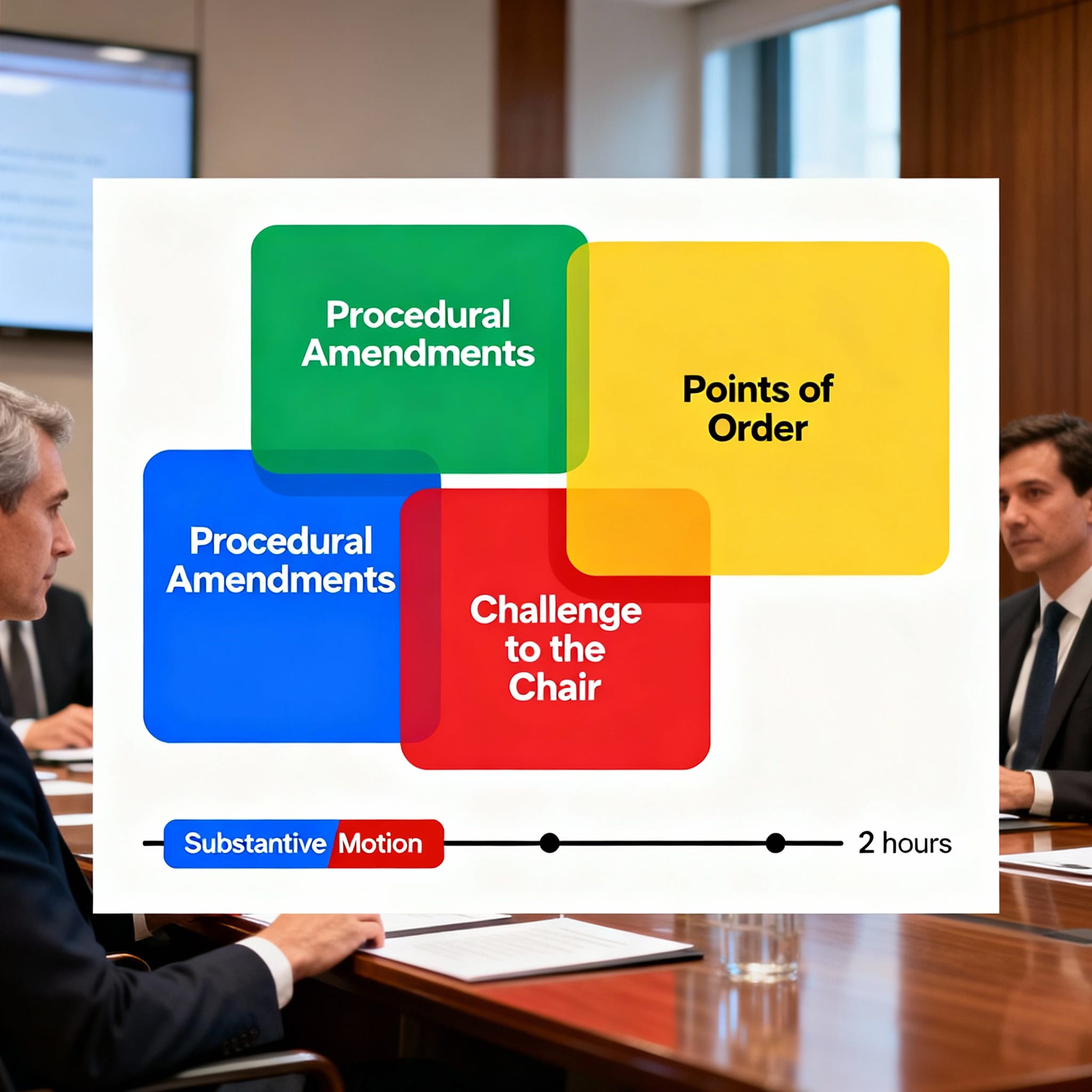
The transcript of this meeting provides a masterclass in a phenomenon that fuels widespread civic frustration. It shows how the essential rules of parliamentary procedure, designed to ensure fairness and order, can be transformed into weapons of delay and obstruction. When you watch politicians on the news who seem to be arguing over obscure points and accomplishing nothing, what you are often witnessing is not simple disagreement. You are seeing a calculated navigation of what can be called the Procedural Labyrinth, a system where the rules of debate become more important than the debate itself.
The Simple Goal
The meeting began with a clear task. Member of Parliament Michael Barrett introduced a motion to have the committee review the Conflict of Interest Act. The text was direct, proposing that the committee should study the Act and consider specific improvements.
“...whether the act should be amended or expanded with a view to enhancing transparency, preventing conflicts of interest, avoiding potential or apparent conflicts of interest, regulating public office holders ownership of assets in tax havens, limiting the availability of blind trusts as a compliance measure, extending the act’s provisions to political party leaders and leadership candidates, and increasing penalties for non-compliance...”
This is precisely the kind of substantive work you expect a committee on ethics to undertake. The motion was an opportunity to strengthen the guardrails of Canadian democracy. As Barrett noted, it was a chance “to demonstrate our stewardship of Canadians’ confidence in this institution”. The expectation was a focused debate on the merits of such a review. Instead, the committee spent the bulk of its time trapped in the labyrinth.
Tactic 1: The Out-of-Scope Amendment
The first turn into the maze came from MP Leslie Church, who proposed an amendment. She suggested adding language about “expanding consistency between the act and the Conflict of Interest Code for members of the House of Commons”.
This sounds reasonable, until you understand the distinction. As the Committee Chair, John Brassard, immediately pointed out, the Act and the Code are two different things, governed by two different bodies.
“The code is generally under the purview of the procedure and House affairs committee. It doesn’t fall under the mandate of the ethics committee. The act itself could... The act actually speaks specifically to the Prime Minister and ministers.”
The amendment was ruled “out of order” because it attempted to pull a subject into the committee’s work that did not belong there. This tactic, proposing an amendment that is procedurally flawed, serves a dual purpose. It forces the Chair and the committee clerks to spend time analyzing the rules, and it creates a point of debate that consumes time without advancing the original motion one inch.
Tactic 2: The Redundant Amendment
After the first amendment failed, Ms. Church proposed a second one. This time, she suggested adding a new clause instructing the committee to consider whether the Act meets its own objectives.
“...to encourage experienced and competent persons to seek and accept public office and to facilitate interchange between the private and public sector...”
Here’s the detail I find most revealing. As Ms. Church later clarified, this language was not new. She was quoting verbatim from the existing Conflict of Interest Act itself. Another MP, Luc Thériault, immediately identified the problem with this approach.
“I find the amendment superfluous. It’s superfluous because section 67 clearly states that the act must be reviewed every five years.”
Mr. Thériault’s point is critical. Adding an instruction to a motion that tells a committee to consider the stated purpose of the Act it is already tasked with reviewing is redundant. It’s like adding a note to a grocery list to “buy food”. The amendment adds no new substance but creates an opportunity for extensive debate, which is exactly what happened. The discussion that followed touched on political recruitment, barriers to entry, and private sector expertise, all while the original motion to simply start the review waited.
Tactic 3: The Slowdown
Throughout the meeting, another tactic was on full display: the deliberate slowing of the process. After the initial motion was introduced, a member asked to suspend the meeting simply to read it, even though it had been provided electronically in both official languages. Later, a simple amendment proposed orally by Ms. Church led to a lengthy pause. The Chair’s frustration was palpable.
“That took 20 minutes to write up what is effectively a one-line amendment. I’m going to suggest that if anybody has any other amendments, they do it right away.”
This repeated stopping and starting, combined with requests for written translations of simple spoken sentences, breaks the momentum of the meeting. It creates a disjointed environment where focus is difficult to maintain and the clock becomes the committee’s primary opponent. As MP Michael Barrett noted, this feels less like a good-faith effort to improve a motion and more like a strategy. “If this is just an exercise in running down the clock,” he said, “we’re not going to support any of the amendments”.
Tactic 4: The Challenge
After the second amendment was eventually defeated in a tie vote, the Chair attempted to move forward. Believing debate was over, he called for a vote on the main motion. At this point, MP Gurbux Saini claimed he had intended to move another amendment. The Chair stated he did not see any hands up and that the call for a vote had already been made.
This led to the final tactic: a formal challenge to the Chair’s ruling. A challenge is a serious procedural move that forces the entire committee to stop and vote on whether the Chair’s decision was correct. The debate is frozen, and the challenge itself cannot be debated. The committee ultimately voted to sustain the Chair’s decision, but the move served its purpose. It consumed more time and created a confrontational end to the debate, followed by multiple “questions of privilege” from members arguing they were being silenced. The result was an atmosphere of conflict, not collaboration.
The Real Cost of the Labyrinth
The Conflict of Interest Act review motion did eventually pass. But the journey to that vote reveals a deeper problem in our political system. The rules of Parliament are a foundational part of our democracy. They exist to ensure every voice can be heard and that decisions are made in a fair and transparent manner. The issue arises when these rules are no longer used as a tool for good governance, but as a weapon for partisan advantage. The goal shifts from building better policy to simply running out the clock. This is the Procedural Labyrinth in action. It is complex, frustrating, and ultimately corrodes public trust. When citizens see endless procedural squabbles, they do not see the intricate strategy. They see a system that is failing to do its job.
In Other News...
Beyond this deep dive, you can find more analysis and commentary on the On Hansard site.


Sources:
House of Commons. (2025, September 17). Standing Committee on Access to Information, Privacy and Ethics, Evidence, Number 003, 45th Parliament, 1st Session.