


On a quiet Saturday in mid-January 2026, the mechanics of the Canadian state grind forward not with a bang, but with the release of a dense, PDF-formatted dispatch from Ottawa. To the casual observer, the Canada Gazette is a bureaucratic ledger. To the trained eye, it is a map of the nation’s anxieties. This week, the anxiety is microscopic. It dissolves in water. It flows through municipal pipes. And according to a new assessment by the Department of the Environment and the Department of Health, it poses a specific, quantifiable risk to the most vulnerable citizens among us.
The substance is phenol methylstyrenated, or MSP. For years, it was considered benign, a silent additive used in paints and coatings on ships and massive industrial equipment. But the government’s latest science indicates that the landscape has changed. Imports are rising. Usage is climbing. And now, federal officials are proposing to designate this chemical as toxic under the Canadian Environmental Protection Act because it is entering the environment in quantities that may endanger human life.
The primary vector of exposure is not the factory floor or the shipyard. It is the kitchen tap.
The Invisible Accumulation
The story of MSP is a case study in how a safe substance becomes a threat through sheer volume. In 2008, regulators looked at MSP and shrugged. There was no expected exposure to humans. It did not meet the criteria for toxicity. It was allowed to exist in the background of Canadian industry, a chemical ghost in the machine.
However, the government placed a “monitor” on it—a requirement for Significant New Activity Notifications. They wanted to know if the situation changed.
By 2015, the notifications began to arrive. Companies were not manufacturing it in Canada, but they were importing it in droves. Between 10,000 and 100,000 kilograms were entering the country annually. The chemical was being painted onto the hulls of ships and the sides of large equipment. From there, it was washing off.
The new draft assessment paints a stark picture of bioaccumulation. MSP is an “organic UVCB”—a substance of Unknown or Variable composition. It does not break down easily. Empirical data suggests that major components of this chemical cocktail, specifically dimethylstyrenated phenol and dimers of the C9 monomer, persist in the environment. They linger in the water column. They build up in the tissues of organisms.
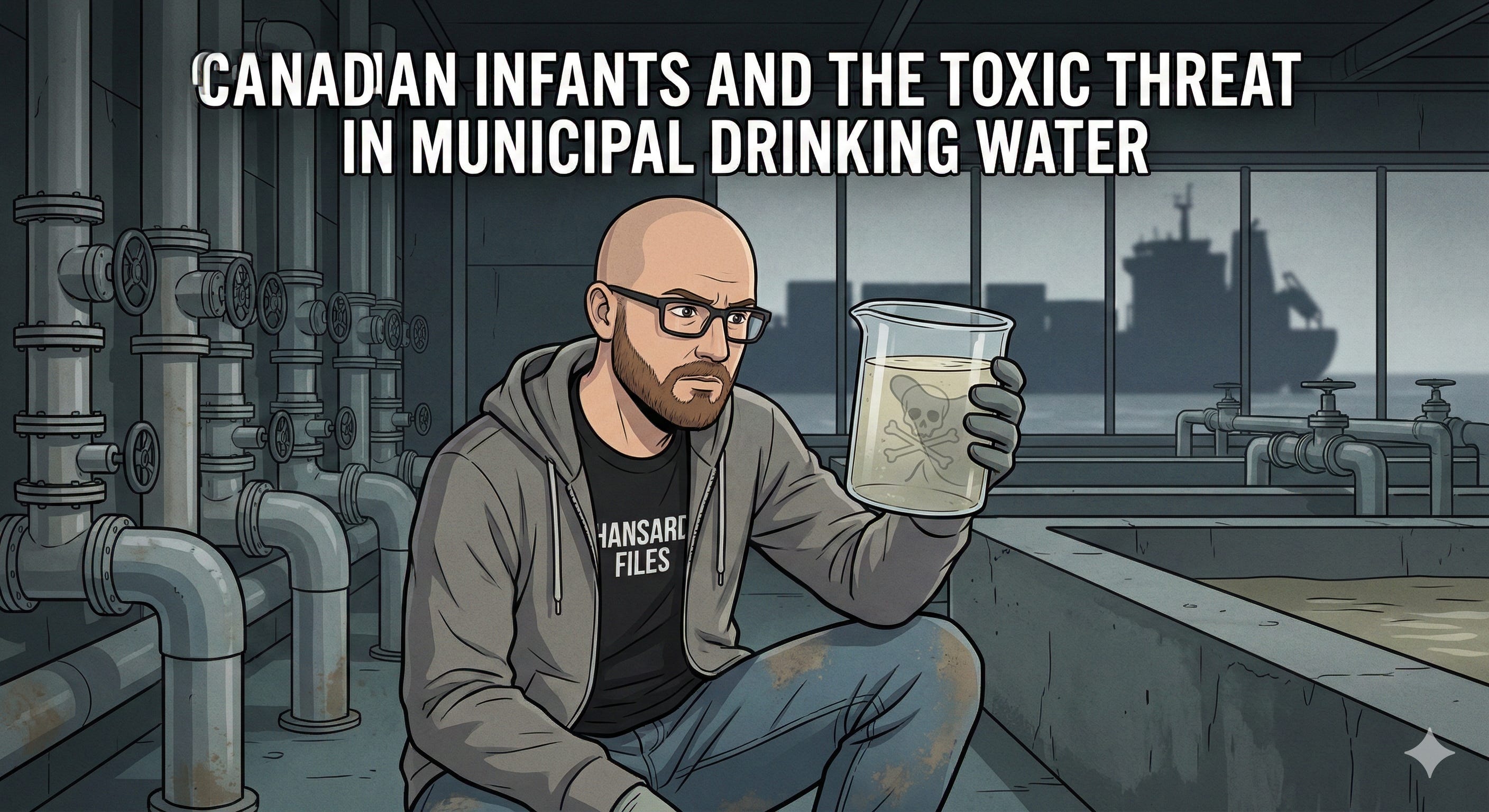
While the general population is not scrubbing industrial equipment, the assessment notes a critical pathway for exposure: surface water. As the chemical leaches into lakes and rivers, it enters the source water for municipal treatment plants. The draft assessment concludes that the general population may be exposed via drinking water consumption.
The human health assessment drilled down into the demographics of this exposure. It found that one group stands apart in its vulnerability. Infants. Due to their low body weight relative to their water intake, infants were found to be the subpopulation most highly exposed to MSP. While the margins of exposure are currently considered “adequate” to address uncertainties, the government is moving to list the substance on Schedule 1 to the Act. This is the first step toward strict regulation or prohibition. The science is clear: the chemical is inherently toxic to non-human organisms, it is persistent, and it is finding its way into the glass of water sitting on the dinner table.
The Asphalt Restrictions
While MSP faces a potential ban, another chemical battle is being fought with a scalpel rather than a sledgehammer. In the same legislative breath, the Minister of the Environment issued Ministerial Condition No. 22256 regarding a substance known as “tall-oil fatty amides.”
The ministers suspect this substance is toxic. Under normal circumstances, this might trigger a halt in commerce. However, the modern regulatory state is a game of risk management. The government has authorized the manufacture or import of this substance, but only under a regime of strict confinement.
The conditions laid out are a masterclass in bureaucratic containment. The notifier—the company bringing this substance into existence within Canada—is legally bound to a specific end-use. They may only import the substance to incorporate it into asphalt or bitumen emulsions. It is destined for the road, locked into the pavement.
The disposal protocols are draconian. If there is waste, if there is a spill, or if there is residue left in a shipping container, it cannot simply be discarded. It must be incinerated in accordance with local laws or buried in an “engineered hazardous waste landfill.” This is not a standard dump. It is a facility designed to confine hazardous materials for the duration of their “effective contaminating lifespan.”
The government is essentially allowing a potential toxin to enter the economy provided it is buried in our roads or burned in our furnaces. It is a calculated wager that the economic utility of the asphalt outweighs the environmental risk, provided the paperwork is impeccable. And the paperwork must be impeccable: records of every transfer, every kilogram, and every address must be kept for five years, ready for inspection at a moment’s notice.
The War on Dumping
If the environmental files read like a scientific thriller, the trade notices read like a war room briefing. Canada is currently entrenched in a multi-front economic conflict, primarily involving steel and manufacturing inputs from Asia and Europe. The Canada Gazette reveals a flurry of activity from the Canada Border Services Agency (CBSA) and the Canadian International Trade Tribunal (CITT), the twin pillars of Canada’s trade defense.
The antagonist in nearly every file is the same: China.
On January 7, 2026, the CBSA made final determinations of dumping regarding cast iron soil pipe originating from China. This is the plumbing infrastructure of the nation, the heavy pipes that carry waste out of buildings. The finding confirms that these goods were being sold into Canada at prices lower than their fair market value, undercutting domestic producers. Provisional duties will continue to be collected, a tariff wall erected to protect Canadian foundries.
Simultaneously, the Tribunal found injury regarding carbon or alloy steel wire. This investigation covered a coalition of nations—China, Chinese Taipei, India, Italy, Malaysia, Portugal, Spain, Thailand, Türkiye, and Vietnam. The Tribunal’s findings were nuanced. They determined that the dumping of “Industrial Wire,” used in manufacturing and commercial distribution, has caused injury to Canadian industry. However, “Retail Wire”—the small packages of wire sold to consumers for household use—was deemed harmless.
This distinction highlights the precise nature of modern trade warfare. It is not a blanket embargo. It is a surgical strike. The government protects the industrial base—the factories that make wire products—while leaving the consumer aisle at the local hardware store untouched.
The trade war extends to the bureaucratic engine of commerce itself. Thermal paper rolls, the ubiquitous receipts dispensed by cash registers and card terminals, are also under fire. The Tribunal found that dumped and subsidized thermal paper from China has caused injury to the domestic industry. Even the paper on which we print our transactions is a contested commodity.
Appeals and Zeroing
The friction generated by these tariffs is visible in the docket of appeals. The CITT is preparing to hear cases that strike at the heart of how Canada calculates fair trade. One upcoming case, Imco International Steel Trading Inc. v. President of the Canada Border Services Agency, involves the controversial practice of “zeroing.”
Zeroing is a calculation method used by customs authorities to determine dumping margins. When calculating the average price of foreign goods, the authority treats any transaction where the export price is higher than the home market price as a zero, rather than a negative dumping margin. This mathematical trick prevents high-priced sales from canceling out low-priced dumped sales, effectively inflating the calculated dumping margin and the resulting duties.
It is a technicality worth millions. Imco International is fighting back, challenging whether this practice is permissible under the Special Import Measures Act. The hearing, scheduled for March 2026, will determine the ferocity with which Canada can police steel imports.
Another appeal involves the retail giant Walmart Canada Corp. They are locked in a dispute over the classification of a “spin mop and bucket system.” The CBSA classifies it as “other mops,” carrying a specific tariff rate. Walmart argues it is a machine—”other machines and mechanical appliances having individual functions.” It is a debate over the definition of technology itself. Is a spinning bucket a tool, or is it a machine? The difference is likely measured in six or seven figures of duty payments.
The Digital Migration of the Hunt
Amidst the toxicity assessments and trade disputes, the Department of the Environment is quietly modernizing one of Canada’s oldest regulated activities: the hunt.
A Notice of Intent signals a shift in the Migratory Birds Regulations. The government is proposing amendments for the 2026-2027 and 2027-2028 hunting seasons. The changes involve the usual biological adjustments—bag limits, season dates, and possession limits designed to keep bird populations sustainable.
But the most significant change is administrative. Starting in 2027, the government proposes to discontinue the production of paper migratory game bird hunting permits. The physical permit, a staple of the Canadian hunter’s wallet for decades, is vanishing. The “Migratory Birds Hunting Regulations Summaries,” the folded maps and charts handed out at sporting goods stores, are also slated for extinction.
The hunt is going digital. This move reflects a broader trend across the federal apparatus. Whether it is the electronic record-keeping required for toxic asphalt additives or the online reporting systems for chemical notifications, the state is becoming data-driven. The physical artifacts of regulation are disappearing, replaced by database entries and PDF receipts.
The Amalgamation of Trust
In the financial sector, the Gazette records the merging of capital. Fiduciary Trust Company of Canada and a numbered company, 17440961 Canada Inc., have applied for letters patent of amalgamation. They intend to fuse into a single entity, retaining the Fiduciary Trust name.
This corporate maneuvering happens in the background, a reminder that while the government regulates the environment and the border, it also acts as the gatekeeper for corporate existence. These entities exist only because the Minister of Finance allows them to. The amalgamation is conditional, dependent on regulatory approvals and the “discretion” of the Minister. In the Canadian system, even the movement of capital bows to the prerogative of the Crown.
Conclusion
The January 17, 2026, issue of the Canada Gazette is a snapshot of a nation in defensive posture. The government is fortifying the borders against unfair trade practices that threaten domestic steel and manufacturing. It is fortifying the ecosystem against chemicals that threaten the biological integrity of Canadian waters and the health of Canadian infants.
The inclusion of phenol methylstyrenated on the toxic list is a recognition that the industrial age has left a residue that can no longer be ignored. The strict controls on asphalt additives show a government willing to compromise, allowing hazardous materials to exist only if they are entombed in infrastructure.
From the molecular level to the macroeconomic level, the state is tightening its grip. The days of unseen chemicals and unregulated imports are closing. The water is being tested. The steel is being weighed. And the paper permits are burning, replaced by the cool, unblinking eye of the digital state.
Source Documents
Canada Border Services Agency. (2026, January 17). Cast iron soil pipe - Decision. Canada Gazette, Part I, Vol. 160, No. 3.
Canada Border Services Agency. (2026, January 17). Certain thermoformed molded fiber tableware - Decision. Canada Gazette, Part I, Vol. 160, No. 3.
Canada Revenue Agency. (2026, January 17). Revocation of registration of a charity. Canada Gazette, Part I, Vol. 160, No. 3.
Canadian International Trade Tribunal. (2026, January 17). Notice No. HA-2025-013 (Appeals). Canada Gazette, Part I, Vol. 160, No. 3.
Canadian International Trade Tribunal. (2026, January 17). Inquiry NQ-2025-003 - Notice of Findings. Canada Gazette, Part I, Vol. 160, No. 3.
Department of the Environment. (2026, January 17). Ministerial Condition No. 22256. Canada Gazette, Part I, Vol. 160, No. 3.
Department of the Environment. (2026, January 17). Notice of intent: Migratory Birds Convention Act, 1994. Canada Gazette, Part I, Vol. 160, No. 3.
Department of the Environment & Department of Health. (2026, January 17). Publication of summary of the updated draft assessment of phenol, methylstyrenated (MSP). Canada Gazette, Part I, Vol. 160, No. 3.
Fiduciary Trust Company of Canada. (2026, January 17). Letters Patent of Amalgamation. Canada Gazette, Part I, Vol. 160, No. 3.
Innovation, Science and Economic Development Canada. (2026, January 17). Notice No. SMSE-016-25. Canada Gazette, Part I, Vol. 160, No. 3.