


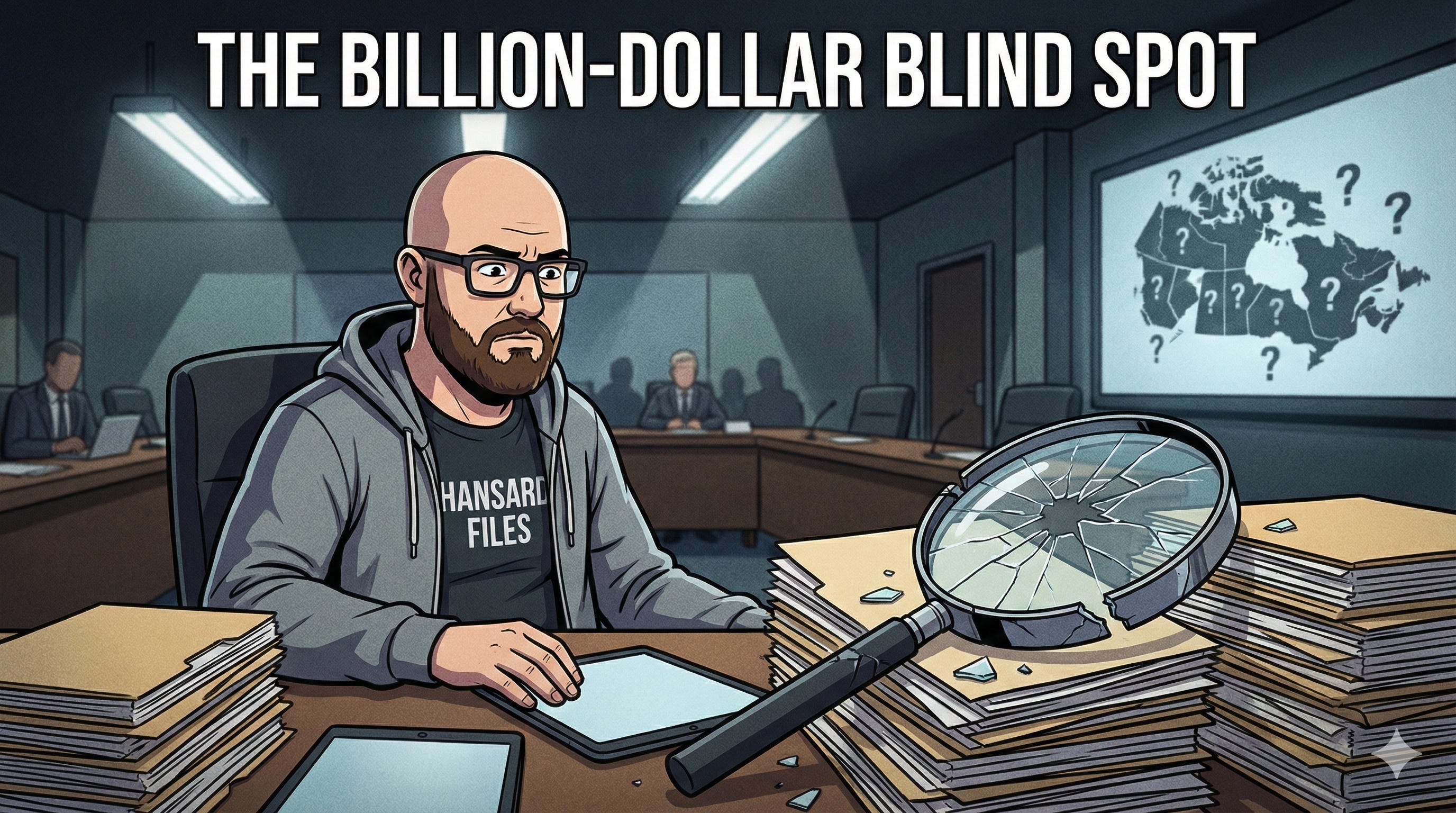
The warning did not come from a classified intelligence briefing or a leaked spy cable. It came from a lawyer in a fluorescent-lit committee room, speaking into a microphone about a video that should have stopped a family at the border.
David Thomas, a former chairperson of the Canadian Human Rights Tribunal, sat before the Standing Committee on Citizenship and Immigration and described a failure so total it seemed almost bureaucratic in its banality. He spoke of the Eldidi family. A father and son admitted to Canada, granted permanent residence, and fast-tracked toward citizenship. Only to be arrested for allegedly planning a mass terrorist attack in Toronto.
The detail that silenced the room was not the arrest itself, but what preceded it. Thomas testified that the father had been filmed in an ISIS video in 2015, allegedly taking part in a gruesome act of violence involving a beheading. The Canadian screening system had missed it. It took American authorities to alert Canada to the monster in its midst.
This testimony is not an outlier. It is the opening scene of a horror story told across eighteen parliamentary committees in late 2025. Whether the threat is a terrorist hiding in plain sight, a foreign agent intimidating citizens in their driveways, counterfeit medical gear flooding national stockpiles, or the existential risk of artificial intelligence, the message from witnesses is consistent. National security has become a sieve. The filter is broken. And the government’s ability to distinguish between a friend, a foe, and a fraud has collapsed.
The Terrorist in the Queue
While officials often speak of “robust vetting,” the reality on the ground is a market where entry to Canada is bought and sold. David Thomas described a system that has replaced rigorous scrutiny with naive optimism. He detailed the “Bharowal case,” a discipline decision involving young men from India paying forty thousand dollars for a Labour Market Impact Assessment—a document meant to prove a labor shortage—to work as truck drivers for an employer who owned no trucks.
They paid a fortune to work in slave-like conditions for ten dollars an hour, not for the job, but for the golden ticket of permanent residence. The fraud creates a massive security hole. Thomas warned that police checks from certain countries are “not worth the paper they’re written on,” citing the Indian foreign minister’s own warning that Canada was admitting serious criminals. Yet, the system churns on, paralyzed by a culture that views security checks as a potential human rights liability rather than a national necessity.
The Spy in the Driveway
If the border is porous, the interior is compromised. The Procedure and House Affairs committee heard from Joe Tay, a witness who experienced the visceral reality of foreign interference. It was not a subtle cyberattack; it was a strange car parked outside his driveway in a quiet Canadian suburb.
Tay recounted coming home to find the vehicle waiting. His wife, sensing danger, suggested they circle the block. The car remained—a physical manifestation of a foreign power reaching into a neighborhood to silence dissent. Volunteers were harassed. People were afraid to speak.
While citizens face intimidation, the government’s response remains trapped in procedural amber. Sébastien Aubertin-Giguère, a high-ranking official from Public Safety Canada, told the committee that the long-promised Foreign Influence Transparency Registry was “very close to the finish line.” But “very close” offers no protection against a foreign state looking over your shoulder. Six months after the legislation received royal assent, there is no commissioner, no office, and no registry. The government is still “consulting” while the cars are still parking.
The Trojan Horse Imports
The blindness extends beyond people to the very goods piling up in Canadian warehouses. In a stunning revelation to the Health committee, Scot Magnish, representing a domestic manufacturer, testified that the National Emergency Strategic Stockpile holds over one hundred million dollars’ worth of isolation gowns that were likely made with falsified lab reports.
These gowns, purchased during the pandemic panic, sit in warehouses as a monument to a failed procurement system. Magnish testified that many were likely manufactured in the Uyghur region of China—a zone notorious for forced labor—by companies that provided fake safety data. Some gowns were highly flammable; others failed fluid penetration tests.
At the International Trade committee, officials from the Canada Border Services Agency (CBSA) admitted they could not confirm if goods from specific companies flagged by U.S. authorities for forced labor were on Canadian shelves. While American customs agents issue “Withhold Release Orders” to stop slave-made goods at the dock, Canada operates on a “balance of probabilities,” a legal standard that melts away when faced with the complex deception of global supply chains.
The Enemy Within the Ranks
Perhaps most disturbing is the testimony from those who swore to protect the nation. The National Defence committee heard from Elvira Jaszberenyi, a retired corporal who described a military justice system that protects the institution at the cost of the soldier.
Jaszberenyi testified that she was raped on base by a predator who was known to the National Investigation Service. Instead of justice, she faced a “botched” investigation and a chain of command more interested in covering up the crime than punishing the perpetrator. She described being ordered to return to the location of her assault, her medical files tampered with, and her career derailed.
“The government’s obligation is to protect citizens from harm,” she told the committee. Yet, her assailant remained employed, even placed on courses while under investigation. Her testimony paints a picture of a defense apparatus that is rotting from the inside, unable to protect its own members, let alone the country.
The Existential Horizon
While these immediate threats play out, a larger shadow looms. The Ethics committee heard from Connor Leahy, an AI safety expert who warned of an “extinction risk” from superintelligent artificial intelligence. He compared the current race to build god-like AI to the discovery of the ozone hole—an urgent global threat requiring immediate action.
Leahy warned that companies are racing to build systems they do not understand and cannot control, systems that could eventually overpower national security apparatuses. He called for a halt to the development of superintelligence on Canadian soil. His testimony adds a terrifying coda to the other failures: if the state cannot stop a terrorist with a video trail or a crate of fake gowns, how can it hope to regulate a superintelligent mind?
The Paralysis of Process
Across eighteen committees, a singular theme emerges: paralysis. In the Natural Resources committee, lumber remanufacturers described their industry being destroyed by U.S. duties as a “drive-by shooting,” pleading for a deal before they are decimated. In the Status of Women committee, experts warned of the “Andrew Tate effect” radicalizing boys in schools, while the government studies the issue. In the Agriculture committee, ministers spoke of “recalibrating” trade with China, while producers struggle for markets.
Canada’s “open door” was once a symbol of strength. But the testimony of late 2025 reveals a house where the doors have been ripped off the hinges. The filters (immigration screening, counter-intelligence, border enforcement, procurement validation) have clogged and failed. The world has become a more dangerous place, filled with migrating terrorists, aggressive foreign powers, tainted supply chains, and evolving technological threats. Canada, meanwhile, is still filling out the paperwork.
Source Documents
Canada. Parliament. House of Commons. Standing Committee on Citizenship and Immigration. (2025, December 2). Evidence (No. 16).
Canada. Parliament. House of Commons. Standing Committee on Natural Resources. (2025, November 27). Evidence (No. 16).
Canada. Parliament. House of Commons. Standing Committee on Official Languages. (2025, December 4). Evidence (No. 15).
Canada. Parliament. House of Commons. Standing Committee on the Status of Women. (2025, December 1). Evidence (No. 17).
Canada. Parliament. House of Commons. Standing Committee on Government Operations and Estimates. (2025, December 4). Evidence (No. 20).
Canada. Parliament. House of Commons. Standing Committee on Industry and Technology. (2025, December 10). Evidence (No. 20).
Canada. Parliament. House of Commons. Standing Committee on Human Resources, Skills and Social Development and the Status of Persons with Disabilities. (2025, December 9). Evidence (No. 20).
Canada. Parliament. House of Commons. Standing Committee on Public Accounts. (2025, December 2). Evidence (No. 18).
Canada. Parliament. House of Commons. Standing Committee on Public Safety and National Security. (2025, December 9). Evidence (No. 19).
Canada. Parliament. House of Commons. Subcommittee on International Human Rights of the Standing Committee on Foreign Affairs and International Development. (2025, December 8). Evidence (No. 8).
Canada. Parliament. House of Commons. Standing Committee on Procedure and House Affairs. (2025, December 2). Evidence (No. 16).
Canada. Parliament. House of Commons. Standing Committee on National Defence. (2025, November 20). Evidence (No. 14).
Canada. Parliament. House of Commons. Standing Committee on Health. (2025, December 2). Evidence (No. 15).
Canada. Parliament. House of Commons. Standing Committee on Fisheries and Oceans. (2025, December 4). Evidence (No. 17).
Canada. Parliament. House of Commons. Standing Committee on Access to Information, Privacy and Ethics. (2025, December 1). Official Report (Hansard) (No. 20).
Canada. Parliament. House of Commons. Standing Committee on International Trade. (2025, November 27). Evidence (No. 16).
Canada. Parliament. House of Commons. Standing Committee on Agriculture and Agri-Food. (2025, December 8). Evidence (No. 19).
Canada. Parliament. House of Commons. Standing Committee on Justice and Human Rights. (2025, November 6). Evidence (No. 12).
It's getting harder to argue against the notion that "Canada is completely broken".
The "Andrew Tate effect" pales in comparison to the impact of radical feminism, queer & critical race ideologies. Young men are being destroyed and the DEI crowd are dancing on the graves.