


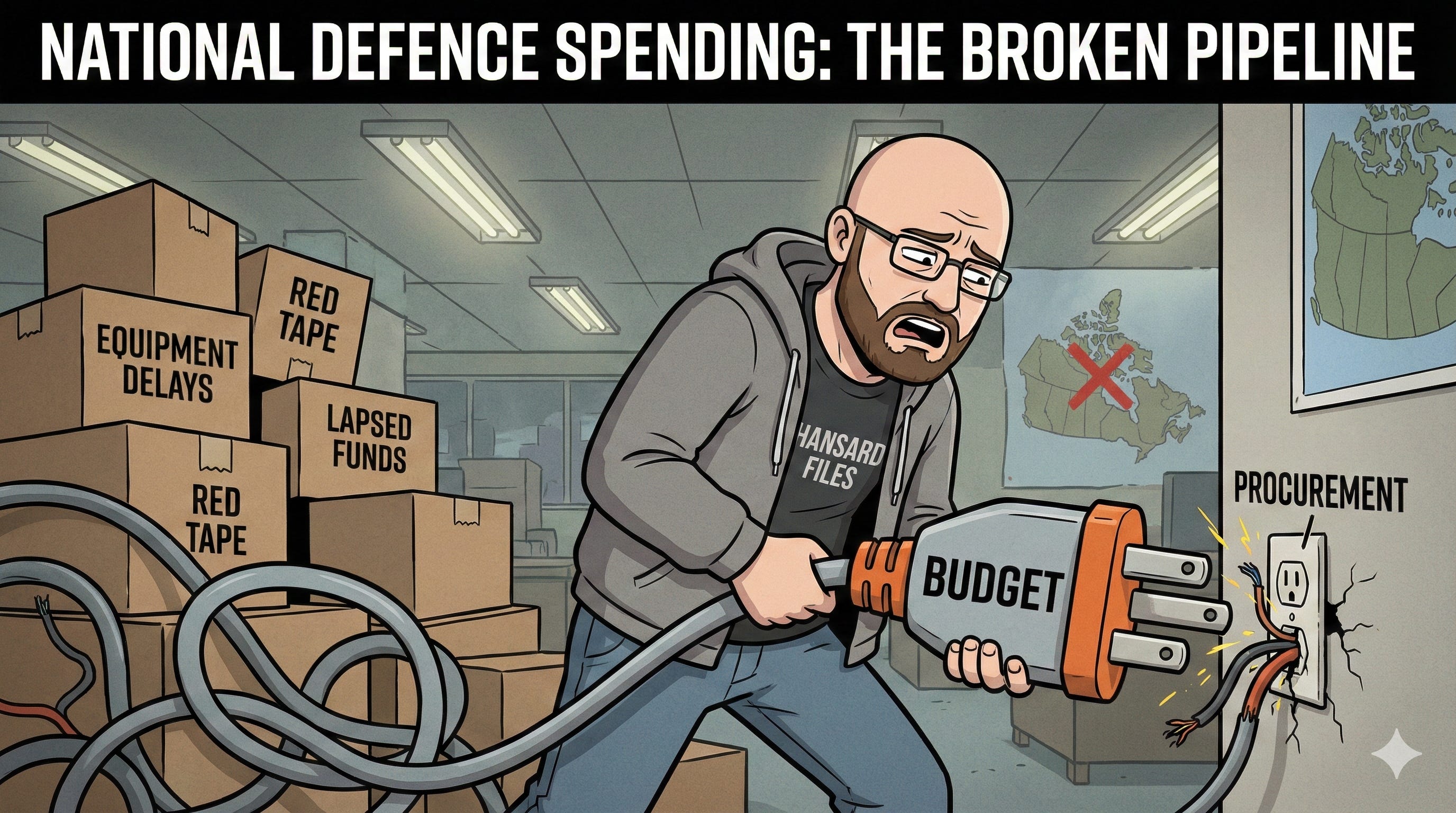
The fluorescent lights of the West Block committee rooms hum with the dry recitation of budget line items, but the atmosphere in early 2026 has shifted toward something far more urgent. At the heart of the tension is the staggering scale of National Defence spending, a figure that has become a lightning rod for critics questioning why billions of dollars in authorized funding are failing to reach the front lines of the Canadian Armed Forces. As global instability rises, the gap between the money promised on paper and the equipment delivered to the field has widened into a chasm that threatens the very foundation of national sovereignty.
The Invisible Attrition of National Defence Spending
The crisis is not merely a matter of missing hardware. It is a crisis of personnel. During recent sessions of the Standing Committee on National Defence (NDDN), witnesses painted a bleak picture of a military that is losing members faster than it can recruit them. This human element is inextricably linked to the financial mismanagement of the department. When National Defence spending is delayed, it is not just a tank or a jet that goes missing. It is the housing for a young family in Esquimalt. It is the modern cold weather gear for a soldier in the Arctic. It is the functional childcare that allows a parent to deploy.
The testimony provided in NDDN Meeting 22 highlights a disturbing trend. The recapitalization of the forces is being choked by a procurement process that takes, on average, fifteen years from the identification of a need to the delivery of a product. In the private sector, fifteen years is several lifetimes of technological evolution. In the context of Canadian National Defence spending, it means that by the time a piece of equipment reaches a soldier, it is often already nearing the end of its relevant life cycle. This innovation gap is costing the taxpayer billions in maintenance fees for legacy systems that should have been retired a decade ago.
The $1 Billion Lapsed Budget and the Procurement Trap
One of the most contentious points of the recent parliamentary cycle has been the revelation of the lapsed billions. In fiscal reports scrutinized by the Standing Committee on Public Accounts (PACP), it became clear that a significant portion of the National Defence spending authorized by Parliament never actually left the vault. Skeptics argue that this is a deliberate backdoor austerity measure. By creating a procurement process so bogged down in red tape and Value Propositions, the government ensures that the department cannot physically spend the money it has been allocated.
This creates a political win-win for the incumbent administration: they can claim they have increased the budget to record levels to satisfy NATO allies, while simultaneously keeping the actual cash in the treasury to balance other social spending priorities. However, the cost of this maneuver is borne by the men and women in uniform. In NDDN Meeting 21 and NDDN Meeting 23, the committee heard how the lack of predictable, flow-through funding has decimated the domestic defense industry. Canadian companies, unable to wait out the decade-long Valley of Death between a request for proposal and a signed contract, are either folding or moving their operations to the United States.
Continental Defence and the NORAD Modernization Gap
The stakes of National Defence spending are perhaps highest in the North. As the ice melts and the Arctic becomes a corridor for global trade and potential conflict, Canada’s ability to monitor its own backyard is being called into question. The modernization of NORAD is a multi-billion dollar commitment that spans decades, yet the progress on over-the-horizon radar and northern infrastructure remains sluggish.
During the proceedings of the Standing Committee on Foreign Affairs and International Development (FAAE), experts testified that Canada’s allies are becoming increasingly vocal about the lack of boots on the ground and eyes in the sky in the high North. The FAAE Meeting 18 and FAAE Meeting 19 evidence suggests that the delay in National Defence spending on Arctic capabilities is not just a domestic issue but a diplomatic liability. If Canada cannot provide for its own defense within the NORAD framework, it risks ceding its sovereignty to the United States, which will inevitably step in to fill the security vacuum. This is not a theoretical threat. It is a logistical reality currently playing out as aging North Warning System sites reach their breaking points.
Infrastructure Decay and the Quality of Life Crisis
While high-tech jets and frigates dominate the headlines, the most pervasive failure in National Defence spending is found in the mundane. The crumbling state of military bases across the country is a direct result of decades of deferred maintenance. In the Standing Committee on Government Operations and Estimates (OGGO), the discussion turned to the immovables (the buildings and land owned by the department). The OGGO Meeting 23 evidence reveals that D and F ratings for infrastructure are becoming the norm rather than the exception.
Soldiers are living in barracks with mold, training in facilities with failing HVAC systems, and working in offices that do not meet modern safety standards. This decay acts as a powerful anti-recruitment tool. When the department fails to spend its allocated infrastructure budget, it sends a clear message to the rank and file that their daily working conditions are a secondary priority. The link between National Defence spending and retention is undeniable. The military is currently facing a culture of exit, where the most talented officers and non-commissioned members are taking their skills to the private sector, citing the frustration of working within a broken system as a primary motivator.
This systemic decay extends to the support systems for those who have already served. The Standing Committee on Veterans Affairs (ACVA Meeting 19) has seen an influx of testimony regarding the backlog in disability claims and the lack of transition support. The fiscal failures at the front end of a soldier’s career are being mirrored at the back end, creating a lifecycle of bureaucratic negligence.
The Ethical Oversight of Military Contracts
The shadow of the ArriveCan scandal has loomed large over all government procurement, but the Standing Committee on Access to Information, Privacy and Ethics (ETHI) has recently turned its gaze toward National Defence spending. The concern is the over-reliance on external consultants. In ETHI Meeting 24, members questioned why the department is spending hundreds of millions of dollars on management consultants to streamline procurement while the procurement itself continues to slow down.
The concern is that the department has hollowed out its internal expertise. By outsourcing the management of National Defence spending to firms like McKinsey or Deloitte, the government has created a circular economy of bureaucracy. Consultants are hired to solve the problems created by previous consultants, while the actual military requirements are lost in a sea of slide decks and deliverables that never result in a piece of steel hitting the water. The lack of transparency in these contracts has led to calls for a full forensic audit of the Defence procurement pipeline, echoed in deliberations within the Standing Committee on Justice and Human Rights (JUST Meeting 15 and JUST Meeting 17).
Trade, Transport, and the Industrial Base
The tentacles of National Defence spending reach far beyond the battlefield, influencing Canada’s broader economic and industrial strategy. The Standing Committee on International Trade (CIIT Meeting 19 and CIIT Meeting 21) has been forced to grapple with how procurement delays affect our export potential. When Canada fails to adopt its own domestic technologies, those companies lose the essential “First Customer” stamp of approval needed to sell abroad.
Simultaneously, the Standing Committee on Transport, Infrastructure and Communities (TRAN Meeting 17, TRAN Meeting 18, and TRAN Meeting 19) has highlighted the dual-use nature of our national infrastructure. Deficiencies in rail, port, and airport capacity hinder the military’s ability to mobilize. Without targeted National Defence spending that integrates with civilian transport networks, the logistics of defending a country as geographically vast as Canada become nearly impossible during a crisis.
This lack of integration is also felt in the natural resources sector. The Standing Committee on Natural Resources (RNNR Meeting 20) has explored the critical minerals required for modern defense hardware. While Canada sits on a goldmine of these resources, the absence of a cohesive strategy linking National Defence spending with resource extraction means we are currently importing the very materials we export as raw ore, often after they have been processed by strategic competitors.
The Human Cost of Fiscal Mismanagement
The impact of these high-level failures eventually trickles down to the most vulnerable. The Standing Committee on Human Resources, Skills and Social Development and the Status of Persons with Disabilities (HUMA Meeting 13 and HUMA Meeting 22) has heard heart-wrenching stories of military families living in poverty. The housing crisis on bases, combined with the frequent moves required of service members, has left many families relying on food banks.
Furthermore, the Standing Committee on Public Safety and National Security (SECU Meeting 21 and SECU Meeting 22) has noted that the domestic security apparatus is also under strain. When the military is called upon to assist with natural disasters—a frequency that is increasing—it pulls resources away from their primary defense mission. The failure to properly fund a dedicated civil defense force through National Defence spending means the military is being used as a jack-of-all-trades, master of none, wearing out equipment and personnel alike.
The environmental implications are equally stark. In the Standing Committee on Environment and Sustainable Development (ENVI Meeting 23), the focus has been on the massive carbon footprint of the military and the slow pace of greening the fleet. Without dedicated National Defence spending on hybrid and alternative energy platforms, the military remains tethered to long, vulnerable fossil fuel supply lines that are both an environmental and a tactical liability.
The Future of National Defence Spending in a Multi-Polar World
As the committee meetings of 2026 draw to a close, the consensus is one of profound unease. From the Standing Committee on Agriculture and Agri-Food (AGRI Meeting 20) discussing food security as a component of national resilience, to the Standing Committee on Science and Research (SRSR Meeting 22) lamenting the brain drain in defense science, every corner of the government is feeling the friction of a stalled procurement machine.
The Standing Committee on Public Accounts (PACP Meeting 22 and PACP Meeting 23) and the Standing Committee on Finance (FINA Meeting 19) are expected to call for a radical simplification of the process. This would include multi-year funding guarantees that do not lapse and the elimination of redundant oversight layers that only serve to slow down decision-making. Even the Standing Committee on Fisheries and Oceans (FOPO Meeting 20) has emphasized the need for a capable Coast Guard and Navy to protect our maritime borders and economic zones.
The era of trying to Canadianize every bolt and screw on a fighter jet may finally be coming to an end, forced by the sheer weight of fiscal necessity. National Defence spending is not just about numbers in a ledger; it is a statement of national intent. It is the price of admission for a seat at the table of G7 nations. As the evidence from the various parliamentary committees shows, Canada is currently in arrears. These transcripts contain the blueprint for a national crisis that is already well underway. The question remains whether the political will exists to fix the pipes before the reservoir runs dry.
Hansard Files meticulously sifts through thousands of pages of parliamentary transcripts and government reports to find the stories the headlines miss. Our work is powered by readers who value independent investigation. Subscribe to support us.
Source Documents
House of Commons. (2026, n.d.). Evidence - ETHI (Meeting No. 24)
House of Commons. (2026, n.d.). Evidence - AGRI (Meeting No. 20)
House of Commons. (2026, n.d.). Evidence - ENVI (Meeting No. 23)
House of Commons. (2026, n.d.). Evidence - FINA (Meeting No. 19)
House of Commons. (2026, n.d.). Evidence - FOPO (Meeting No. 20)
House of Commons. (2026, n.d.). Evidence - FAAE (Meeting No. 19)
House of Commons. (2026, n.d.). Evidence - FAAE (Meeting No. 18)
House of Commons. (2026, n.d.). Evidence - OGGO (Meeting No. 23)
House of Commons. (2026, n.d.). Evidence - HUMA (Meeting No. 13)
House of Commons. (2026, n.d.). Evidence - HUMA (Meeting No. 22)
House of Commons. (2026, n.d.). Evidence - CIIT (Meeting No. 19)
House of Commons. (2026, n.d.). Evidence - CIIT (Meeting No. 21)
House of Commons. (2026, n.d.). Evidence - JUST (Meeting No. 15)
House of Commons. (2026, n.d.). Evidence - JUST (Meeting No. 17)
House of Commons. (2026, n.d.). Evidence - NDDN (Meeting No. 22)
House of Commons. (2026, n.d.). Evidence - NDDN (Meeting No. 21)
House of Commons. (2026, n.d.). Evidence - NDDN (Meeting No. 23)
House of Commons. (2026, n.d.). Evidence - RNNR (Meeting No. 20)
House of Commons. (2026, n.d.). Evidence - PACP (Meeting No. 23)
House of Commons. (2026, n.d.). Evidence - PACP (Meeting No. 22)
House of Commons. (2026, n.d.). Evidence - SECU (Meeting No. 21)
House of Commons. (2026, n.d.). Evidence - SECU (Meeting No. 22)
House of Commons. (2026, n.d.). Evidence - SRSR (Meeting No. 22)
House of Commons. (2026, n.d.). Evidence - TRAN (Meeting No. 17)
House of Commons. (2026, n.d.). Evidence - TRAN (Meeting No. 18)
House of Commons. (2026, n.d.). Evidence - TRAN (Meeting No. 19)
House of Commons. (2026, n.d.). Evidence - ACVA (Meeting No. 19)
A shameful list of multiple failures.
Decision makers reluctant to make a decision for fear of armchair QBs. Procurement slowed unnecessarily because every department, every Oversight Committee, wants to be heard. A general reluctance to assign to a specific group or individual responsibility for a solution to an identified need, the review of options and potential providers — including the expectation of input *but not interference* from other groups because responsibility has been clearly assigned —, a decision/selection, and implementation. These and many related process weaknesses are clear signs of malfunctioning organizations. They are found, it myst be said, in the corporate as well as governmental world, but as we increasingly acknowledge the need for efficiency and action — 15 year deployment timeframes are clearly intolerable, now more than ever — we need strong hands and indomitable individuals to root out this disfunction and create responsive, effective, management.
I’m confident the Forces have the smart, educated, experienced individuals required to effect this transformation. They need only clear guidance and goals, and the backing to proceed. The transformation will draw considerable fire, toes will be stepped upon and fiefdoms disrupted, so those charged with this enormous change must know that the government — Parliament and its multitudinous committees — has their back.
Fiscal mismanagement when their only job is fiscal management. This is the direct result of the disinclination or perhaps inability to hold bureaucrats accountable.
For the past two decades at least, the federal government has staggered from crisis to crisis. How is it that using pens & paper, the federal government managed payments, salaries, pension, everything, through two world wars and now with massive amounts of technology and bloated bureaucracy, they can't set up a fucking payroll system (Phoenix).
Big tech and defense contractors laugh at inept bureaucrats signing contracts without defining needs, identifying benchmarks & goals, you name it. That runs top to bottom, not just DND.
Things were marginally better during the Harper years but not by much. I wasn't in a position to know before that but I expect the shit-show has been this bad since Pearson was PM.