

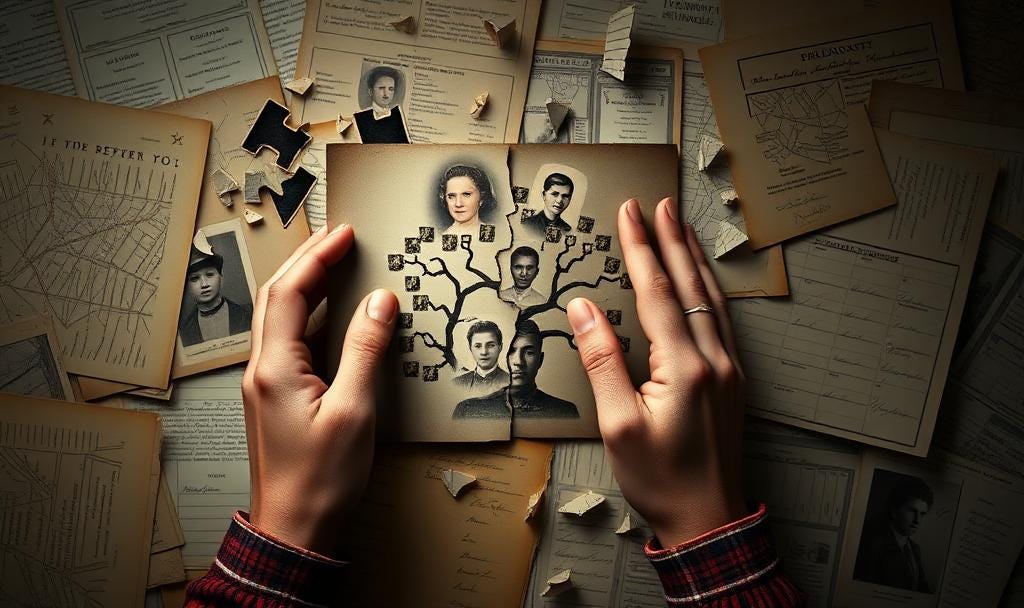
Imagine the government telling you that if you marry the person you love, you will legally cease to be who you are. Your connection to your community, your culture, and your heritage will be officially severed. Now, imagine this wasn't a choice you made, but one your husband made for you, and it applied not only to you but to all your children.
This wasn't a hypothetical scenario. For more than a century, this was the reality for thousands of First Nations women under Canada's Indian Act.
For most of us, the history of government-Indigenous relations is understood through broad, often impersonal strokes like "residential schools" or "broken treaties." But buried in the legal text of the Indian Act is a story of profound and personal discrimination, aimed with surgical precision at women. It was a policy that, as one Senate report recently put it, "worked effectively to damage the women and the nations".
This article isn't about dry legal clauses. It's about the human cost of a law that turned identity into a weapon. It’s about the generations of women who fought back, and what we, today, must do to finally make it right.
The Choice No One Should Have to Make
Before 1985, the Indian Act was ruthlessly clear: it privileged patrilineal descent. A First Nations man could marry a non-Indigenous woman and not only keep his "Indian Status," but automatically pass it on to his new wife and their children.
For a First Nations woman, the rules were the opposite. If she married a non-status man, she was automatically and involuntarily stripped of her own status.
This process was called enfranchisement. It sounds positive, but it was a policy of assimilation designed to legally sever a person's ties to their community. There was also a so-called "voluntary" enfranchisement. Between 1876 and 1985, a First Nations man could apply to give up his status, perhaps to gain the right to vote or to protect his children from being forced into a residential school. But the choice was his alone. If he applied, his wife and any minor, unmarried children automatically lost their status, too. It was not a choice they had any say in.
The effect was devastating. As witnesses told the Standing Senate Committee on Aboriginal Peoples, women were expelled from their homes, languages, and cultures. Families were torn apart. As Sharon Mclvor, who has fought this injustice for decades, stated:
"The Indian Act has defined thousands of Indigenous women and their descendants as non-Indians and forced them into the non-Indigenous population."
This wasn't just a loss of a card or a number on a list. It was the loss of belonging, identity, and a voice in the future of their own communities.
A Call for Repair
After decades of legal battles fought by First Nations women, the government has been forced by the courts to amend the Indian Act multiple times. But these changes have been described as "piecemeal", fixing one problem while often creating others. The discrimination, though less overt, continues.
Because of this generational harm, witnesses before the Senate committee have made it clear that simply changing the law is not enough. They are calling for reparations.
This is a call for the government to finally acknowledge and pay for the damage done. It includes:
Compensation: For the tangible losses of rights, benefits, and access to services that came with having one's status stripped away.
A Formal Apology: For the "many generations of discrimination" against Indigenous women and their children.
Commemoration: To create memorials and other initiatives to honor the women who have spent their lifetimes fighting this injustice.
Healing: Investments in healing for women and their families who will continue to experience hardships even after their status is reinstated.
The Hidden Clause Blocking Justice
You might think that if the government caused harm, people could sue for damages. But Canada was one step ahead.
In the amendments made to the Indian Act in 1985, 2010, and 2017, the government included non-liability clauses. These sections explicitly prevent First Nations women and their descendants from making any claim against the Crown or band councils for the harms they suffered due to the discriminatory registration rules.
Essentially, the government admitted the law was discriminatory and fixed parts of it, but simultaneously made itself immune from being held responsible for the consequences. Witnesses have argued these clauses are themselves a form of sex-based discrimination.
The Honourable Lillian Eva Dyck, a former senator, put the issue bluntly:
"Why can't we afford to compensate descendants of Indigenous women who lost their status? It's a matter of what your priorities are. Indigenous women typically have not been high on the level of priority."
To achieve true justice, the Senate committee recommends that these non-liability clauses be fully repealed.
A New Perspective
The fight to end discrimination in the Indian Act is not over. It is an ongoing injustice that continues to affect families today. The story of enfranchisement reveals a hard truth: these policies were not abstract lines in a law book. They were tools used to systematically break apart First Nations families and communities, targeting women as the primary vehicle for this assimilation.
Fixing the law is only the first step. The second, and arguably more important step, is healing the wound. That can only begin when we acknowledge the harm done, take responsibility for it, and provide meaningful reparations to those who have carried its weight for 150 years. It is long past time to listen to their call and, finally, make it stop.