


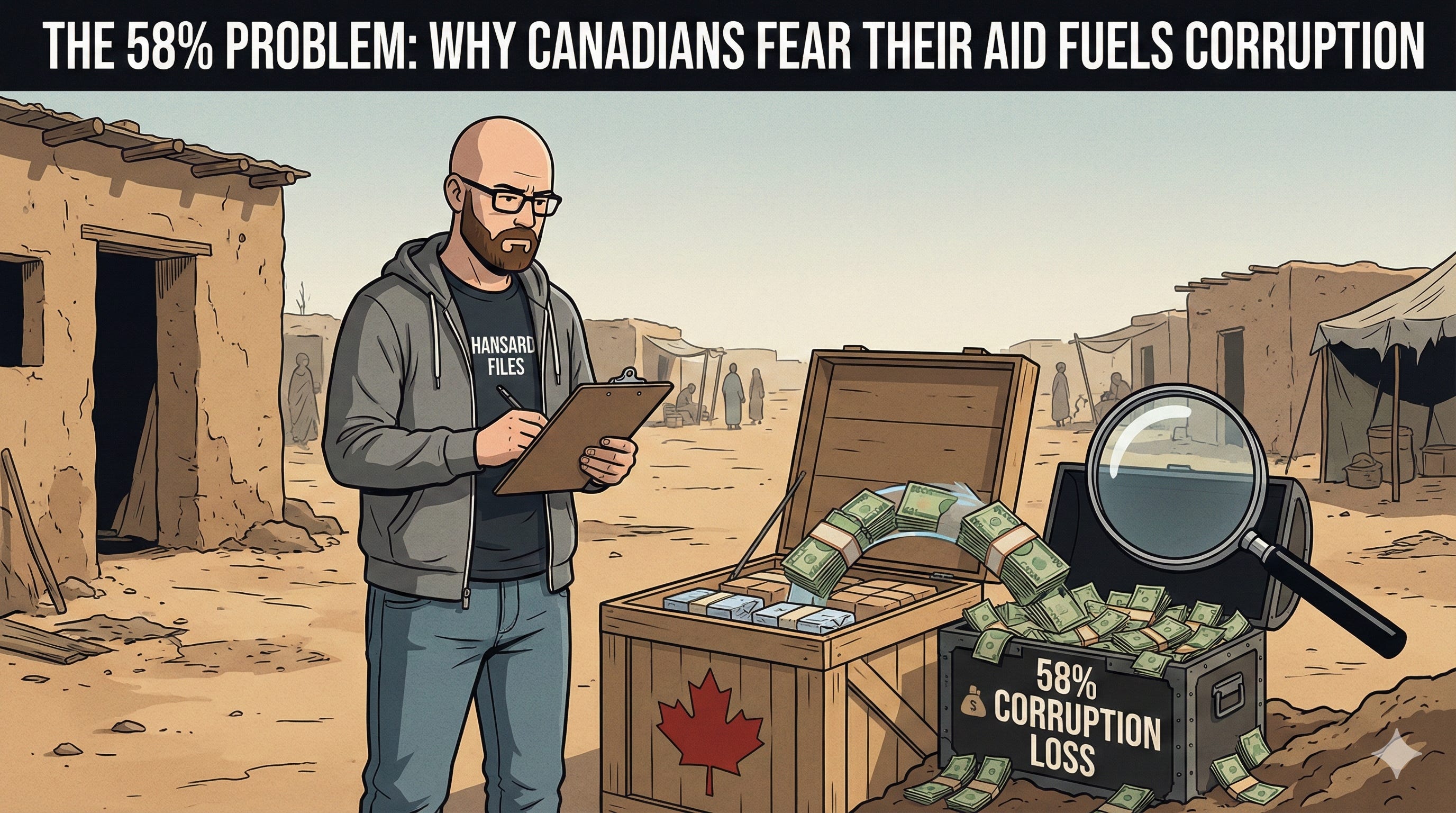
In the sprawling refugee camps and drought-stricken villages of the developing world, the promise of Canadian generosity meets a harsh reality. For millions, international aid is a lifeline, but back home, a quiet crisis of confidence is eroding the foundation of that support. While the maple leaf is often associated with peacekeeping and global benevolence, a deep dive into public opinion reveals a citizenry torn between a profound sense of moral obligation and a paralyzing suspicion of how their tax dollars are actually spent.
This is the story of a nation that desperately wants to help but is terrified that its charity is being hijacked. It is a narrative of conflicting impulses where the desire to be a good global neighbor collides with a cynical belief that the system is rigged. The numbers paint a picture of a population that sees the suffering of the world and feels the weight of it, yet recoils at the machinery of government spending designed to alleviate it.
The Burden of Global Citizenship
The Canadian identity has long been intertwined with the concept of the global citizen. This is not merely a political talking point but a deeply held view in living rooms across the country. When asked about their place in the world, the vast majority of citizens reject isolationism. They do not see the borders of their country as the limits of their responsibility.
Three-quarters of the population feel a distinct duty to ensure that their actions do not harm those living in other nations. This sense of interconnectedness is not abstract. More than half of the country believes that events unfolding thousands of kilometers away eventually ripple back to impact their own lives. It is a recognition that in a modern world, there is no such thing as a distant problem. Whether it is a virus, a financial crash, or a climate catastrophe, the walls have come down.
This worldview drives a powerful impulse to intervene. Almost nine out of ten people agree that helping those in need is simply the right thing to do. It is a moral imperative that transcends politics. When faced with the stark reality of global poverty, half of the population admits they would feel a profound sense of guilt if they were to ignore the needs of the poor in developing nations. They see a world that should be treated equally, where a child born in a conflict zone deserves the same chance at survival as a child born in a quiet Canadian suburb.
This compassion is the engine of international aid. It is the force that allows the government to allocate billions of dollars to foreign assistance programs. The public support for the idea of aid is robust. Over half of the citizenry believes the government should be providing this assistance, and a plurality even believes the current spending levels should be increased. They want Canada to be a force for good. They want to see schools built, wells dug, and diseases eradicated.
The Shadow of Corruption
However, this altruistic vision crashes into a wall of skepticism the moment the conversation turns to the mechanics of delivery. The same people who feel a moral duty to give are deeply suspicious of where that money actually goes. There is a pervading belief that the pipeline of aid is leaking, and leaking badly.
The statistics are jarring. More than half of the population believes that a significant portion of Canadian aid ends up lining the pockets of corrupt politicians in the developing world. This is not a minority view or a fringe conspiracy theory. It is the dominant narrative. Fifty-eight percent of people look at foreign aid and see graft, bribery, and theft. They imagine their tax dollars purchasing luxury cars for warlords rather than textbooks for children.
This cynicism extends beyond just the fear of corruption. There is a broader belief that the logistical chain is broken. Fifty-six percent of citizens believe that most aid simply never reaches its intended recipients. They see a system that absorbs resources at the top but fails to deliver results at the bottom. This perception is a poison in the well of public support. It transforms an act of charity into a source of frustration.
The skepticism is most pronounced in specific regions. In the Prairie provinces, particularly Alberta, the belief that aid is diverted by corruption climbs even higher. Here, the skepticism is not just about efficiency but about the fundamental wisdom of the expenditure. Men are also more likely than women to hold these cynical views, seeing the entire enterprise of foreign assistance as a leaky bucket that can never be filled.
This disconnect creates a paradox. Canadians are willing to pay. They want to help. Yet they are convinced that the vehicle for that help is fundamentally flawed. They are trapped between their conscience and their common sense, compelled to give by their values but restrained by their doubts.
The Crisis of Effectiveness
The skepticism regarding corruption feeds into a broader crisis of confidence in the government’s competence. When citizens look at the federal government’s track record on international aid, they do not see success. They see a bureaucratic machine that consumes vast resources with little to show for it.
Only one in four people believes that government spending on aid is actually effective. Conversely, nearly half of the population views it as ineffective. This is a damning indictment of the state’s ability to communicate its successes or, perhaps, a reflection of a reality that the public has intuited.
The lack of faith is specific to the government. When asked who can actually make a difference in reducing global poverty, Canadians turn their eyes elsewhere. They place more faith in businesses and corporations than they do in their own federal representatives. They trust the United Nations and international organizations more than they trust Ottawa. Even development charities and NGOs rank higher in perceived effectiveness than the government of Canada.
This is a precarious position for policymakers. They are operating with a mandate to spend billions on a file where the public has almost zero confidence in their ability to deliver results. The citizenry is essentially saying that they want the job done, but they do not trust the government to do it.
This sentiment helps explain the specific priorities the public assigns to aid spending. When asked where the money should go, the answers are concrete, tangible, and measurable. They do not want vague programs about “governance” or “political influence.” They want the basics.
Water, Health, and Education
If Canadians could direct the flow of aid dollars themselves, they would bypass the complex policy initiatives and focus on the essentials of human survival. The top priority, identified by nearly half the population, is access to clean water. It is a visceral, understandable goal. A well in a village is a tangible success. It is something that can be photographed, measured, and understood. It is harder to steal a well than a bank transfer.
Close behind water is education. The public understands that the long-term solution to poverty is knowledge. They want to see children in school, learning skills that will allow them to build their own futures. Health care rounds out the top three priorities. Vaccinations, hospitals, and clinics are seen as indisputable goods.
These priorities reveal a public that is pragmatic in its altruism. They are less interested in the geopolitical chess game of international aid—promoting Canada’s national interest or securing political alliances—and more interested in the humanitarian baseline. Only a small fraction of the population believes the primary purpose of aid should be advancing Canada’s own interests. For the vast majority, the goal is simple: reduce poverty.
This preference for tangible results is likely a defense mechanism against their fear of corruption. If the money is spent on pumps, pipes, and bricks, it feels more secure. It feels real. The preference for these “hard” assets over “soft” policy programs is a direct reflection of the trust deficit.
The Demographic Divide
The story of Canadian views on aid is not uniform. It is fractured along lines of age, gender, and education. These demographic fault lines reveal where the support for aid is robust and where it is fragile.
Younger Canadians, often assumed to be the most idealistic, present a surprising counter-narrative. Those between the ages of 18 and 34 are actually more likely to be negative about the effectiveness of aid. They are less likely to believe that events outside Canada affect them and are more skeptical about the eradication of poverty. This pessimism among the youth suggests a generation that has grown up exposed to a constant stream of global crises and may feel a sense of hopelessness about the ability of traditional institutions to solve them.
In contrast, older Canadians, particularly those over 65, are the staunchest defenders of the aid system. They are more likely to support increased spending, more likely to believe in the moral duty to help, and more likely to see the interconnectedness of the world. It is the older generation that carries the torch of traditional global citizenship.
Gender also plays a significant role. Women are consistently more supportive of international aid than men. They are less cynical about corruption and more likely to engage in activism, such as boycotting products to support ethical causes. They are the driving force behind the compassionate consensus. Men, by comparison, are more likely to view aid as ineffective and to believe that Canada cannot afford to be so generous.
Education serves as another dividing line. University graduates are far more likely to support aid, trust its effectiveness, and engage with the issues. Those with lower levels of education are more likely to feel isolated, skeptical, and resistant to foreign spending. This suggests that the narrative of global citizenship is, in part, a product of educational exposure.
The Information Vacuum
Part of the challenge facing the aid sector is a profound disconnect in information. While Canadians are interested in global issues—nearly eighty percent have read or watched news about global poverty in the last year—the content they consume is overwhelmingly negative.
Two-thirds of the population report that the news they see about global poverty is more negative than positive. They are fed a steady diet of famine, war, and disaster. They rarely see the stories of success: the diseases eradicated, the literacy rates climbing, the villages gaining access to water. This relentless negativity reinforces the belief that the situation is hopeless and that the current efforts are failing.
There is also a lack of awareness about the global goals that guide these efforts. The United Nations Sustainable Development Goals, the roadmap for ending poverty, are largely unknown to the general public. Nearly half of Canadians have never heard of them. This ignorance creates a vacuum where cynicism can thrive. Without a clear understanding of the plan and the progress being made, the public is left with only their fears and their suspicions.
The Future of Canadian Compassion
The landscape of Canadian opinion on international aid is a terrain of contradictions. It is a place where deep compassion coexists with deep suspicion. The desire to help is resilient, surviving even the darkest cynicism about the mechanisms of government.
The danger lies in the erosion of trust. If the belief that aid is corrupt and ineffective continues to grow, it could eventually undermine the moral consensus that supports the spending. The guilt that drives Canadians to give may eventually be outweighed by the anger of seeing that gift squandered.
For now, the mandate remains. Canadians want to be part of the solution. They want to share their prosperity with the world. But they are watching closely, and they are not satisfied with what they see. They demand a system that is as honest as their intentions, and until they get it, the paradox of the generous cynic will define Canada’s place in the world.
Source Documents
EKOS Research Associates Inc. (2022, March 28). Canadian Views on International Assistance Tracking Study (POR 106-21). Global Affairs Canada.