


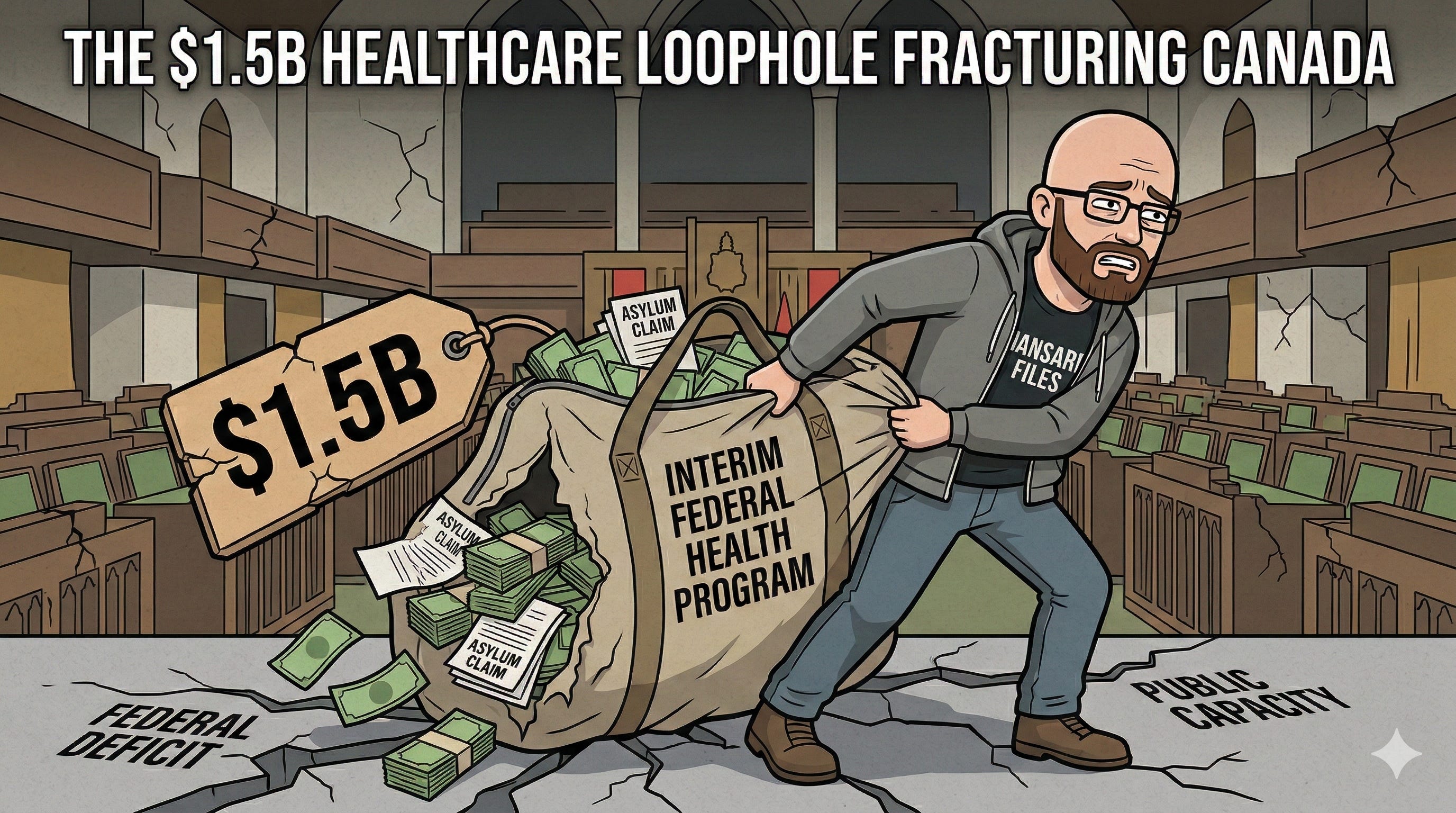
The air inside the House of Commons during the final week of February 2026 was heavy with the weight of a nation stretched to its absolute limits. Over five grueling days of parliamentary debate, a singular question dominated the chamber. Who gets priority when Canada’s resources run dry? This anxiety reached a boiling point over the Interim Federal Health Program, a previously obscure policy that has now become the epicenter of a national identity crisis. But the fight over healthcare for asylum seekers was only one act in a broader legislative drama. From the icy coastal waters of Newfoundland to the staggering $78.3 billion federal deficit, and finally to the cruel colonial legacy of the Indian Act, the transcripts of these five days reveal a government struggling to balance compassion with capacity. This is the story of a fractured consensus.
The Fight for the Sea and Bill C-237
On Monday, February 23, the week opened not with billion-dollar budgets, but with a deeply personal fight over fish. At the heart of the debate was Bill C-237, an act to amend the Fisheries Act, specifically targeting the Atlantic groundfish and cod fisheries. For Newfoundlanders and Labradorians, the cod moratorium of 1992 remains an open wound. It was a national tragedy that displaced 30,000 people and hollowed out entire coastal communities.
Conservative Member of Parliament Carol Anstey stood to defend the bill, her voice carrying the frustration of generations. She painted a vivid picture of families standing on fishing stages, breathing in the sharp scent of saltwater, passing down the heritage of cod jigging to their children. Yet, under current federal regulations, Newfoundlanders are restricted to roughly 45 days of recreational fishing, mostly on weekends. In the rest of Atlantic Canada, residents can fish seven days a week.
Anstey argued that Ottawa’s arbitrary weekend-only rule ignores the treacherous weather realities of the North Atlantic. Fog, wind, and harsh sea conditions regularly cancel out these tiny windows of opportunity, forcing seniors and families to take unnecessary risks just to put food on their tables. The bill proposed harmonizing these rules across the Atlantic provinces to end the geographical inequity.
However, the Liberal government and the Bloc Quebecois fiercely opposed the measure. Liberal MP Robert Morrissey argued that treating all regional fish stocks as a single species would devastate conservation efforts. Bloc MP Maxime Blanchette-Joncas echoed this, noting that standardizing seasons across vastly different migratory zones removes the flexibility required to adapt to climate change. The debate set the tone for the week, highlighting the deep disconnect between central Ottawa planners and the rural citizens who rely on the land and sea for their survival.
The $1.5B Explosion of the Interim Federal Health Program
If Monday was about access to the sea, Tuesday and Wednesday were defined by an explosive battle over access to hospitals. The Conservative opposition launched a massive offensive against the Interim Federal Health Program, a policy originally designed to offer temporary medical coverage to legitimate refugees.
Conservative MP Michelle Rempel Garner laid out a blistering indictment. Under the Liberal government, the cost of the program had skyrocketed by over 1,000 percent. It jumped from a modest $66 million a decade ago to nearly $900 million, and is projected by the Parliamentary Budget Officer to hit $1.5 billion by 2030. The core of the outrage centered on 86,000 rejected asylum claimants. These are individuals whose refugee claims have been formally evaluated and denied by the Immigration and Refugee Board, yet they remain in Canada.
Dan Mazier, the Conservative shadow minister for health, read directly from government documents, exposing a glaring inequity. While six million Canadians cannot find a family doctor and wait times for specialists stretch to 30 weeks, rejected asylum claimants remain enrolled in the federal program. This program covers premium supplemental benefits, including vision care, physiotherapy, counseling, and home care. These are services that millions of working Canadians must pay for out of pocket. The Conservatives demanded that rejected claimants be restricted strictly to emergency, life-saving care until they are deported.
The Liberal pushback was immediate and furious. Yasir Naqvi, Parliamentary Secretary to the Minister of International Trade, accused the Conservatives of engaging in dangerous, Trumpian politics. He argued that the official opposition was intentionally conflating the actions of a few with the desperate needs of hundreds of thousands fleeing war and persecution. Naqvi insisted that the ballooning costs were simply a reflection of global instability and a surge in legitimate refugees, not systemic fraud.
Yet, the sheer math continued to haunt the government. Warren Steinley pointed out that the entire federal health transfer to the province of Saskatchewan is $1.6 billion a year. The revelation that an interim program for non-citizens will soon cost taxpayers the exact same amount as the healthcare budget for an entire Canadian province laid bare the immense strain on the public treasury.
Budget Illusions and the $78.3 Billion Deficit
By Thursday, the intense debates over asylum costs bled directly into a broader reckoning over the nation’s finances. The House pivoted to Bill C-15, the massive Budget Implementation Act. Spanning over 600 pages, the omnibus bill touched on everything from clean electricity tax credits to the creation of a new Crown corporation for housing.
The financial reality presented to the chamber was stark. The government was tabling a budget with a $78.3 billion deficit. Conservative MP Kelly McCauley highlighted that Canada is now awash in $1.3 trillion of federal debt. Next year alone, the government will spend $55.6 billion just to service the interest on that debt, a figure that exceeds the total amount collected through the GST.
A significant flashpoint in the budget debate was the housing crisis and the creation of “Build Canada Homes.” The government touted this new agency, backed by $11.5 billion, as a silver bullet to accelerate housing construction on public lands. Liberal MP Charles Sousa, a former provincial finance minister, defended the budget as a necessary blueprint to attract investment, build major infrastructure, and protect Canada’s sovereignty in an increasingly volatile global market.
The opposition, however, viewed the new housing agency as nothing more than an expensive bureaucratic illusion. Conservative MPs argued that adding a fourth federal housing agency, alongside the Department of Housing, the Canada Mortgage and Housing Corporation, and the Canada Lands Company, would only multiply paperwork. They pointed out that while the Prime Minister promised to build 500,000 homes a year, the Parliamentary Budget Officer estimated that this new program would deliver a mere 5,000 homes. At that pace, critics noted, it would take a century to meet the government’s own targets.
The Bloc Quebecois also fiercely attacked the budget’s centralizing tendencies. MP Jean-Denis Garon lambasted the government for overstepping provincial jurisdictions, particularly concerning open banking regulations and housing funds. The frustration over endless cost overruns was palpable, with the Bloc pointing to federal IT projects like the Cúram software, which skyrocketed from an initial budget of $1.75 billion to a staggering $6.6 billion. Conservative MP Pat Kelly added that the budget reversed several failed Liberal policies, including the repeal of the digital services tax and the luxury tax on corporate aircraft, framing the reversals as proof of economic mismanagement.
Bill S-2 and the Cruel Legacy of Enfranchisement
As the week drew to a close on Friday, the partisan shouting gave way to a sombre reflection on Canada’s historical sins. The House took up Bill S-2, an act to amend the Indian Act. The legislation sought to right one of the most insidious wrongs of Canadian colonialism. It aimed to address the policy of enfranchisement.
Minister of Indigenous Services Mandy Gull-Masty, standing before the chamber, delivered a deeply personal and powerful address. She reminded Parliament that the Indian Act of 1876 was explicitly designed to absorb First Nations languages, cultures, and identities. Through enfranchisement, Indigenous people were forced to make an impossible choice. If they wanted the right to vote, to own property, or to become a doctor or a lawyer, they had to legally surrender their First Nations identity and the identity of their descendants.
“Before 1960, a First Nations woman like me would never have had the opportunity to sit in this chamber as a member of Parliament unless she first gave up her status,” Gull-Masty stated to the quiet room. “That was the price of enfranchisement. Participation in exchange for erasure.”
Bill S-2 aims to restore entitlement to approximately 3,500 First Nations individuals and their descendants who were stripped of their identity by these racist policies. It also seeks to remove outdated, offensive language from the Act and make it easier for women to reaffiliate with their natal bands.
While all parties expressed support for restoring these rights, the debate revealed deep ongoing tensions regarding the pace of reconciliation. NDP MP Lori Idlout pushed the minister on whether she supported Senate amendments that would immediately equalize First Nations rights to be on par with other Canadians. Idlout thanked the Indian Act Sex Discrimination Working Group for their tireless advocacy, noting that delaying justice for women and children risks further trauma. The government countered that sweeping changes to the “second-generation cut-off” rule require legally mandated consultations with First Nations communities to ensure solutions are led by rights-holders, not imposed by Ottawa.
A Parliament Stretched to the Breaking Point
When the Speaker finally adjourned the House on Friday afternoon, the echoes of the week’s battles lingered in the chamber. Over five days, Parliament debated the foundational pillars of the Canadian social contract.
From the coastal fishermen fighting for access to their ancestral waters, to the explosive costs of an overwhelmed asylum system, to a national budget drowning in debt servicing fees, the overarching theme was undeniable. The era of limitless federal resources has ended. Canada is facing a profound crisis of capacity.
The Liberal government continues to defend its record, arguing that investments in affordable housing, clean energy, and a compassionate immigration system will ultimately secure the nation’s future. But with waitlists for healthcare growing, housing starts stalling, and the national debt climbing, the opposition’s narrative of a broken system is gaining terrifying traction.
As the next election approaches, these five days of Hansard transcripts serve as a perfect microcosm of a country at a crossroads. The government must now figure out how to pay for the promises of the past while navigating the harsh economic realities of the present. Whether they can manage that impossible balancing act remains the most consequential question in Canadian politics today.
Hansard Files spends hours digesting thousands of pages of raw parliamentary transcripts so you do not have to. If you rely on deep, uncompromising journalism that bypasses the spin to expose the mechanics of Canadian power, please subscribe today to support our independent investigations.
Source Documents
House of Commons. (2026, February 23). House of Commons Debates, Official Report (Hansard), Volume 152 No. 087.
House of Commons. (2026, February 24). House of Commons Debates, Official Report (Hansard), Volume 152 No. 088.
House of Commons. (2026, February 25). House of Commons Debates, Official Report (Hansard), Volume 152 No. 089.
House of Commons. (2026, February 26). House of Commons Debates, Official Report (Hansard), Volume 152 No. 090.
House of Commons. (2026, February 27). House of Commons Debates, Official Report (Hansard), Volume 152 No. 091.
A great deal of "stuff" in this one.
The concept of providing top tier healthcare to failed refugee claimants (instead of deporting them immediately) is so repugnant to citizens, only a post-national wastrel could have come up with such. And of course the Liberals are going to screech "Trumpian" about anything the Opposition does or says... Liberals (and their sycophant MSM) want to keep the "Orange Man BAD" narrative fresh and the outrage flowing.
So Gull-Masty claims aboriginals were being coerced into citizenship by the Indian Act? Take a step back and consider what alternatives were available, both at the time and now. You want to vote and receive all of the benefits of citizenship as well as being afforded special status etc... but you don't want to be citizens? Cool beans... what does that look like? Go ahead and explain how you should be allowed to take from everyone else, have all of the benefits but give nothing in return.
Before anyone gets all "muh colonialism" bullshit on me, I have aboriginal heritage and Scottish/Irish as well. When some of my ancestors came over, it was as a result of the Highland Clearances... literally forced off of the lands where they'd lived and worked for generations, uprooted and dumped in Nova Scotia with nothing but the clothes on their backs. They carved civilization out of the raw land with their sweat and blood.
I worry that Canada isn't so much at a crossroads as it's already gone past that and is teetering on the edge of a fiscal cliff.