


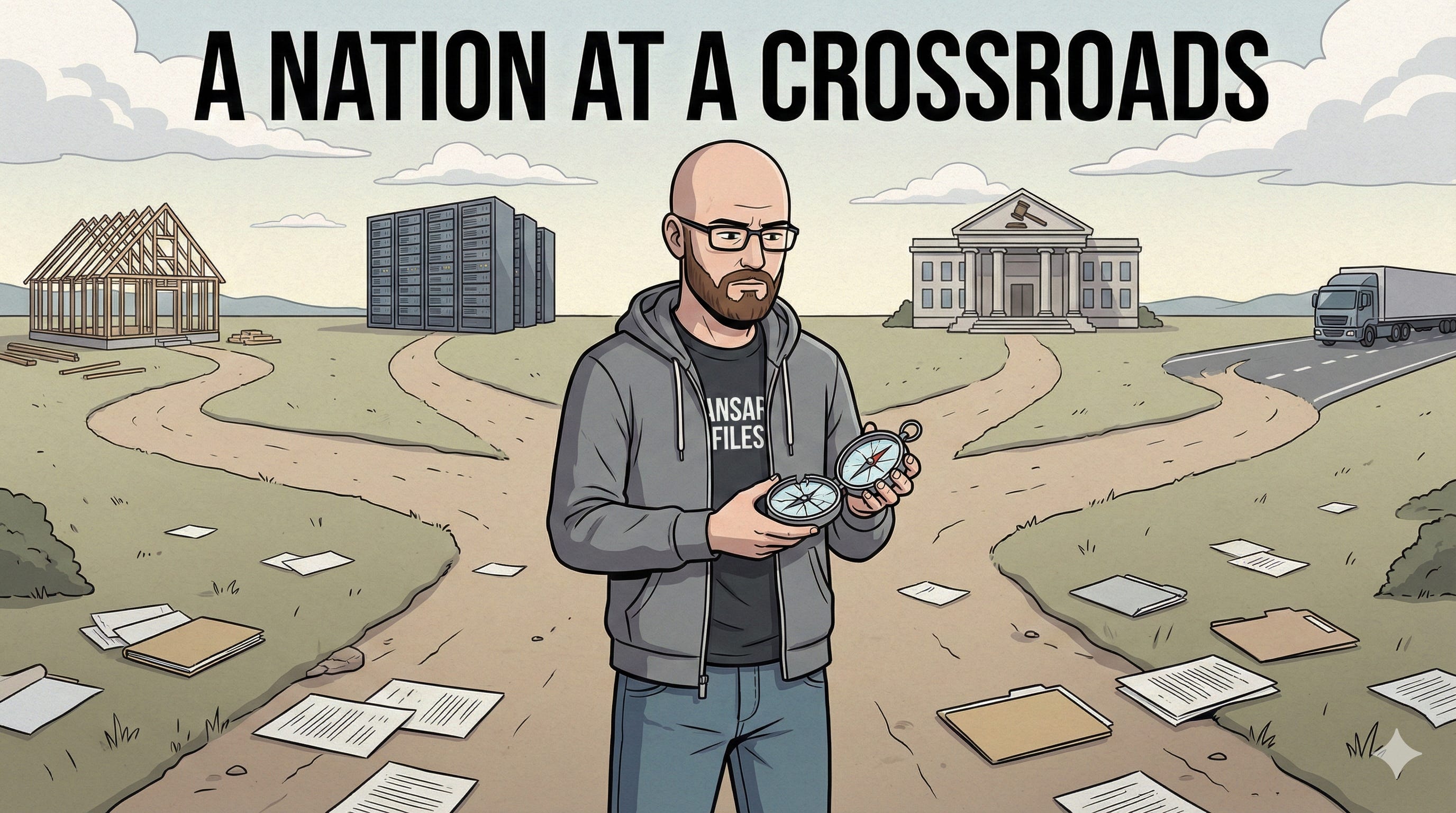
Inside the committee rooms of Ottawa, the tension is palpable as the government unveils Build Canada Homes, a massive 13 billion dollar initiative aimed at scaling up the supply of affordable housing. Minister of Housing and Infrastructure Gregor Robertson stood before the Standing Committee on Human Resources, Skills and Social Development and the Status of Persons with Disabilities to defend a mandate focused on leveraging public lands and deploying flexible financial tools. The stakes could not be higher. While the government speaks of modernizing the residential construction industry to make it more productive, the reality on the ground in cities like Toronto and Vancouver tells a different story.
Opposition members were quick to point out the disconnect between federal promises and industry warnings. Conservative MP Scott Aitchison challenged the Minister, noting that builders are reporting a total collapse of pre-sales in the Greater Toronto Area and the Lower Mainland. Projects that were meant to house thousands are being abandoned before they even break ground. The government’s response remains focused on the long-term, moving forward with incremental steps even as the industry warns that a crisis of productivity and investment is already here.
McKinsey and the Outsourcing Scandal
While housing dominates the economic headlines, a parallel drama has been unfolding in the Standing Committee on Public Accounts. The ghost of McKinsey and Company continues to haunt federal departments, particularly the Canada Border Services Agency and Immigration, Refugees and Citizenship Canada. The investigation into professional services contracts has revealed a pattern of reliance on outside consultants that has left parliamentarians questioning who is actually running the government.
Evidence provided by Deputy Minister Harpreet Kochhar and other officials paint a picture of a system where millions were funneled into contracts for “diagnostics” and “strategic advice.” In one instance, the Canada Border Services Agency cancelled a contract with McKinsey only after it was determined that public servants could have done the work themselves. The Auditor General has highlighted a recurring theme of poor documentation and a lack of clear justification for why these high-priced consultants were necessary in the first place. For many in the room, the McKinsey files represent a fundamental failure of internal capacity and a waste of taxpayer funds.
Artificial Intelligence and National Security
The technological frontier is also a site of intense legislative battle. The Standing Committee on Science and Research has been diving into the 100 billion dollar impact of artificial intelligence on the Canadian economy. Minister of Artificial Intelligence and Digital Innovation Evan Solomon argued that Canada is a world leader in this space, citing a 1.7 billion dollar investment to attract top global researchers. However, the optimism of the “AI success story” is tempered by deep-seated concerns about ethics, regulation, and security.
Witnesses from firms like Conjecture Ltd. warned the Ethics Committee that the rapid advancement of AI poses existential risks that current regulations are ill-equipped to handle. There is a growing consensus that AI is no longer just a tool for productivity but a matter of national security. As the government looks to integrate AI into service delivery, the debate has shifted from how to foster innovation to how to prevent the technology from being used to spread disinformation or undermine democratic institutions.
The Toxic Culture of National Defence
In the early morning hours, the Standing Committee on National Defence has been grappling with a much more human cost. The testimony surrounding Bill C-11, an act to amend the National Defence Act, has exposed the “chilling” reality for survivors of sexual misconduct within the Canadian Armed Forces. Witnesses shared harrowing accounts of having no safe avenue to report abuse, either at home or abroad in Afghanistan.
Justice Minister Sean Fraser appeared before the committee to discuss moving the investigation and prosecution of sexual offences to the civilian justice system. This move, long recommended by experts like Justice Louise Arbour, is seen as a vital step in breaking the cycle of internal cover-ups. Yet, the testimony of survivors remains a stark reminder that legislative changes on paper do not immediately fix a broken culture. The risks for those who speak out remain high, both professionally and personally, and the committee’s work serves as a grim ledger of the government’s failure to protect its own members.
Tax Compliance and the Trucking Industry
The economic battle extends even to the highways. In the Standing Committee on Transport, Infrastructure and Communities, the “Driver Inc.” model has become a flashpoint for tax compliance. The trucking industry, vital to Canada’s trade, is being undermined by a system that allows companies to avoid tax and benefit obligations by misclassifying employees as independent contractors.
Secretary of State Wayne Long defended nearly 78 million dollars in new funding for the Canada Revenue Agency to ramp up enforcement. However, the opposition remains skeptical of the timeline. Conservative MP Dan Albas pressed for a firm date on when these rules would actually be enforced, pointing out that the government had allowed previous fixes to lapse. For the trucking companies that follow the rules, every day of delay is a day they are put at a competitive disadvantage against bad actors who exploit the system.
A Nation at a Crossroads
From the billions spent on housing to the systemic failures in national defence and procurement, the files of the 45th Parliament reveal a nation struggling to align its massive expenditures with its stated values. The narrative that emerges is not one of a single failure, but of a series of high-stakes decisions being made under immense pressure. Whether it is the gamble on artificial intelligence or the fight for tax fairness on the roads, the results of these committee meetings will shape the Canadian landscape for a generation.
The human cost is evident in every transcript. It is found in the frustration of a builder whose project is shelved, the courage of a veteran speaking of their trauma, and the persistence of a small business owner fighting for a level playing field. As the “mighty OGGO” and other committees continue their work, the scrutiny of these documents remains the only way to hold the powerful to account.
Hansard Files digs through thousands of pages of dense parliamentary archives to find the stories that matter most to Canadians. Please subscribe to support our independent investigation and ensure these proceedings never stay hidden in the vaults.
Source Documents
Canada. Parliament. House of Commons. Standing Committee on Agriculture and Agri-Food. (2025, November 20). Evidence. (45-1, Evidence No. 015).
Canada. Parliament. House of Commons. Standing Committee on Canadian Heritage. (2025, December 1). Evidence. (45-1, Evidence No. 017).
Canada. Parliament. House of Commons. Standing Committee on Canadian Heritage. (2025, December 8). Evidence. (45-1, Evidence No. 019).
Canada. Parliament. House of Commons. Standing Committee on Citizenship and Immigration. (2025, December 2). Evidence. (45-1, Evidence No. 016).
Canada. Parliament. House of Commons. Standing Committee on Environment and Sustainable Development. (2025, December 11). Evidence. (45-1, Evidence No. 021).
Canada. Parliament. House of Commons. Standing Committee on Finance. (2025, December 1). Evidence. (45-1, Evidence No. 016).
Canada. Parliament. House of Commons. Standing Committee on Fisheries and Oceans. (2025, December 4). Evidence. (45-1, Evidence No. 017).
Canada. Parliament. House of Commons. Standing Committee on Government Operations and Estimates. (2025, November 27). Evidence. (45-1, Evidence No. 018).
Canada. Parliament. House of Commons. Standing Committee on Health. (2025, December 2). Evidence. (45-1, Evidence No. 015).
Canada. Parliament. House of Commons. Standing Committee on Health. (2025, December 4). Evidence. (45-1, Evidence No. 016).
Canada. Parliament. House of Commons. Standing Committee on Human Resources, Skills and Social Development and the Status of Persons with Disabilities. (2025, December 4). Evidence. (45-1, Evidence No. 019).
Canada. Parliament. House of Commons. Standing Committee on Industry and Technology. (2025, November 17). Evidence. (45-1, Evidence No. 014).
Canada. Parliament. House of Commons. Standing Committee on International Trade. (2025, December 4). Evidence. (45-1, Evidence No. 018).
Canada. Parliament. House of Commons. Standing Committee on National Defence. (2025, November 27). Evidence. (45-1, Evidence No. 015).
Canada. Parliament. House of Commons. Standing Committee on National Defence. (2025, December 11). Evidence. (45-1, Evidence No. 019).
Canada. Parliament. House of Commons. Standing Committee on Public Accounts. (2025, November 27). Evidence. (45-1, Evidence No. 017).
Canada. Parliament. House of Commons. Standing Committee on Public Accounts. (2025, December 2). Evidence. (45-1, Evidence No. 018).
Canada. Parliament. House of Commons. Standing Committee on Public Accounts. (2025, December 11). Evidence. (45-1, Evidence No. 021).
Canada. Parliament. House of Commons. Standing Committee on Public Safety and National Security. (2025, December 9). Evidence. (45-1, Evidence No. 019).
Canada. Parliament. House of Commons. Standing Committee on Science and Research. (2025, November 19). Evidence. (45-1, Evidence No. 016).
Canada. Parliament. House of Commons. Standing Committee on Science and Research. (2025, December 3). Evidence. (45-1, Evidence No. 020).
Canada. Parliament. House of Commons. Standing Committee on Status of Women. (2025, December 2). Evidence. (45-1, Evidence No. 018).
Canada. Parliament. House of Commons. Standing Committee on Status of Women. (2025, December 8). Evidence. (45-1, Evidence No. 019).
Canada. Parliament. House of Commons. Standing Committee on Transport, Infrastructure and Communities. (2025, November 6). Evidence. (45-1, Evidence No. 015).
Canada. Parliament. House of Commons. Standing Committee on Veterans Affairs. (2025, December 2). Evidence. (45-1, Evidence No. 017).
Canada. Parliament. House of Commons. Standing Committee on Veterans Affairs. (2025, December 9). Evidence. (45-1, Evidence No. 018).
Canada. Parliament. House of Commons. Standing Committee on Access to Information, Privacy and Ethics. (2025, December 1). Evidence. (45-1, Evidence No. 020).
Canada. Parliament. House of Commons. Standing Committee on Access to Information, Privacy and Ethics. (2025, December 8). Evidence. (45-1, Evidence No. 022).
Canada. Parliament. House of Commons. Standing Committee on Access to Information, Privacy and Ethics. (2025, December 10). Evidence. (45-1, Evidence No. 023).
Canada. Parliament. Standing Joint Committee for the Scrutiny of Regulations. (2025, December 8). Evidence. (45-1, Evidence No. 3).
Excellent overview of the 45th Parliament's pressing files—from housing bottlenecks to AI risks and defense reforms. Your focus on human impacts elevates this beyond mere reporting, underscoring the urgent need for accountability in Ottawa's high-stakes deliberations.
While you may have more information, what I have seen in the news is that the market in tiny high rise condos is collapsing. This was a greedy market error on the part of developers. People who cannot afford homes are often young families who need more than 600 square feet of space.