


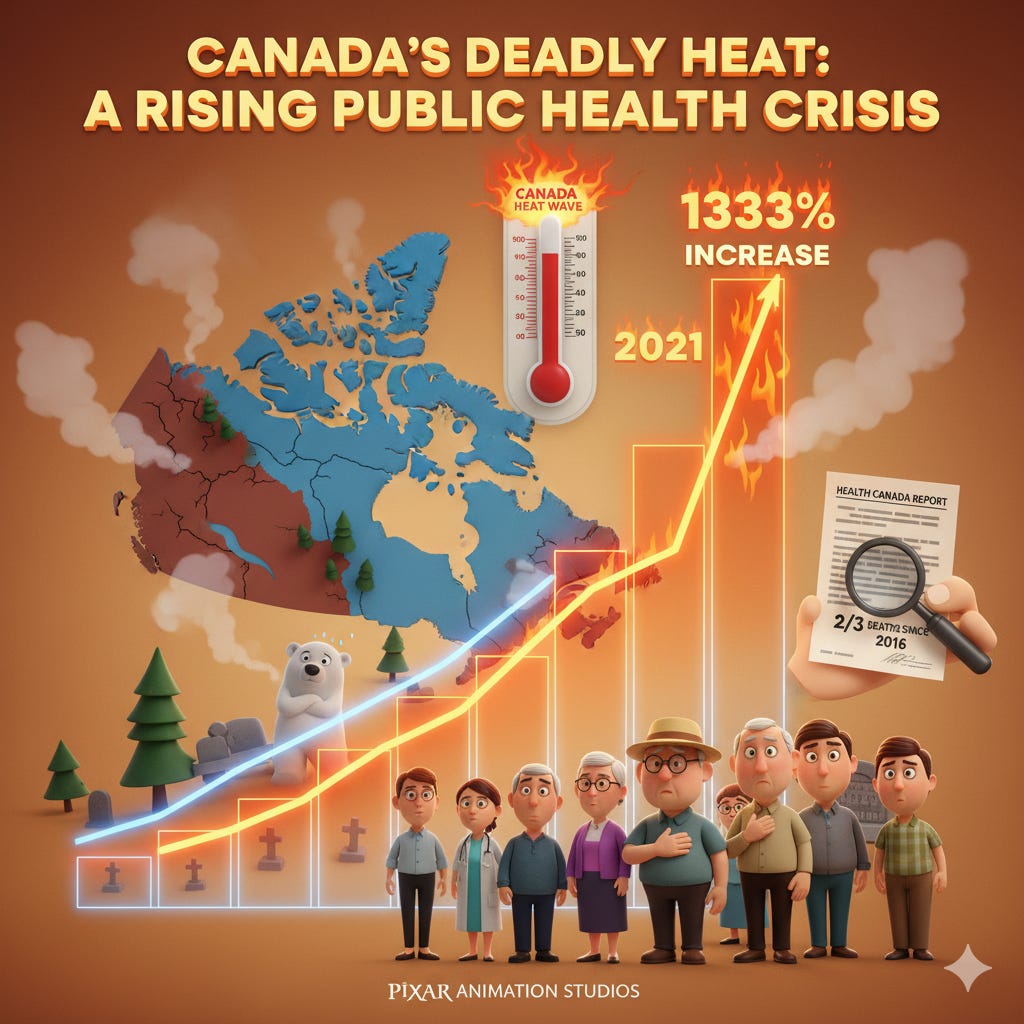
Heat-related deaths in Canada are no longer rare statistical outliers; they are becoming a significant public health trend. While most Canadians remember the sweltering temperatures of the 2021 “heat dome” in the west, a new comprehensive report suggests that event was part of a much larger, accelerating pattern. Health Canada has released a retrospective analysis of health administrative data that spans forty years, offering us the clearest picture yet of how a warming climate is impacting our hospitals and morgues. The findings confirm what many experts have warned about for decades: extreme heat is not just uncomfortable, but increasingly deadly.
How sharp is the recent rise in fatalities?
The data regarding mortality is stark. Health Canada examined records from 1981 to 2022 and found a total of 916 deaths where exposure to excessive heat was the underlying cause. What is most concerning is the distribution of these deaths over time.
According to the report, two-thirds of all recorded heat-related deaths since 1981 have occurred since 2016. This concentration of fatalities in the last few years coincides with years featuring record-breaking extreme heat events.
The impact of specific weather events is clearly visible in the data:
The 2021 Spike: In 2021, during the extreme heat event in western Canada, the rate of heat-related deaths rose to 8.6 per million population. This represents a 1,333.3% increase over the average annual rate for the reporting period.
Total Counts: That single year accounted for 35.8% of all heat-related deaths recorded across the entire forty-year study period.
Long-term Trend: Even excluding the anomalous year of 2021, the number of annual heat-related deaths has increased noticeably in the last decade compared to the previous thirty years.
Who is most vulnerable to extreme heat?
The analysis provides a demographic breakdown that highlights exactly who is most at risk. The data shows that age is the single most significant factor in severe health outcomes.
Over 85% of all heat-related deaths occurred in individuals aged 45 years and older. The risk increases dramatically as we age:
The Elderly: Individuals aged 80 years and older accounted for approximately 30% of all heat-related deaths. This age group had the highest average annual mortality rate at 4.8 deaths per million population.
Gender Differences: Males are consistently more vulnerable than females. In age groups between 25 and 64 years, males accounted for the vast majority of deaths. Specifically, for those aged 45 to 64, males made up 71% of the fatalities.
Hospitalizations: This trend holds true for hospital visits as well. Annual hospitalization rates were highest for those over 80, and male hospitalization rates were generally higher than female rates for everyone older than 12.
What illnesses are sending people to the hospital?
Beyond mortality, the report tracks “morbidity,” or illness, by looking at hospital discharges and emergency department visits. The distinction between what sends someone to the emergency room versus what keeps them in the hospital overnight is important.
Emergency Department Visits: There were over 38,000 visits with a heat-related diagnosis between 2004 and 2023. The most common diagnosis in these cases was heat exhaustion, which accounted for 54.2% of diagnoses.
Hospitalizations: When the condition was severe enough to require a hospital stay, the diagnosis changed. Heatstroke was the most frequent cause, accounting for 52.3% of diagnoses during hospitalizations.
The volume of these visits is highly sensitive to weather patterns. In 2021, the rate of heat-related hospitalizations jumped by 367.6% compared to the average.
Why are the official numbers likely an undercount?
While the numbers in this report are concerning, the authors at Health Canada are careful to note that they likely underestimate the true toll of heat on the Canadian population. Several limitations make it difficult to capture the full scope of the problem.
Data Gaps: The morbidity analysis excludes data from Quebec entirely due to data sharing limitations. Furthermore, emergency department data is not consistently submitted by all provinces; for instance, only Ontario and Alberta fully submit this data, which heavily influences the national rates.
The “Underlying Cause” Problem: It is often difficult to attribute a death specifically to heat. If an individual has a preexisting condition, such as heart or lung disease, their death during a heatwave is usually attributed to that underlying medical condition rather than the heat that exacerbated it.
Investigation Limits: Identifying hyperthermia (overheating) often relies on investigating the scene where a person was found, as autopsy findings alone may not clearly indicate heat exposure.
Takeaway
Heat-related deaths in Canada are rapidly shifting from a theoretical climate risk to a measurable medical reality. The data indicates that we are entering a period where summer temperatures pose a lethal threat, particularly to men and those over the age of eighty. While the numbers are stark, the admission by health authorities that these figures are likely conservative suggests the actual burden on our healthcare system is even heavier. As the report concludes, without targeted intervention or adaptation strategies, these trends will almost certainly continue to rise as our climate warms.
Source Documents
Health Canada. (2025). Heat-Related Morbidity and Mortality in Canada. (Cat.: H129-171/2025E-PDF). Government of Canada.