


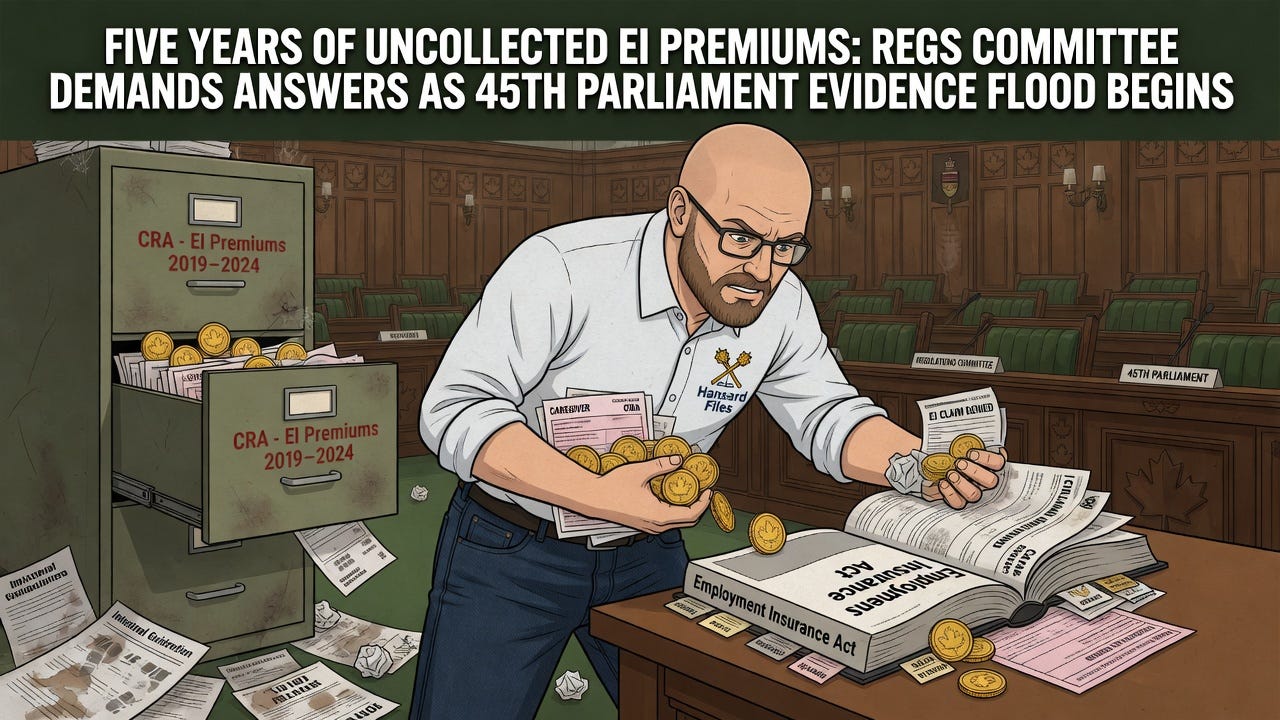
OTTAWA, February 23, 2026. Senator Yuen Pau Woo leaned into the hybrid meeting of the Standing Joint Committee for the Scrutiny of Regulations and delivered his instructions with a wry smile. “I feel like a parent reminding recalcitrant children,” he said, gesturing toward the Zoom screen and the in-person table cards. No copying, no recording, no photographs. Microphones muted unless recognized. Earpieces kept away from live mics to prevent feedback. “These are my instructions.”
The room settled. The Joint Chair turned the floor over to the House joint clerk for the election of vice-chairs. Mr. Al Soud nominated Ms. Mingarelli. She accepted. Ms. Mingarelli then nominated Mrs. DeBellefeuille from the opposition benches. Both were elected by acclamation. Senator Woo offered warm congratulations and welcomed new members before pivoting to the committee’s core business: reviewing statutory instruments.
What followed was a pointed examination of a regulatory lapse that had persisted for half a decade. The Canada Revenue Agency had not collected past employment insurance contributions on certain supplementary payments made to employees unable to work because they were providing care to seriously ill family members. For five years the agency followed internal guidelines instead of applying the law. Letters from the committee to the responsible ministers had gone unanswered.
Mr. Kram cut through the procedural language. The pattern, he argued, amounted to a “disregard for the rule of law.” The committee weighed its limited options. Another letter risked the same silence. The stronger path was clear: invite senior officials and put the minister on notice to appear before the committee so the breach could be placed on the public record.
The Caregiver File: Five Years of Guidelines Over Law
The Standing Joint Committee for the Scrutiny of Regulations exists precisely for moments like this. Its mandate is narrow but unforgiving: ensure that every statutory instrument stays within the four corners of its enabling statute and that departments do not quietly substitute policy preferences for parliamentary intent. Here the mismatch was unmistakable. Caregivers stepping in during medical crises received supplementary payments. The Employment Insurance Act required premiums to be collected and remitted. The agency chose guidelines instead. The financial and legal gap remained unclosed.
Members noted the closed files on air-travel regulations and Ukraine sanctions before returning to the unresolved caregiver file. The decision to escalate carried weight. Public transcripts, witness summons, and ministerial accountability are the committee’s sharpest tools. The exchange underscored a quiet truth about parliamentary oversight: sometimes the most consequential work happens not in the headlines but in the steady scrutiny of how regulations are actually applied.
The Veterans Affairs Moment That Stopped the Room
Just over a month later, on March 25, the Standing Committee on Veterans Affairs opened with a different kind of silence. Chair Marie-France Lalonde announced the identification of Private Albert Henry Detmold’s remains. The soldier had been killed on August 15, 1917, during the Battle of Hill 70 in France. His body was recovered in 2020. DNA and historical records confirmed his identity in December 2025, more than a century after he fell. The simple announcement carried the weight of delayed closure for one Canadian family and, by extension, for the thousands of unidentified Great War dead still waiting.
Truck-Death Families Still Waiting for Justice
On March 23 the Standing Committee on Transport, Infrastructure and Communities heard Peter Verleysen describe the September 2021 death of his sister Gail. She was killed by a transport truck. The driver faced charges, but the court process dragged for years. The accused eventually fled to India on an expired visa. Verleysen laid out the human cost of procedural delays: families left in limbo, justice deferred, and no clear mechanism to seize passports or expedite extradition in such cases. His testimony pressed for concrete changes that would prevent other families from enduring the same prolonged uncertainty.
Household Debt Pressures Under the Microscope
The Standing Committee on Finance, meeting March 26, drilled into elevated household debt levels. Officials acknowledged the strain left by years of inflation and high interest rates. Per capita GDP had remained essentially flat for a decade. Yet they also pointed to household resilience and low systemic risk. The discussion moved between balance-sheet numbers and the lived experience of Canadians carrying heavier mortgages and credit-card balances while wages lagged.
A Parliament in Full Scrutiny Mode
The evidence releases did not stop there. Between mid-March and mid-April 2026 the 45th Parliament, 1st Session, produced transcripts from nearly every standing committee and one special joint committee. The volume was striking. The Standing Committee on Indigenous and Northern Affairs met on March 26 and April 14. The Standing Committee on Public Safety and National Security convened March 26. The Standing Committee on Fisheries and Oceans held sessions on March 23 and March 25. Health, Justice and Human Rights, Science and Research, Industry and Technology, Human Resources, Skills and Social Development and the Status of Persons with Disabilities, International Trade, and Government Operations and Estimates all tabled evidence on March 26. The Special Joint Committee on Medical Assistance in Dying opened its public portion on March 10. The Standing Committee on Transport, Infrastructure and Communities added a second session on March 25.
Each transcript captured distinct but interlocking national conversations: northern infrastructure needs, fisheries management challenges, health-policy updates, trade implications, estimates review, and the complex ethical terrain of medical assistance in dying. Taken together they formed a panoramic record of a parliament moving from broad policy statements to granular accountability.
What the Surge Means for Ordinary Canadians
The REGS committee’s five-year EI caregiver file is not an isolated technicality. It sits alongside the Veterans Affairs announcement, the Transport committee’s truck-death testimony, and the Finance committee’s debt analysis as examples of how committee rooms translate statutes and spending into human outcomes. A caregiver denied proper premium treatment, a family awaiting closure on a soldier lost at Hill 70, a sibling still seeking justice after a fatal collision, a household balancing the mortgage against stagnant real wages; each story surfaces in these pages.
The 45th Parliament’s committee system is operating at full throttle. Transcripts become the public ledger. MPs, senators, journalists, and citizens can read the questions asked and the answers given. The work does not always make front-page news, yet it shapes the next round of legislation, regulation, and budget decisions. The files are open. The moments captured on the record; from Senator Woo’s procedural reminders to Mr. Kram’s blunt assessment of regulatory disregard; will echo in future proceedings.
For ordinary Canadians the hearings represent more than bureaucratic process. They are the point where abstract rules meet real lives. What Parliament chooses to do with the evidence now on the table will determine whether caregivers receive the EI treatment the law requires, whether veterans’ families finally receive closure, whether transport safety reforms move forward, and whether debt pressures are met with meaningful relief. The spring evidence surge has begun. The next chapters will be written in the committee rooms still to come.
Hansard Files digs through dense parliamentary transcripts and evidence so you don’t have to. Support independent, non-partisan reporting on Canada’s legislative record by subscribing today.
Source Documents
Canada. Parliament. Standing Joint Committee for the Scrutiny of Regulations. (2026, February 23). *Evidence*. 45th Parliament, 1st Session.
Canada. Parliament. House of Commons. Standing Committee on Finance. (2026, March 26). *Evidence* (Number 031). 45th Parliament, 1st Session.
Canada. Parliament. House of Commons. Standing Committee on Veterans Affairs. (2026, March 25). *Evidence* (Number 027). 45th Parliament, 1st Session.
Canada. Parliament. House of Commons. Standing Committee on Indigenous and Northern Affairs. (2026, April 14). *Evidence* (Number 028). 45th Parliament, 1st Session.
Canada. Parliament. House of Commons. Standing Committee on Transport, Infrastructure and Communities. (2026, March 23). *Evidence* (Number 026). 45th Parliament, 1st Session.
Canada. Parliament. Special Joint Committee on Medical Assistance in Dying. (2026, March 10). *Evidence* (Number 001, Public Part Only). 45th Parliament, 1st Session.
Canada. Parliament. House of Commons. Standing Committee on Transport, Infrastructure and Communities. (2026, March 25). *Evidence* (Number 027). 45th Parliament, 1st Session.
Canada. Parliament. House of Commons. Standing Committee on Justice and Human Rights. (2026, April 13). *Evidence* (Number 023). 45th Parliament, 1st Session.
Canada. Parliament. House of Commons. Standing Committee on Science and Research. (2026, March 26). *Evidence* (Number 030, Public Part Only). 45th Parliament, 1st Session.
Canada. Parliament. House of Commons. Standing Committee on Public Safety and National Security. (2026, March 26). *Evidence* (Number 030). 45th Parliament, 1st Session.
Canada. Parliament. House of Commons. Standing Committee on Fisheries and Oceans. (2026, March 25). *Evidence* (Number 029). 45th Parliament, 1st Session.
Canada. Parliament. House of Commons. Standing Committee on Indigenous and Northern Affairs. (2026, March 26). *Evidence* (Number 027). 45th Parliament, 1st Session.
Canada. Parliament. House of Commons. Standing Committee on Government Operations and Estimates. (2026, March 26). *Evidence* (Number 033). 45th Parliament, 1st Session.
Canada. Parliament. House of Commons. Standing Committee on Industry and Technology. (2026, March 26). *Evidence* (Number 030). 45th Parliament, 1st Session.
Canada. Parliament. House of Commons. Standing Committee on Fisheries and Oceans. (2026, March 23). *Evidence* (Number 028). 45th Parliament, 1st Session.
Canada. Parliament. House of Commons. Standing Committee on Human Resources, Skills and Social Development and the Status of Persons with Disabilities. (2026, March 26). *Evidence* (Number 030). 45th Parliament, 1st Session.
Canada. Parliament. House of Commons. Standing Committee on Health. (2026, March 26). *Evidence* (Number 026). 45th Parliament, 1st Session.
Canada. Parliament. House of Commons. Standing Committee on International Trade. (2026, March 26). *Evidence* (Number 029). 45th Parliament, 1st Session.
Thank you for this work. The "truck death families" portion reminded me that while the federal government writes criminal law and appoints judges, the provinces implement it and they have been under-resourcing the provincial courts and jails for years. While some blame for the lack of judges attaches to the feds, even if sufficient were appointed, there would be no where for them to work.