


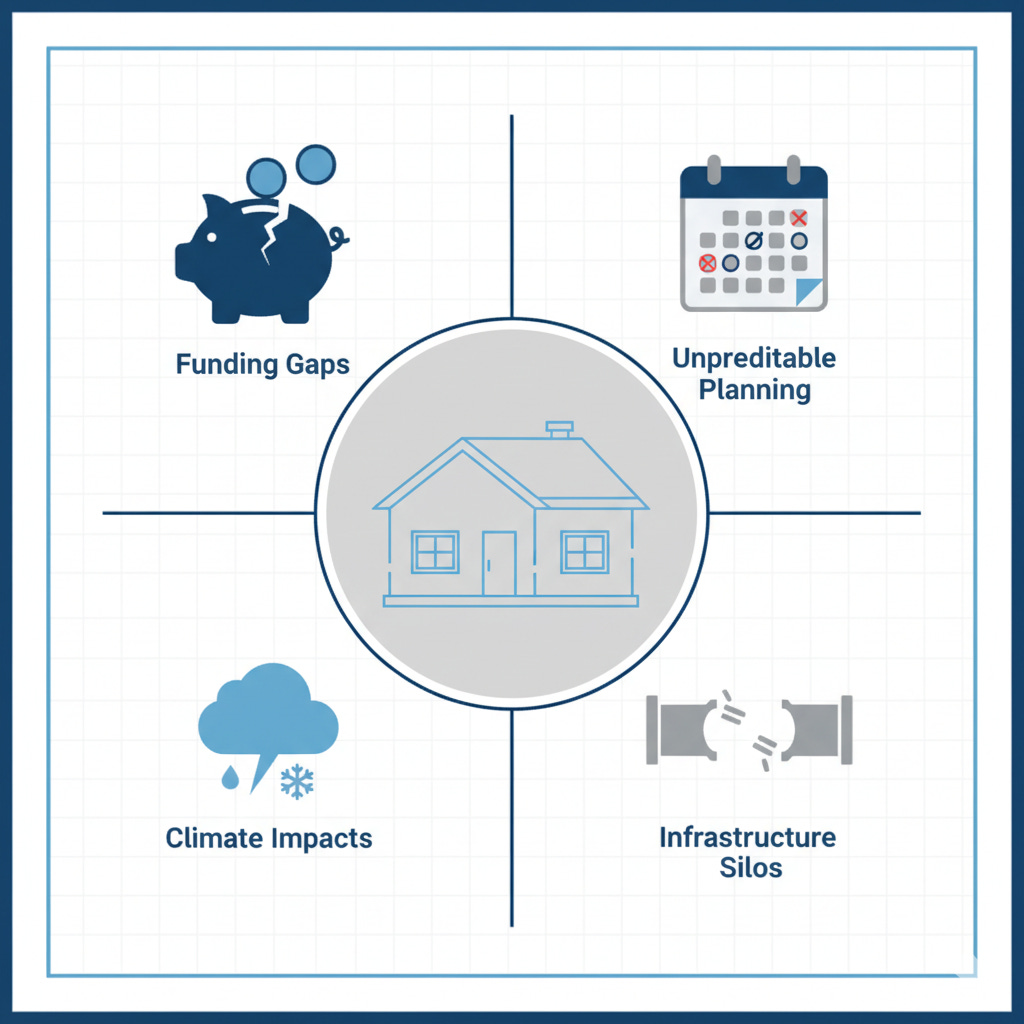
You often hear about the housing crisis in First Nations communities. The narrative is a familiar one, focusing on overcrowded homes, a backlog of needed repairs, and a critical shortage of units. The government periodically announces hundreds of millions, or even billions, in funding to address the problem. Yet the crisis persists. This raises a fundamental question: if money is flowing, why are the gaps not closing?
A comprehensive evaluation by Indigenous Services Canada offers some clear answers. The problem is not simply a funding shortfall, although that is a major factor. The deeper issues lie within the structure of the program itself. The way funds are allocated, the rules for their use, and the lack of coordination with other essential services create a system that often undermines its own goals.
This system forces communities into short-term, reactive decision-making instead of allowing for the long-term, strategic planning necessary to build thriving communities. The following points distill the key findings from the evaluation, explaining the hidden barriers that prevent progress and keep communities in a perpetual state of housing insecurity.
1. Funding is Unpredictable and Prevents Long-Term Planning
The federal government’s primary funding stream, known as A-base, provides a predictable annual allocation for housing. This amount, however, has not increased in decades and is insufficient to build even a single new home in many communities.
To supplement this, the government relies on temporary, time-limited funding announcements, known as B-base funds, tied to federal budgets. While these infusions of cash seem significant, their unpredictability makes strategic planning nearly impossible for First Nations. Communities cannot develop multi-year housing strategies because they do not know if or when the next round of major funding will arrive.
This approach forces a "band-aid" mentality. Communities must scramble to use funds within tight deadlines, often on the most urgent repairs or a few new builds, without the ability to plan for future needs, population growth, or larger infrastructure projects. Sustainable community development requires a stable, long-term financial commitment, not a cycle of short-term grants.
2. Homes are Built in Isolation from Essential Services
A house is not a home without running water, electricity, and safe roads. The federal system, however, funds these elements in separate, uncoordinated silos. A community might receive funding for housing construction from one program, but the money for servicing the lots with water and wastewater pipes, connecting roads, or sidewalks must come from a different program through a separate application process.
This disconnect leads to profound inefficiencies. The evaluation found instances where new housing units were built but sat empty because the essential infrastructure needed to make them livable was not in place. The different funding streams have different timelines and approval processes, making it a significant challenge for First Nations to coordinate projects.
Breaking down these administrative silos is essential. A holistic, "whole-of-community" approach would fund housing and its supporting infrastructure as a single, integrated project. This change would ensure that when a new house is built, a family is able to move in immediately and safely.
3. Budget Limits Force the Use of Lower-Quality Materials
When funding is insufficient to cover the true costs of construction, especially in remote regions with high transportation expenses, communities face difficult choices. To stay within budget, they often must opt for lower-cost building materials or prefabricated designs that are not suited for their local climate.
This creates a vicious cycle. Homes built with inferior materials deteriorate much faster, particularly when faced with harsh weather conditions made worse by climate change. Overcrowding, a direct result of the housing shortage, also adds significant wear and tear.
The result is that the lifecycle of a house on a reserve is drastically shorter than one off-reserve, with some needing complete replacement in as little as 15 years. This approach is inefficient, as it requires spending more money over the long term on constant major repairs and rebuilds. Investing in high-quality, climate-resilient construction from the start is more cost-effective and provides families with safer, more durable homes.
4. A Shortage of Diverse Housing Fails to Meet Community Needs
The dominant housing model on reserves has been the three or four-bedroom single-family bungalow. While this suits some families, First Nation communities are becoming increasingly diverse. There is a growing and unmet need for different types of housing, including:
Smaller, one-bedroom units for youth, single adults, and seniors.
Accessible homes for members with disabilities or special needs.
Larger homes for multi-generational families living together.
Transitional housing for individuals needing temporary support.
The current system, combined with urgent waiting lists dominated by families with children, creates inertia that favours the continued construction of standard bungalows. The lack of diverse housing options means many community members’ needs are not met, which discourages young professionals from returning to their communities and forces others to seek housing off-reserve. One focus group participant expressed deep frustration with the situation.
"I am frustrated with the housing situation in our community, we have a lot of families and children living in camping trailers."
Meeting the full spectrum of a community’s needs requires a more flexible approach that supports the construction of varied housing types.
5. Lack of Capacity Support Weakens Community Management
Managing a community's housing portfolio is a complex job. It requires skilled professionals to handle everything from long-term planning and financial management to tenant relations and maintenance coordination. The evaluation found that a lack of trained staff is a primary reason communities struggle to reform their housing programs.
The role of a housing manager is particularly critical, yet these positions are often underfunded, the staff are overburdened, and turnover is high. Many communities rely on costly external consultants to prepare funding proposals and manage projects, which drains resources. Furthermore, high staff turnover within Indigenous Services Canada itself means that First Nations constantly have to build new relationships and re-explain their community’s unique needs, leading to more inefficiency.
Investing in building and retaining local capacity is essential for self-determination. Providing dedicated, long-term funding for training and competitive salaries for housing managers and support staff would empower communities to manage their housing more effectively and efficiently.
Conclusion:
The federal evaluation makes it clear that the on-reserve housing crisis is a problem of system design, not just of insufficient funding. The current approach is fragmented, unpredictable, and fails to support the holistic, long-term planning that First Nations need to build and maintain their communities.
Addressing these deep-rooted issues requires a fundamental shift. It means moving from short-term grants to predictable, long-term funding commitments. It means breaking down administrative silos to integrate housing with essential infrastructure. Finally, it means investing in local capacity so that communities have the tools and expertise to manage their own futures. With these systemic problems now clearly identified, the critical question is what actions will be taken to build a new foundation for housing on reserve?
Sources:
Indigenous Services Canada. (2024). Evaluation of the On-Reserve Housing Program. R122-100-2024-eng.pdf.
Indigenous Services Canada. (2024). Evaluation of the On-Reserve Housing Program [Summary]. R122-100-2024-1-eng.pdf.