


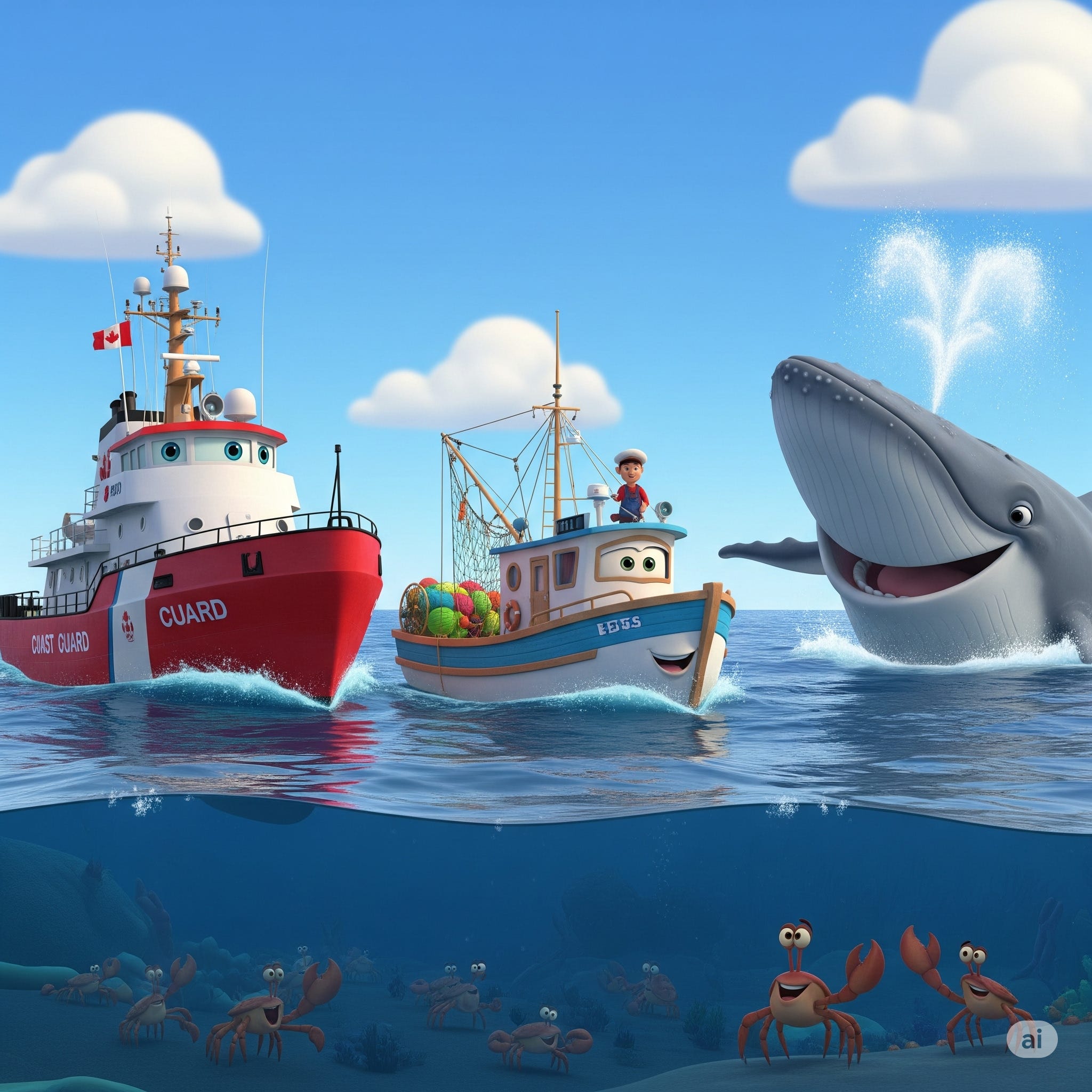
Hello, fellow Canadians! Whether you're casting lines in a rural lake, navigating urban waves, or just curious about what keeps our coasts buzzing, get ready for a splash of knowledge from Fisheries and Oceans Canada (DFO). We've dug into their latest briefing materials—think key facts, department breakdowns, and economic highlights—all straight from the source to keep you informed with a grin. No fluff, just the facts to empower your civic chats. Let's jump in! 😊
Key Facts and Figures: Canada's Seafood Powerhouse 📊
Straight from the documents, DFO outlines its massive role in managing Canada's watery wonders. The department handles everything from fisheries patrols to marine science, supporting a sector that's a big economic fish in our pond.
Canada's fish and seafood exports hit $8.79 billion in 2024, with the U.S. as the top market at $4.1 billion.
Key species exported: Lobster ($2.6 billion), crab ($1.7 billion), salmon ($1.1 billion), shrimp ($0.5 billion).
Total commercial sea fisheries landings: 803,000 tonnes valued at $4.5 billion.
Recreational fishing stats: 3.1 million active anglers, with direct expenditures of $2.5 billion and investments of $2.6 billion.
As noted in the content: "The U.S. remains Canada's largest export market, valued at $4.1 billion." And for trade disruptions: "Potential impacts of trade disruptions on Canada's fish and seafood sector analysis."
These numbers show how DFO's work touches everyday life, from jobs in coastal communities to the lobster on your plate—think of it as the traffic lights keeping our ocean economy flowing smoothly!
Department Overview: A Vast Network of Expertise 🏢
DFO isn't just about fish; it's a powerhouse impacting daily decisions across Canada. The briefing paints a picture of a department with a broad mandate, from Indigenous rights to marine operations.
Workforce: 15,600 employees across seven regions (Arctic, Gulf, Maritimes, Newfoundland and Labrador, Ontario and Prairie, Pacific, Quebec).
Assets: Over $9 billion in property portfolio, including 1,000 small craft harbours and 119 vessels in the Canadian Coast Guard fleet.
Priorities: Sustainable fisheries, ocean protection, and advancing clean energy.
From the source: "A mandate that directly impacts the day-to-day lives of Canadians and informs key decisions on a broad range of priorities." And on Indigenous relations: "Taking steps to further a constructive relationship with Indigenous Peoples based on the recognition of rights, respect, cooperation and partnership."
It's like DFO is the guardian of our three oceans, ensuring everything from safe waterways to thriving ecosystems stays in balance.
Canadian Coast Guard: Safety First, Service Always 🚢
The Coast Guard gets its own spotlight, with details on operations that keep our seas secure and navigable year-round.
Fleet: 119 vessels, including 26 large vessels, 36 medium vessels, 16 small vessels, and 61 lifeboats.
Employees: Approximately 5,500, with bases across regions like Atlantic (2,100 employees) and Arctic (120 employees).
Services: Icebreaking, search and rescue, aids to navigation (over 17,000 fixed and floating aids), and marine pollution response.
Verbatim from the docs: "“Safety first, service always.”" And on future plans: "The new Polar icebreakers will provide year-round access to the Arctic, supporting economic growth and advancing clean energy."
Imagine the Coast Guard as Canada's ocean lifeguards—always on duty to handle emergencies and keep trade routes open.
Financial Outlook: Budgets and Big Plans 💰
Money matters are broken down clearly, showing how DFO funds its missions amid challenges like sunsetters (temporary funding).
Total planned authorities for 2024-25: $6 billion.
Breakdown: Vote 1 (Operating) at $3.2 billion, Vote 5 (Capital) at $1.4 billion, Vote 10 (Grants and Contributions) at $1.4 billion.
Key investments: Fleet renewal and Oceans Protection Plan.
As stated: "Total planned authorities TOTAL PLANNED AUTHORITIES $6,000,000." And a note on risks: "Does not reflect potential future renewal of sunsetters and Budget 2024 items."
This is like peeking at the family budget—ensuring dollars go toward sustainable seas and safe coasts.
Regional Profiles: Coast to Coast Highlights 🗺️
DFO's reach spans the country, with tailored priorities per region. Here's a quick tour:
Newfoundland and Labrador: 688 employees, $4.1 billion in exports (mostly crab and shrimp).
Pacific: 1,900 employees, focus on salmon management and Indigenous reconciliation.
Arctic: Emerging fisheries, with priorities on sovereignty and climate adaptation.
From the source: "DFO - Newfoundland and Labrador (NL) Region Regional HQ & Lab Facilities - St. John's, NL Three Area Offices - Grand Falls-Windsor - Corner Brook - Happy Valley-Goose Bay 688 employees and an operating budget of $..."
These profiles remind us how DFO adapts to local needs, from Atlantic lobster to Pacific salmon—connecting urban and rural folks alike.
Partners, Stakeholders, and More: Building Bridges 🤝
The docs emphasize collaboration, from provinces to Indigenous groups.
Key partners: Provinces/territories via the Canadian Council of Fisheries and Aquaculture Ministers (CCFAM).
Indigenous relations: Focus on rights implementation and capacity building.
Industry: Fishing and aquaculture sectors contribute $3.6 billion in landed value.
Quote: "Active and comprehensive relationship with Indigenous groups across the country - Relationship is evolving through our approach to reconciliation."
It's all about teamwork, like a national potluck where everyone brings their expertise to the table.
Marine Economy and Aquaculture: Economic Waves 📈
Canada's marine economy is booming, per the briefing.
Total marine GDP: Accounts for 1.8% of national GDP, with $11.9 billion from coastal tourism and $8.6 billion from offshore oil and gas.
Aquaculture: $1.4 billion in production value, with salmon as the top species.
Jobs: 66,730 in fish and seafood sectors.
As detailed: "Canadian Sea Fisheries: $3.608B (Landed Value, 2023)."
And on aquaculture governance: "Federal-Provincial-Territorial coordination via the Canadian Council of Ministers of Aquaculture."
These stats highlight how oceans fuel jobs and growth—exciting stuff for anyone dreaming of coastal careers!
Legislative Framework and Science: The Backbone 🛡️🔬
Finally, overviews on laws and science underscore DFO's evidence-based approach.
Key acts: Fisheries Act, Oceans Act, Species at Risk Act.
Science role: Supports decisions with data on stocks, habitats, and climate.
From the source: "The role of science at DFO DFO science provides information, analysis and advice to support evidence-based decision-making."
Wrapping up, these briefings show DFO as a vital player in Canada's story—protecting our waters while boosting economies.
How do these ocean insights resonate with your corner of Canada? Share your thoughts in the comments below—we're all in this together, and I can't wait to hear your stories! 🐟✨