


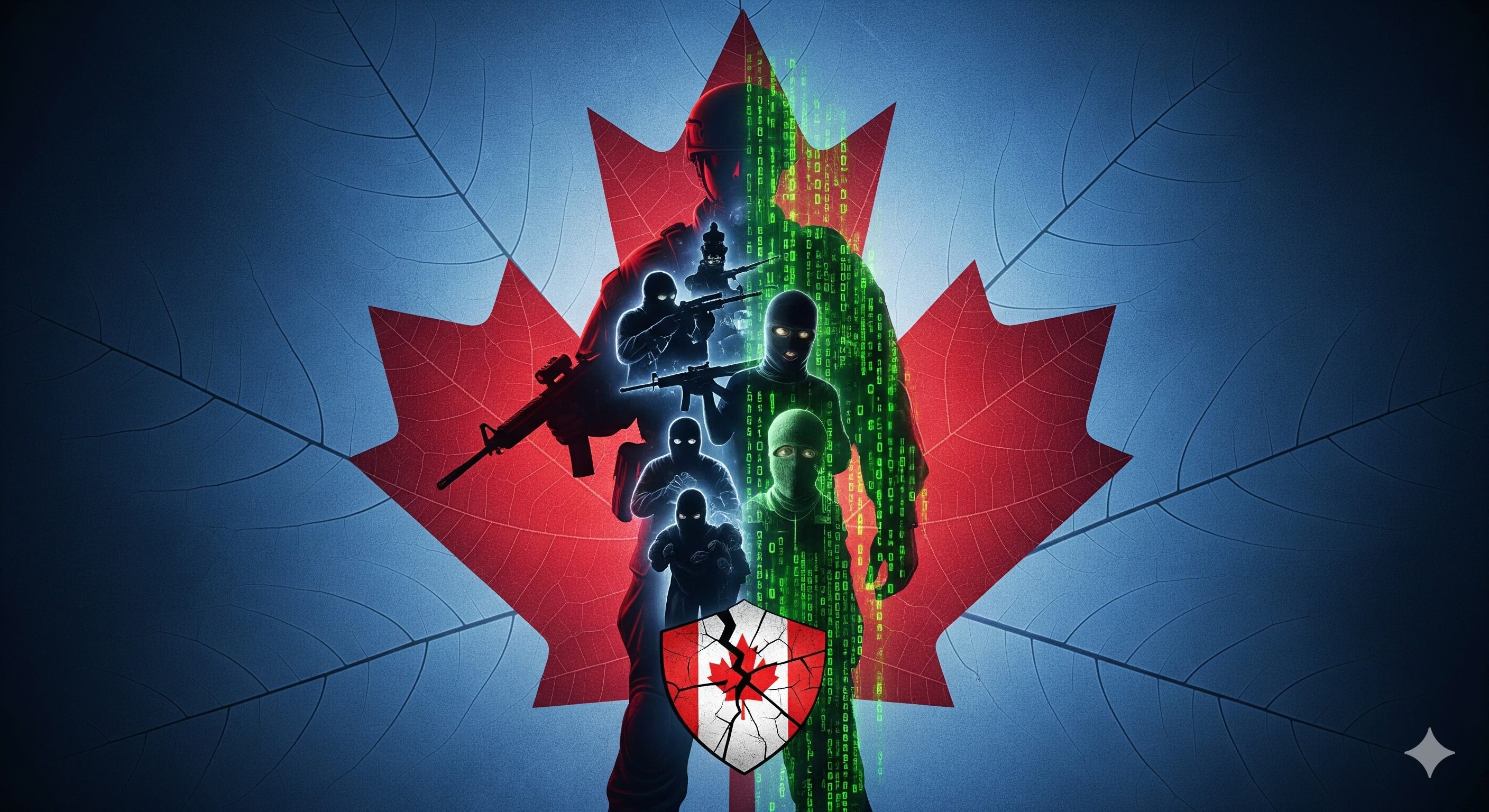
Imagine scrolling through your phone only to find banks offline, news sites hacked, and social media flooded with chaos, all without a single soldier in sight. That's the shadowy world of hybrid warfare, and a new Canadian military publication is pulling back the curtain on how it threatens our way of life. Released by the Canadian Special Operations Forces Command in 2025, "Understanding Hybrid Warfare" by Tony Balasevicius dives into this evolving threat, blending facts with real-world examples to show why it matters to Canadians. In a time of great power rivalries, like tensions with Russia and China, this book highlights how non-traditional tactics could disrupt everything from elections to energy supplies. It's timely, shareable intel that demystifies the Ottawa fog around defence policy, with a dash of wit: think of it as warfare's sneaky remix, where bullets meet bots.
What Exactly Is Hybrid Warfare?
Hybrid warfare isn't your grandfather's battlefield clash; it's a cunning mix of conventional military might, irregular tactics like guerrilla strikes, and non-violent tools such as cyberattacks or disinformation campaigns. According to the book, it fuses "regular and irregular warfare techniques that can be employed both by states and non-state actors." Think of it as a smoothie of sabotage: a bit of hacking here, some proxy fighters there, all blended to avoid direct confrontation with stronger foes like NATO forces.
Key characteristics include:
Omnidirectionality: Attacks come from all angles, targeting military, economic, and social fronts simultaneously.
Synchrony: Actions are timed for maximum impact, like coordinated cyber strikes during political unrest.
Asymmetry: Weaker players exploit vulnerabilities, such as using cheap drones against high-tech defences.
The book argues this shift stems from peer nations like Russia and China dodging Western superiority by fighting smarter, not harder. Provocative insight: while some online chatter speculates Canadian wildfires could be hybrid sabotage [Unverified], the publication sticks to verified cases, reminding us not to jump to conclusions without evidence.
The Evolving Battlefield: From Tactics to Strategy
Gone are the days of clear front lines; future conflicts sprawl across "expanded battlefields," including cyber, space, and information domains. The book breaks it down like a group project gone global: tactical fights (boots on ground) link to operational goals (disrupting supply chains), all aiming for strategic wins (toppling governments without full-scale war).
Notable concepts:
Deep Operations Zone: The area beyond immediate battles where forces exploit breakthroughs, akin to a hockey team pushing past the blue line for a breakaway goal.
Strategic Effects Zone: The big picture, targeting an enemy's economy or public morale. Here, military ops support non-kinetic tools like propaganda.
Did You Know? The 2007 cyber attacks on Estonia, detailed in the book, crippled banks and media for weeks, serving as a wake-up call. It was like a digital blockade, showing how hybrid tactics can paralyze a nation without firing a shot.
Polarizing perspective: The publication notes Russia's Crimea annexation as a masterclass in hybrid ops, using "little green men" (unmarked troops) and proxies. Fact-based but controversial, it suggests Western democracies struggle because our institutional checks slow unified responses, while authoritarians act swiftly.
Case Studies: Real-World Hybrid Threats
Balasevicius uses historical examples to illustrate hybrid warfare's punch, making complex policy digestible. For instance:
Hezbollah in Lebanon: A non-state actor blending insurgency with state-like military tech, linking tactical wins (rocket barrages) to strategic gains (deterring invasions).
ISIL's Rise and Fall: From terror cells to a hybrid force controlling territory, ISIL exploited vulnerabilities in Iraq and Syria. They adapted tactics mid-battle, but strategic blunders like alienating locals led to defeat.
Russia in Crimea: SOF and proxies seized control with minimal resistance, a blueprint for deniable operations.
These cases underscore Canada's stake: as a NATO member, we're on the front lines against similar tactics in the Arctic or cyber realm. Witty aside: If hybrid warfare is a poker game, these actors are bluffing with stacked decks, while Canada plays by the rules.
Countering the Threat: Canada's Path Forward
The book doesn't just diagnose; it prescribes. To counter hybrid warfare, nations need a "whole-of-government" approach, integrating military with diplomatic and economic tools. Recommendations include:
Creating a Strategic Coordination Agency for unified responses.
Developing a hybrid doctrine rooted in "Political Warfare," emphasizing SOF's role in unconventional ops.
Overcoming institutional resistance to embrace proxies and non-state actors ethically.
Specific to Canada, while the publication doesn't detail unique roles, its CANSOFCOM origin implies our special forces are key in training allies or defending against Arctic incursions. Controversial take: Embracing "compound warfare" (blending SOF with proxies) could ruffle feathers, but it's grounded in examples like Finnish and U.S. Marine adaptations.
Key Takeaways and Why It Matters
Hybrid warfare blurs lines between peace and conflict, demanding agile defences from Canada. Core lessons: Adapt or lose; integrate all tools; don't underestimate non-state actors. Share this if you're intrigued by how these threats could hit home, from cyber disruptions to influence ops. Follow @OnHansard for more breakdowns on governance gems like this. Being informed isn't just smart; it's your shield in this sneaky game of nations, because forewarned is forearmed.
Sources: Balasevicius, T. (2025). Understanding hybrid warfare: Great power competition and conflict in the new era. Canadian Special Operations Forces Command. https://publications.gc.ca/collections/collection_2025/mdn-dnd/D2-693-2025-eng.pdf
Government of Canada. (2025). Understanding hybrid warfare: Great power competition and conflict in the new era. Publications.gc.ca. https://publications.gc.ca/site/eng/9.947913/publication.html