


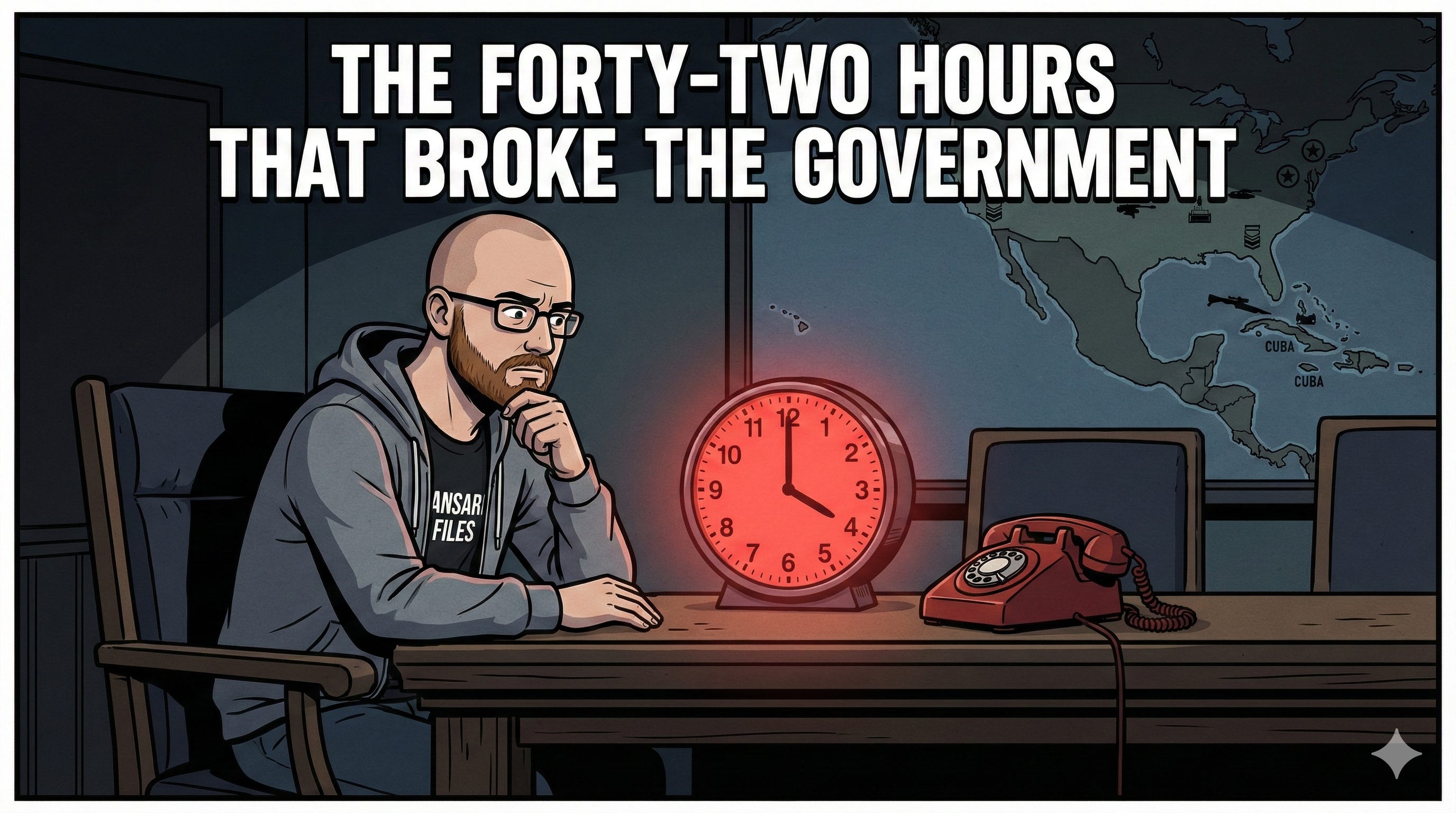
The call came into Ottawa at 4:00 AM on October 22, 1962. While the capital slept, the heavy machinery of the United States military was grinding into gear for a confrontation that threatened to incinerate the hemisphere. The United States government had contacted their Canadian counterparts with an urgent, extraordinary request: prohibit transit stops for Soviet bloc aircraft at Gander and match the American state of readiness immediately. The Cuban Missile Crisis had arrived on Canada’s doorstep, and the Americans expected their northern neighbour to answer the door.
By 6:00 PM that evening, allied ambassadors were summoned to the State Department in Washington for a briefing that shattered the peace of the post-war world. Aerial photography revealed the impossible: the Soviet Union was installing Mobile Medium-Range Ballistic Missiles (MRBMs) and Intermediate-Range Ballistic Missiles (IRBMs) in Cuba. These weapons could strike Washington, Ottawa, and major industrial targets across the continent with nuclear warheads. The American military moved to DEFCON 3. The survival of North America depended on the integrated shield of NORAD, and the United States expected Canada to lock arms instantly.
But in Ottawa, the reaction was not immediate compliance. It was hesitation.
The Cabinet Paralysis
On the morning of October 23, the Canadian Cabinet met in an atmosphere of confusion and high anxiety. The Prime Minister, John Diefenbaker, had already made a statement in the House of Commons that stopped short of the full-throated support Washington expected. Instead of simply aligning with the American blockade, he had proposed a United Nations investigation—a “fact-finding mission” by neutral nations to verify the American charges.
Inside the Cabinet room, the Minister of National Defence, Douglas Harkness, pushed for action. He argued that the Canadian component of NORAD needed to implement DEFCON 3 immediately to match the American posture. The logic was cold and military: if the arrows started flying, there would be no time for meetings.
The Cabinet pushed back. Minutes from the meeting reveal a government terrified of making the situation worse. Ministers argued that increasing the state of military preparedness might “escalate the crisis” or cause “unnecessary alarm” among the public. Some questioned the wisdom of the American “selective blockade,” suggesting that even an invasion might have been preferable to this high-stakes game of naval chicken.
While American pilots slept in their flight suits, the Canadian government debated procedure. They agreed only to “give further consideration” to the alert status at their next meeting. The order to ready the forces was stalled.
The Goose Bay Incident
The tension bled into the absurd. While the government debated the grand strategy of nuclear war, a tangible piece of the crisis landed at Goose Bay airport. A Cubana aircraft, diverted by weather, touched down on Canadian soil. It was en route to Cuba from behind the Iron Curtain.
This was the test case. The United States had asked Canada to stop these flights. The Cabinet debate descended into the minutiae of customs enforcement. Ministers discussed conducting a “long and slow search” to delay the aircraft, a bureaucratic weapon deployed against a nuclear threat. They worried about the legality of detaining the plane and the potential aggravation it might cause.
Customs officials tore the plane apart. They found 75 passengers, including two East German technicians, and a cargo that seemed almost mocking in its banality: brake linings, truck parts, and 49 cartons of stoppers for blood flasks. There were no warheads. There were no missiles. The government, trapped between the American demand to halt flights and the lack of legal grounds to seize the plane, eventually authorized its release. The aircraft flew on to Havana, leaving the Canadian government looking indecisive and legalistic in the face of an existential threat.
The Diplomatic Freeze
In Washington, the Canadian proposal for a UN fact-finding mission was met with ice-cold politeness. The Canadian Ambassador, Charles Ritchie, took the proposal to the State Department, suggesting that a group of neutral nations—perhaps the eight non-aligned members of the Disarmament Committee—could conduct an on-site inspection.
Harlan Cleveland, the US Assistant Secretary for International Organizations, was distinctly cool. He pointed out the obvious: the Russians weren’t denying the weapons were there; they were claiming they were defensive. A fact-finding mission would take weeks to organize—weeks the world didn’t have. The Americans needed the missiles dismantled, not documented. They viewed the Canadian proposal as a distraction that could tie the President’s hands while the concrete dried on the Soviet launch pads.
The delay in Ottawa had consequences. The United States had acted unilaterally, imposing a “quarantine” on the high seas. They had essentially presented their allies with a fait accompli, driven by the terrifying speed of the Soviet buildup. Canada’s hesitation to alert its NORAD forces created a rift that went deeper than diplomatic protocol. It struck at the heart of the joint defence agreement.
A Reluctant Alignment
By October 25, the reality of the Soviet threat had become undeniable even to the skeptics in Ottawa. The Prime Minister spoke again, this time acknowledging that the facts of the situation as outlined by President Kennedy were not questioned by the Canadian government. The defensive arguments of the Soviet Union were dismissed; the bases were offensive, and they were a direct threat to Canadian cities.
The crisis eventually broke, not because of a UN fact-finding mission, but because the Soviet Union blinked. Khrushchev agreed to dismantle the bases in exchange for a guarantee on Cuban sovereignty and a quiet deal on Turkish missiles. But for Canada, the forty-two hours of indecision left a scar. The government had debated customs regulations while the world teetered on the brink of nuclear war. They had eventually fallen in line, but the hesitation had revealed a government deeply uncomfortable with the military realities of the Cold War alliance it had signed up for.
Source Documents
Department of External Affairs. (1962, October 22). Telegram 3075 from Ambassador in United States to Secretary of State for External Affairs.
Department of External Affairs. (1962, October 23). Telegram V-104 from Secretary of State for External Affairs to Permanent Representative to United Nations.
Department of External Affairs. (1962, October 23). Telegram 3092 from Ambassador in United States to Secretary of State for External Affairs.
Department of External Affairs. (1962, October 24). Memorandum from Under-Secretary of State for External Affairs to Secretary of State for External Affairs.
Privy Council Office. (1962, October 24). Extract from Cabinet Conclusions.
I can imagine the tension in the PCO arguing whether to dance to the USA's tune or to exert sovereignty. If only Diefenbaker had funky socks or glorious hair to guide his decisions!!