


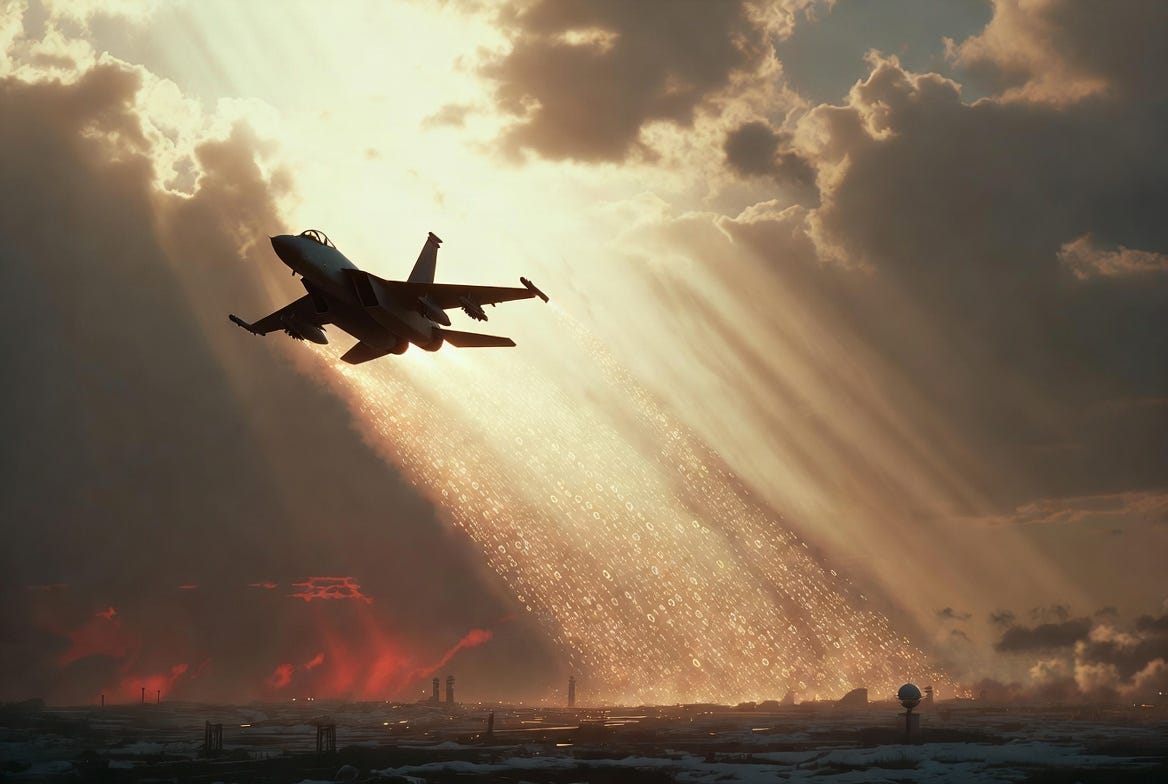
In the winter of 1976, deep inside a National Research Council laboratory in Ottawa, two engineers quietly began wiring Canada’s frontline fighter fleet for something unprecedented: total surveillance of every second in the air.
The target was the CF-5 Freedom Fighter—the nimble, twin-engine jet that formed the backbone of Canada’s tactical air squadrons through the height of the Cold War. Officially designated the CF-116 by the Canadian Forces, the aircraft had been in service for nearly a decade when a new fear emerged: no one actually knew how hard pilots were pushing the Orenda-built J85-CAN-15 engines in day-to-day operations.
Were the official life predictions for turbine blades, compressors, and hot-section components based on gentle training profiles—or on the brutal reality of low-level strike runs, maximum afterburner climbs, and repeated overspeed events that never made it into maintenance logs?
The answer mattered. Hundreds of millions of dollars in engine overhauls, airframe fatigue life, and potential mid-air failures hung on it.
What followed was Project LTR-ENG-57—a now-declassified 1977 technical report that reads less like routine engineering and more like the blueprint for turning an entire fighter fleet into a flying laboratory.
A Mandate Born in Secrecy
The request came directly from Canadian Forces Headquarters in December 1976: determine, with hard data, the “actual service seen by this equipment rather than on initial predictions of mission profiles.”
The man tasked with delivering the answer was E.H. Dudgeon, Section Head of the prestigious NRC Engine Laboratory. His team—M.S. Chappell and G.S. Campbell—were given a single overriding objective: design a portable, airborne data acquisition system that could be bolted into any CF-5, record dozens of critical parameters at high frequency, and survive the harshest NORAD alert scrambles.
This was not theoretical. The first phase demanded an immediate solution for one aircraft at Cold Lake, Alberta—the heart of Canada’s fighter training and tactical development. Later phases would scale to nine additional jets across multiple squadrons.
The stakes were spelled out in stark bureaucratic language that somehow feels cinematic:
“Information is to be used to reassess the specified airframe and engine lives and overhaul schedules.”
Translation: if the real world was harsher than predicted, entire fleets could be grounded early—or worse, fly past safe limits.
The Black Box Canada Built
At the centre of the system sat the Flight Data Recorder (FDR)—a rugged Phillips Cassette unit adapted from civil aviation but hardened for military abuse. Capable of 90 minutes of continuous digital recording on compact tape, the FDR would capture 64 separate variables per second.
Key parameters read like a stress test for metal pushed to the edge:
Pressure Altitude (ALT) from –1000 to +50,000 ft
True Airspeed (TAS) up to 1100 knots
Total Air Temperature (TAT) from –60 to +100 °C
Vertical, lateral, and longitudinal acceleration (GV, GL, ACC)
Engine RPM—both low-pressure and high-pressure spools
Turbine Outlet Temperature (T5H)
Fuel flow, power lever angle, rotor speed, afterburner light-offs
Every throttle slam, every pull into a 9g turn, every spike past redline would be etched onto magnetic tape.
A deceptively simple Mission Analysis Log Sheet—Table I in the report—became the human interface: pilots filled takeoff weights, mission codes, external store configurations, and post-flight fuel states by hand. One box stood out: “Mission Code.” Ten numbered profiles—from air-to-air gunnery to nap-of-the-earth strike runs—allowed engineers to bin every sortie into the exact usage category the aircraft was experiencing.
From Cockpit to Computer
Data flow was elegant in its Cold War pragmatism.
On landing, the tape travelled by courier (or occasionally by the pilot himself) to the Defence Research Establishment Atlantic or NRC Ottawa. There it was transcribed onto industry-standard 9-track tape, then fed into a PDP-11/34 minicomputer for analysis.
Output came in two flavours: individual mission reports that dissected a single sortie second-by-second, and cumulative fleet summaries that slowly painted a picture of how Canada was actually flying its fighters.
The report includes mock-ups of more than thirty planned tables—everything from “Speed Excursion Matrix” to “Weight-Corrected Vertical Acceleration vs Mission Code”—that would eventually reveal whether CF-5s were living gentle training lives or being thrashed in ways the original Northrop design never anticipated.
Sensors Already Watching
One revelation buried in the appendix tables: many of the most critical parameters were already being measured by existing cockpit instruments. The genius was in hijacking those signals.
Engine RPM, turbine temperature, fuel flow—all came straight from the J85’s own transducers. Accelerometers piggybacked on the airframe’s structural monitoring ports. The NRC team deliberately avoided new holes in the skin of the aircraft; every sensor had to be installable without permanent modification or weapons-delivery interference.
Even the synchronization pulse—SYNCH—was stolen from the aircraft’s “recorder ON” discrete, ensuring perfect timing alignment across all channels.
Why It Mattered Then—And Still Does
In 1977, Canada operated more than 100 CF-5s. Each engine overhaul cost a fortune. Each premature turbine failure risked a pilot’s life. The difference between a predicted 2000-hour hot-section life and a real-world 1200-hour life could bankrupt a maintenance budget—or ground squadrons at the worst possible moment.
The NRC report never reveals what the data eventually showed. Later phases promised cumulative histograms, extreme-value tracking, and direct input to both Orenda and the airframe division. But the very existence of LTR-ENG-57 confirms that by the late 1970s, National Defence no longer trusted theoretical mission mixes.
They needed proof.
And they were willing to wire an entire fighter fleet to get it.
The Declassified Legacy
Nearly fifty years later, the yellowing pages of Laboratory Technical Report LTR-ENG-57—once stamped LIMITED and DECLASSIFIED on every sheet—offer a rare window into a Canada that built world-class aerospace engineering in government laboratories most taxpayers never knew existed.
It is the story of engineers who understood that the most dangerous threat to a fighter jet is not always the enemy.
Sometimes it is the gap between what designers assume—and what pilots actually do when no one is watching.
Source Documents
Chappell, M. S., & Campbell, G. S. (1977, January). CF-5 mission analysis. Part I: Project outline and system description [Laboratory Technical Report]. National Research Council Canada. Division of Mechanical Engineering. Engine Laboratory. https://doi.org/10.4224/40003868