


Parliament is back in session, and the atmosphere inside the House of Commons is charged. As Members of Parliament returned to their seats, they immediately began debating critical issues that affect your daily life, from the state of the economy to the safety of your community. The discussions revealed deep divisions on how to handle Canada's most pressing challenges.
The day's proceedings were not just political theatre. They offered a direct look into the government's priorities and the opposition's most urgent concerns. The debates covered the government's refusal to name the size of its deficit, a heated battle over crime and bail reform, and a sweeping new border security bill that has civil liberties groups sounding the alarm. At the heart of these arguments are fundamental questions about the country's direction.
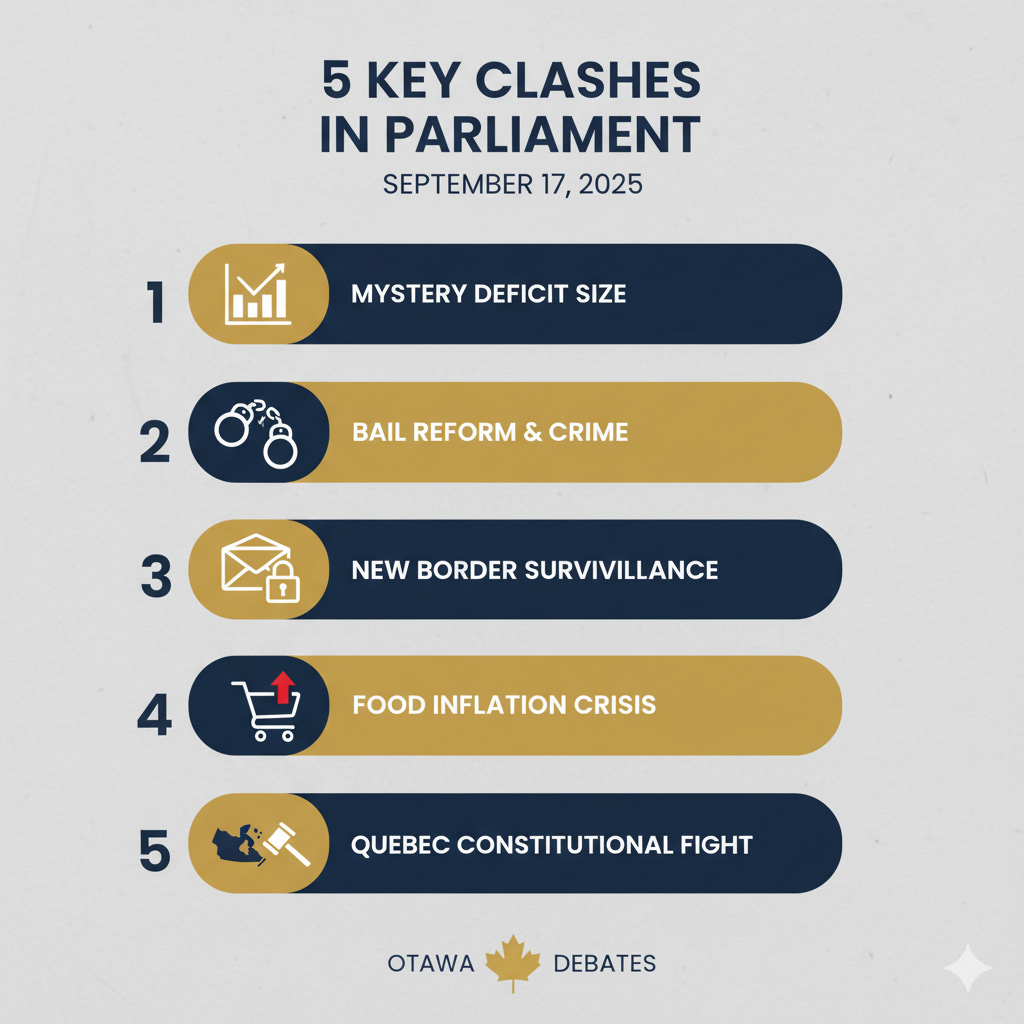
Here are five of the most impactful takeaways from the debates in the House of Commons on September 17, 2025.
The Prime Minister Refuses to Name the Deficit
The opposition came out swinging with a simple question for the Prime Minister: How big is the deficit? Six months into the fiscal year, the government has still not released a budget, leaving Canadians and investors in the dark about the country's finances. The Leader of the Opposition, Pierre Poilievre, asked repeatedly for a number, arguing the uncertainty has "driven out $50 billion in investment and killed 86,000 jobs".
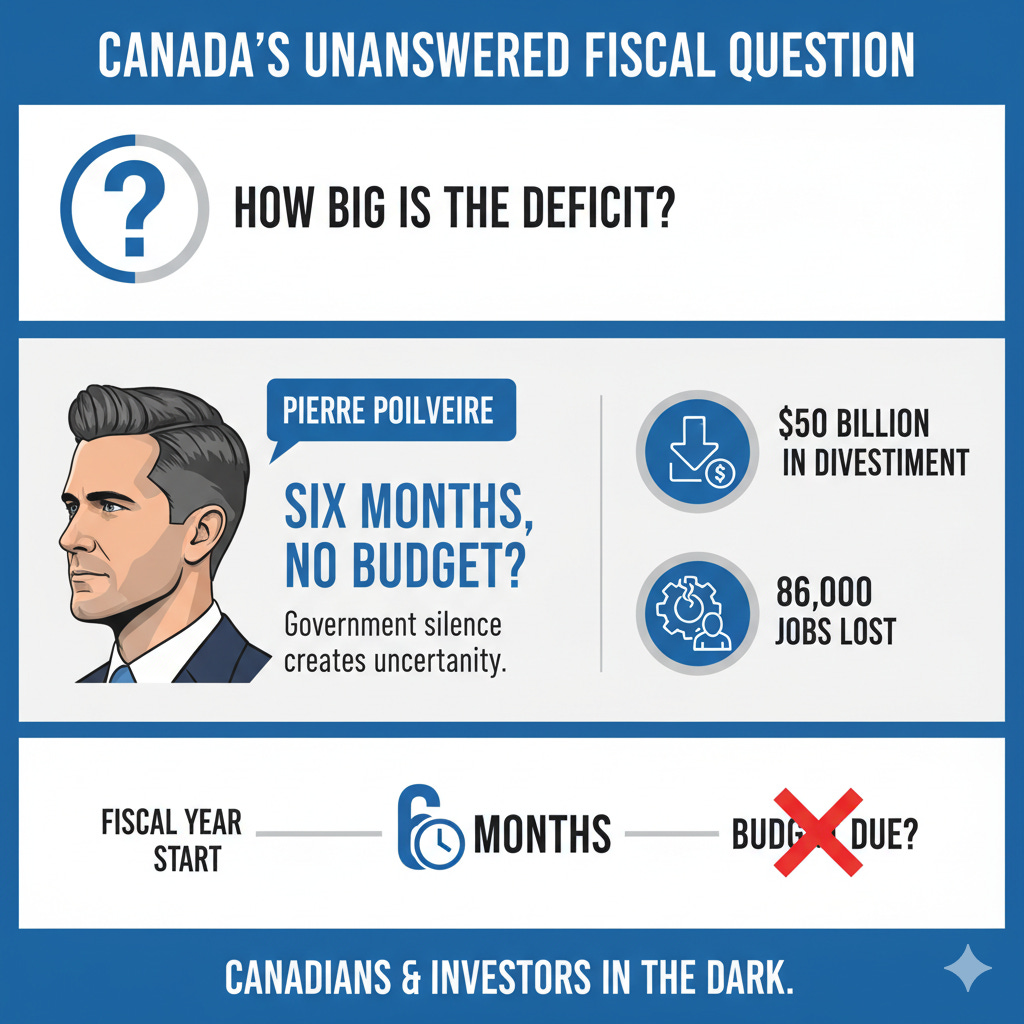
The Prime Minister, Mark Carney, deflected the question multiple times, stating only that a new budget would be released on November 4 and that it would be an "investment budget" focused on building homes, infrastructure, and the economy. This refusal to provide a figure, which the opposition called a first in Canadian history, dominated the opening of Question Period.
The debate was sharpened by recent comments from the Parliamentary Budget Officer (PBO), Canada's independent financial watchdog. An opposition member quoted the PBO's blunt assessment of the government's economic record:
...the deficit will absolutely be higher... I don't know that the government currently has fiscal anchors... the labour market sucks, wages are not going up.
The exchange highlights a core tension over fiscal management. The opposition argues that massive deficits drive up inflation, interest rates, and the cost of living, creating economic instability. The government insists that its spending is a necessary investment to build a stronger economy and that it has the country's finances under control.
A Heated Clash Over "Catch-and-Release" Justice
Emotional and often tragic stories of violent crime fuelled a tense debate over Canada's justice system. Opposition members accused the government of prioritizing "soft-on-crime" laws that have led to a crisis in public safety. They pointed to Bill C-75, a law they say forces judges to release repeat violent offenders back onto the streets, and Bill C-5, which eliminated some mandatory prison sentences for serious crimes.
Members shared harrowing examples from their communities to illustrate their point. One MP spoke of a three-year-old girl who was sexually assaulted in her own bed by a man who had been released from jail early. Another recounted the murder of Bailey McCourt, a young mother killed by her ex-husband hours after he was released on bail for assault. These stories underscore the opposition's central argument: the current bail system is failing to protect Canadians.
The government responded by acknowledging the need for action and promising that new legislation is coming. The Minister of Justice stated that his government would bring forward reforms this fall to create stricter bail conditions for repeat violent offenders and impose harsher sentences. This promise, however, did not satisfy critics who demand immediate change and question why it has taken so long to address a problem they say has allowed crime rates to spiral.
A Sweeping New Border Bill Sparks Major Privacy Fears
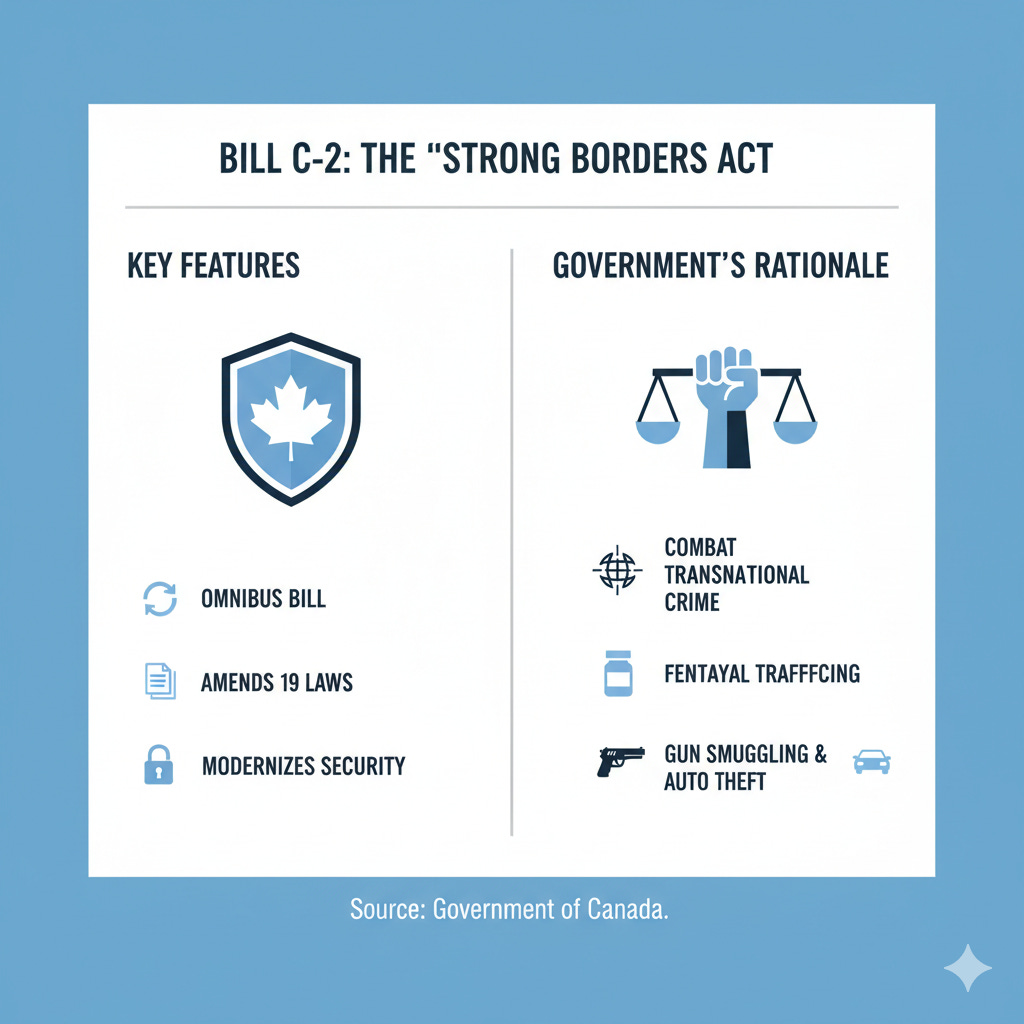
Much of the day's debate focused on Bill C-2, the "Strong Borders Act," a massive omnibus bill that amends 19 different laws. The government presents the bill as a necessary tool to modernize security and combat transnational crime, including fentanyl trafficking, gun smuggling, and auto theft.
While the opposition supports some measures, they raised serious alarms about other parts of the bill that they believe are a direct assault on the privacy and civil liberties of law-abiding Canadians. Two provisions drew the most fire:
Opening Your Mail: Part 4 of the bill would give Canada Post new powers to open mail, including letters, without a warrant. Critics argue this is a fundamental invasion of privacy and that law enforcement should be required to get judicial authorization, as is the standard for searches.
Banning Large Cash Transactions: Part 11 would ban businesses and charities from accepting cash payments over $10,000. Opponents say this unfairly targets people in rural and Indigenous communities who rely more heavily on cash for legitimate business, such as buying farm equipment or used vehicles.
The New Democratic Party went even further, calling for the bill to be withdrawn entirely. They cited a letter from 39 civil liberties groups and 122 lawyers who called the bill a "multi-pronged assault on the basic human rights and freedoms Canada holds dear" that is "likely unconstitutional".
Food Inflation Hits Home
The abstract numbers of deficits and legislation became personal during discussions about the rising cost of groceries. Members of the opposition brought the debate down to the kitchen table, listing sharp price increases for everyday items. One MP noted that since the current government took office, beef is up 33%, coffee is up 22%, and overall food inflation has risen by 40%.
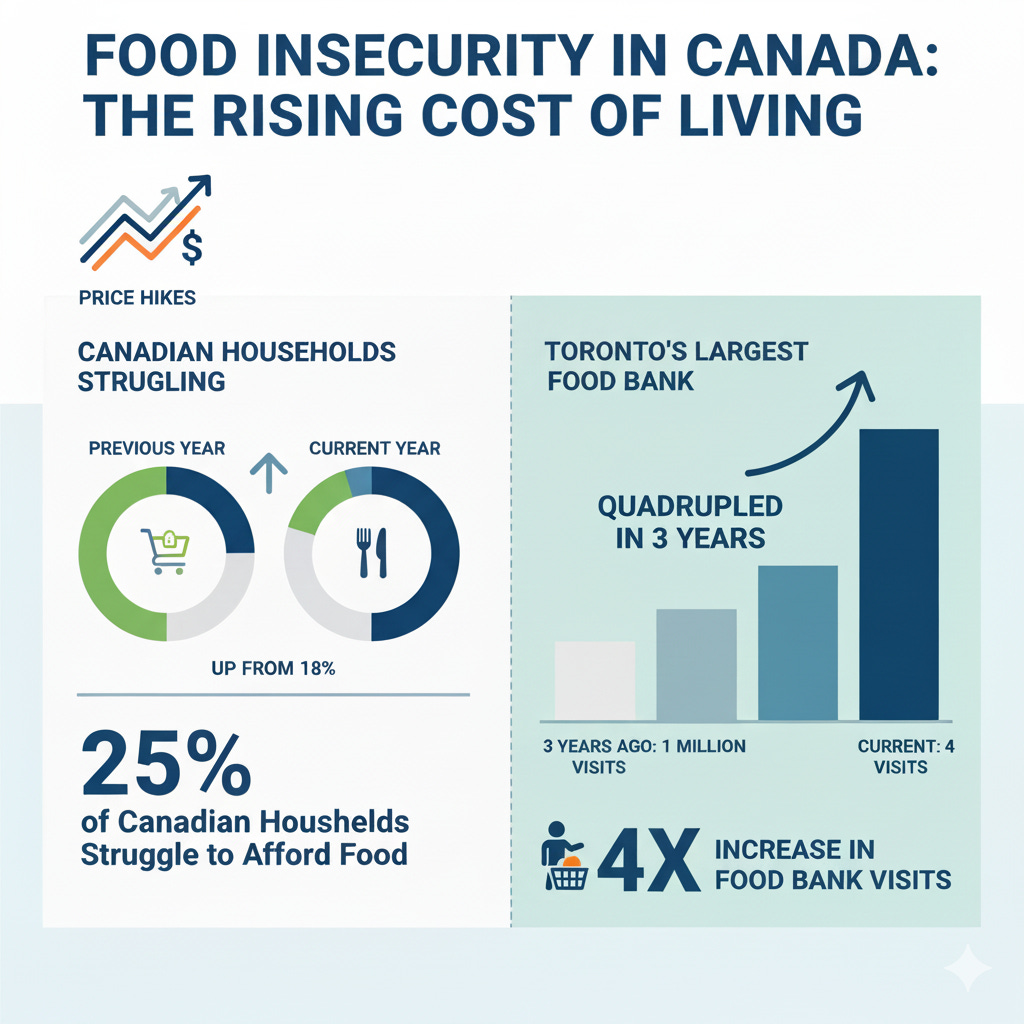
The real-world consequences of these price hikes were laid bare with troubling statistics about food security. A report was cited showing that over 25% of Canadian households are struggling to afford food, up from 18% the previous year. Use of Toronto's largest food bank has quadrupled in just three years, soaring from one million to four million annual visits.
The opposition directly links these rising prices to the government's spending policies, arguing that large deficits fuel inflation and make life less affordable for families. The government defended its record by pointing to investments designed to help families, such as child care and dental care, and by stating its overall plan is working to build a strong economy.
A Constitutional Showdown Looms Over Quebec
A brief but significant exchange exposed deep-seated constitutional tensions between Ottawa and Quebec. The leader of the Bloc Québécois, Yves-François Blanchet, challenged the Prime Minister on the federal government's approach to the notwithstanding clause. This clause allows federal or provincial governments to temporarily override certain sections of the Charter of Rights and Freedoms.
The Bloc leader accused the government of planning an "attack on the notwithstanding clause," which Quebec has used to protect its laws on state secularism . He asked the Prime Minister to commit to respecting the right of Quebec and the provinces to use the clause.
The Prime Minister did not make that commitment. Instead, he stated that it is up to the Supreme Court of Canada to determine if the repeated use of the clause is legal, adding that one of the government's most important responsibilities is to defend the Canadian Charter of Rights and Freedoms. This response suggests the federal government is prepared for a legal battle over an issue that goes to the heart of Quebec's identity and its place in the Canadian federation.
These debates show a Parliament grappling with the immediate pressures of affordability and public safety while also facing fundamental questions about government transparency and individual rights. As these bills and issues move forward, the positions staked out on this day will shape the political battles to come.
Sources:
House of Commons of Canada. (2025, September 17). House of Commons Debates (Hansard), 45th Parliament, 1st Session, Vol. 152, No. 023.