


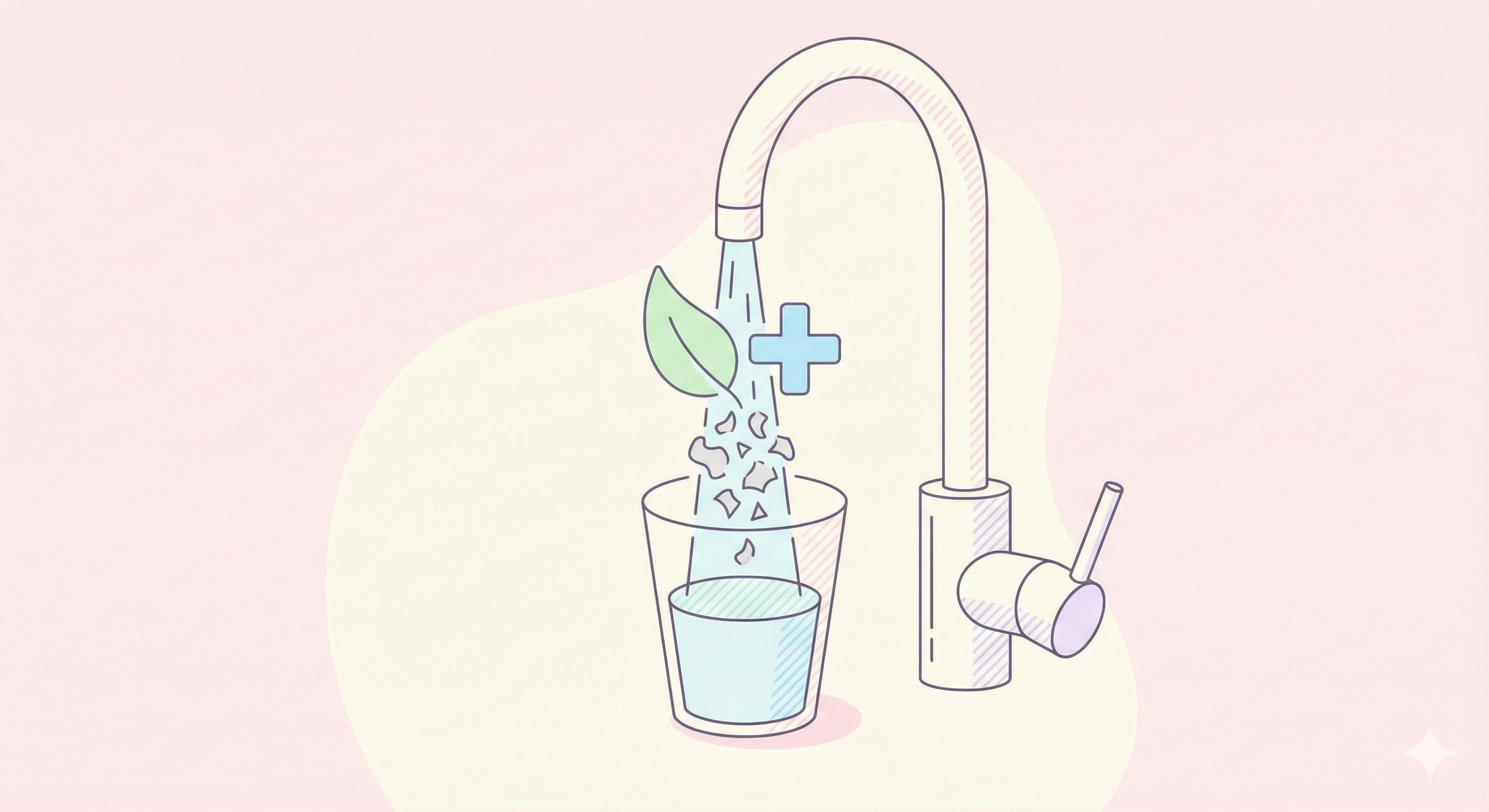
On a quiet Saturday in January 2026, the federal government released a document that concerns the most mundane and essential act of daily life: turning on a kitchen tap. While millions of Canadians filled their glasses without a second thought, officials in Ottawa were quietly outlining a microscopic battlefield. The enemy is not a foreign army or a sudden viral outbreak, but a group of invisible chemical by-products known as haloacetic acids. These compounds, which form silently when disinfection chemicals collide with organic matter like rotting leaves, have forced a recalibration of what we consider safe to drink.
The latest publication of the Canada Gazette reveals a sweeping proposal by the Department of Health to tighten the reins on these elusive contaminants. The government is moving to establish a Maximum Acceptable Concentration for haloacetic acids in Canadian drinking water, setting a strict limit of 0.08 milligrams per liter. It is a regulatory shift that highlights a paradox at the heart of modern sanitation. The very chemicals we use to stay alive are, in a twist of molecular fate, creating new risks that regulators are now scrambling to contain.
The Chemistry of Consequence
The story of safe water is usually told as a triumph of sterilization. Chlorine is added to reservoirs and treatment plants, effectively killing the microorganisms that once caused widespread cholera and typhoid. Health Canada’s notice explicitly reinforces this hierarchy of survival, stating that the risks from these by-products are far lower than the immediate danger of consuming untreated water. Disinfection remains the non-negotiable cornerstone of public health.
Yet, the document exposes the complexity of this chemical transaction. When chlorine enters the water supply, it does not merely hunt down bacteria. It reacts with naturally occurring organic matter found in lakes and rivers. Decaying vegetation, submerged leaves, and soil runoff act as “precursors.” When the disinfectant meets this organic debris, they fuse to create haloacetic acids, or HAAs.
The federal government has identified thirteen distinct variations of these acids that can manifest in disinfected water. The new guidelines specifically target a cluster of six, collectively dubbed HAA6. This group includes monochloroacetic acid, dichloroacetic acid, and trichloroacetic acid, among others. The science presented in the Gazette is stark regarding the potential consequences. Carcinogenicity, the ability to produce tumors, has been reported at low concentrations of these compounds. The government’s analysis viewed these chemicals not just as individual rogues but as a mixture, considering how they might act in concert on the human body to spur the development of cancer.
This formation process is not static. It is a seasonal cycle. The document notes that levels of these carcinogens are expected to spike during warmer months. As temperatures rise, the concentration of organic precursor materials in raw water increases, and the chemical reaction that spawns these by-products accelerates. It is a reminder that our infrastructure is never truly separated from the environment it draws from; the biology of the lake always finds a way to influence the chemistry of the tap.
The Brominated Trigger
While the primary limit is set at 0.08 milligrams per liter for the total group of acids, the Department of Health has introduced a secondary, more granular tripwire. This concerns a specific compound known as bromochloroacetic acid, or BCAA.
Brominated forms of these acids are less prevalent than their chlorinated cousins, but they are significantly more potent. The government warns that these specific variations have the potential to cause health effects at even lower concentrations. Their presence is dictated by the amount of bromide in the source water, adding another variable for treatment plants to manage.
To counter this, the guidelines propose a trigger level. If the running annual average for bromochloroacetic acid hits a mere 0.01 milligrams per liter, water systems are instructed to take immediate steps to reduce formation. This acts as a canary in the coal mine. BCAA serves as an indicator species of chemical contamination, warning operators that the conditions for toxic brominated acids are ripe.
The directive to water treatment operators is one of constant vigilance. They are urged to maintain concentrations as low as reasonably achievable, a standard known by the acronym ALARA, without ever compromising the effectiveness of the disinfection itself. The strategy involves a complex dance of chemistry: removing organic precursors before the chlorine is even added, optimizing the dose of disinfectants, or switching to alternative methods like chloramines. Even the plumbing itself matters. Because these acids continue to form within the distribution pipes, operators are encouraged to manage “water age,” flushing systems to ensure water does not sit stagnant long enough for the chemical reaction to mature into toxicity.
The Industrial Defense
While health officials focused on the biological defense of the nation, the Gazette simultaneously detailed a rigorous economic defense mounted by the Canadian International Trade Tribunal. Just as biological contaminants threaten the physical body, unfair trade practices threaten the industrial body, and the government’s response in both arenas is strikingly similar: identification, isolation, and neutralization.
On January 2, 2026, the Tribunal finalized a significant finding regarding the dumping of carbon and alloy steel wire. This is not the wire found in consumer electronics, but “Industrial Wire” used for manufacturing and commercial distribution. The investigation confirmed that domestic industry has suffered injury due to dumped goods originating from a vast coalition of nations: China, Chinese Taipei, India, Italy, Malaysia, Portugal, Spain, Thailand, Türkiye, and Vietnam.
The specificity of the finding reveals the precision of modern trade warfare. The Tribunal distinguished between the industrial wire, which is harming Canadian producers, and wire packaged for retail sale to individual consumers. The latter, defined as weighing 1 kg or less per package, was deemed harmless to the domestic industry. It is a calculated severance, protecting the heavy manufacturing base while leaving the consumer market untouched.
Simultaneously, the Tribunal issued a determination regarding truck bodies imported from the People’s Republic of China. The preliminary inquiry found reasonable indications that the dumping and subsidizing of these goods have caused injury to Canadian industry. These trade remedies serve as the economic equivalent of the water guidelines—a filter designed to strip out harmful foreign elements that distort the local ecosystem.
The Compliance Purge
Beyond the high-stakes battles against carcinogens and global dumping, the Gazette also serves as the final ledger for those who fail to meet the basic standards of civic operation. The Canada Revenue Agency published a sweeping list of revocations, stripping the charitable status from dozens of organizations for failing to file the necessary returns under the Income Tax Act.
The list is a graveyard of good intentions and administrative failures. It includes groups as varied as the International Institute of Integral Human Sciences in Montreal, the River of Life-Eagleview Ministries in Victoria, and the Saskatoon Opera Association. From local preschool associations in Duncan, British Columbia, to the massive St. George’s Society of Toronto Charitable Trust Fund, the revocations spare no sector. Religious groups, animal welfare societies, and cultural foundations alike were named.
This administrative purge is the bureaucratic immune system at work. The revocation of registration is effective immediately upon publication, closing the tax-exempt status of these entities. It serves as a quiet reminder that in the machinery of state, silence—specifically the failure to file—is treated as a fatal error.
A Government in Search of Talent
Amidst the warnings and revocations, the government also signaled a need for renewal. The Privy Council Office posted a solicitation for one of the most critical watchdog roles in the federal apparatus: the Parliamentary Budget Officer.
The notice frames the search in the language of diversity and merit, seeking a candidate to oversee the nation’s finances who reflects the “values we all embrace: inclusion, honesty, fiscal prudence, and generosity of spirit.” The role of the PBO is to provide independent financial analysis to Parliament, often serving as a check on the very government that appoints them. The posting emphasizes a desire for gender parity and representation of Indigenous peoples and minority groups, framing the appointment not just as a hiring decision, but as an act of nation-building.
The Cost of Safety
The January 10 issue of the Gazette presents a cross-section of a government managing risk on multiple timelines. There is the immediate, chemical risk of the water supply, managed through parts-per-billion calculations and chemical triggers. There is the medium-term economic risk of international dumping, managed through tariffs and tribunal findings. And there is the chronic risk of administrative non-compliance, managed through the revocation of charitable status.
The drinking water guidelines, however, remain the most intimate intervention. They acknowledge a grim reality: that the natural world is chemically reactive, and our attempts to tame it are imperfect. The decayed leaves of a Canadian autumn, washing into the rivers, eventually meet the chlorine designed to protect us. The result is a chemical tension that requires constant monitoring.
For the water treatment operator in a small town, the notice is a directive to watch the sensors more closely, to flush the pipes more often, and to worry about the unseen bromides. For the citizen, it is a reassurance that the water is being watched, even if the chemistry involved is becoming increasingly complex. The glass of water on the counter is clear, but the regulatory machinery ensuring its safety is grinding away in the background, fighting a war against enemies too small to see.
Source Documents
Canada Gazette. (2026, January 10). Canada Gazette Part I, Vol. 160, No. 2. Government of Canada.