


The Canadian insolvency system is quietly suffocating under the weight of its own obsolescence. For over two decades the financial machinery designed to offer a lifeline to drowning debtors has remained frozen in time while the cost of living soared. The result is a distorted marketplace where the path to relief is often dictated not by what is best for the debtor but by what keeps the lights on for the trustee. This Saturday the federal government finally acknowledged the breakage. A sweeping set of proposed amendments to the Bankruptcy and Insolvency Act reveals a system in desperate need of repair where inflation has eroded professional fees to the point that the very people tasked with managing financial ruin are leaving the profession.
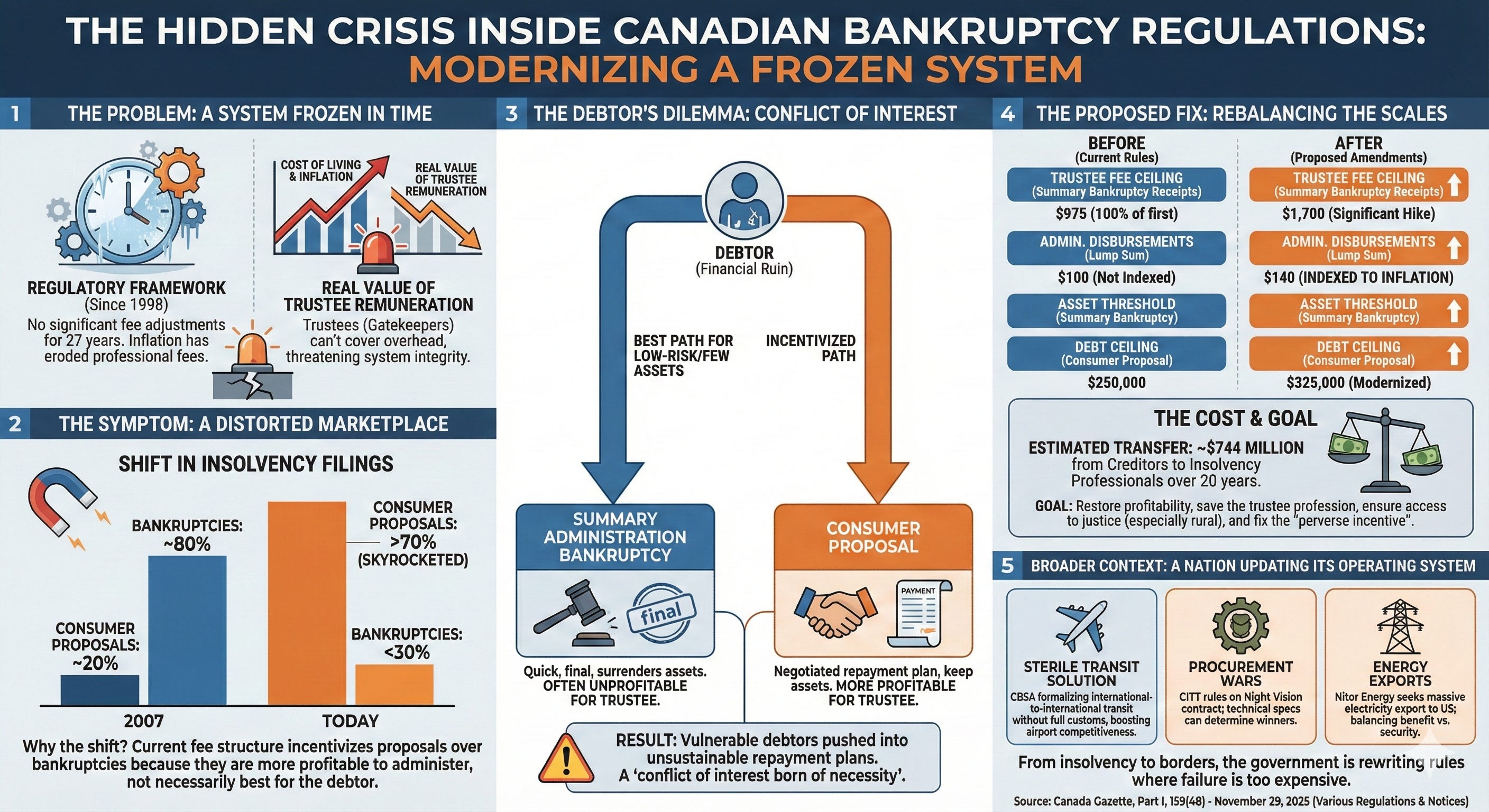
The Office of the Superintendent of Bankruptcy has sounded the alarm. They warn that without immediate intervention the integrity of the insolvency system faces an existential threat. The current regulatory framework has not seen significant fee adjustments since 1998. In the intervening twenty-seven years inflation has ravaged the real value of the remuneration paid to Licensed Insolvency Trustees. These trustees are the gatekeepers of the system. They are the private sector officers licensed by the government to administer bankruptcies and proposals. When their compensation fails to cover the overhead of running an office the entire system begins to warp.
The most disturbing symptom of this decay is a statistical anomaly that has emerged in recent years. In 2007 consumer proposals accounted for only 20 percent of total insolvency filings. Today that number has skyrocketed to over 70 percent. A consumer proposal allows a debtor to negotiate a repayment plan while keeping their assets whereas a bankruptcy usually involves surrendering assets to eliminate debt. While proposals are a valid tool the Superintendent suggests this massive shift is not entirely organic. The current fee structure incentivizes trustees to steer clients toward proposals because they are more profitable to administer than simple bankruptcies.
The Cost of Going Broke
The government’s analysis is blunt. The archaic fee structures have created an environment where debtors are encouraged to take the consumer proposal route even in cases where it is not in their best interest. This is a conflict of interest born of necessity. Trustees are business owners. If a summary administration bankruptcy—the simplest and cheapest form of insolvency—does not pay enough to cover the administrative costs of processing the file trustees will naturally gravitate toward the service that keeps them solvent.
This distortion hits the most vulnerable debtors the hardest. Low-risk debtors with few assets are often the best candidates for summary administration bankruptcy. It is a process designed to be quick and final. Yet if they are pushed into a proposal they may end up tethered to a repayment schedule they cannot sustain simply because the regulatory framework makes the alternative financially unviable for the provider. The proposed regulations aim to dismantle this perverse incentive by rebalancing the scales.
The centerpiece of the new proposal is a significant hike in the fees trustees can claim. Under the current rules a trustee takes 100 percent of the first $975 in receipts from a summary bankruptcy. The new rules would raise that ceiling to $1,700. In addition the lump sum for administrative disbursements would jump from $100 to $140 and be indexed to inflation annually. These are not minor adjustments. They represent a frantic game of catch-up played over a quarter-century of lost time.
A Billion Dollar Transfer
The modernization effort extends beyond trustee fees. It fundamentally alters who qualifies for which procedure. The asset threshold for a summary administration bankruptcy is set to rise from $15,000 to $20,000. Simultaneously the debt ceiling for a consumer proposal will increase from $250,000 to $325,000. These changes acknowledge the reality of modern economics where inflation has bloated the nominal value of assets and debts without necessarily increasing a debtor’s ability to pay.
There is a cost to this correction. Insolvency is a zero-sum game. Every dollar that goes to a trustee is a dollar that does not go to a creditor. The government estimates that these changes will result in a transfer of approximately $744 million from creditors to the insolvency professionals over the next twenty years. Small businesses including local contractors and suppliers who are often left holding the bag when a customer goes under will see their recovery rates drop even further. The government argues this is a necessary sacrifice. Without a viable trustee profession there is no system at all.
The urgency is palpable. The number of trustees operating in Canada is at risk of decline. Large financial firms are consolidating the market leaving rural and remote areas with fewer options. By restoring the profitability of summary bankruptcies the government hopes to encourage new entrants into the field and ensure that a debtor in rural Newfoundland has the same access to justice as one in downtown Toronto. The proposal frames this not as a pay raise but as a rescue mission for the infrastructure of economic failure.
The Sterile Transit Solution
While the insolvency crisis dominates the regulatory landscape another significant shift is occurring at the nation’s borders. The Canada Border Services Agency is moving to formalize a pilot project that has fundamentally changed how international travelers move through Canadian airports. For years passengers transiting through Canada to another international destination were caught in a legal gray zone. They were technically entering the country and therefore subject to examination even if they never left the secure area of the airport.
The new regulations will codify the “International to International” transit process. This creates a legal framework for “sterile transit areas” and “designated holding areas” where passengers can move from one flight to another without undergoing a full customs interview. It is a move designed to boost the competitiveness of Canadian airports which act as major hubs for traffic between Europe and Asia and the Americas.
The change allows the border agency to redirect its resources. Instead of processing thousands of low-risk travelers who have no intention of entering Canada officers can focus on high-risk targets. The regulations will require airlines to transmit more detailed data including a traveler’s transit status and their final destination allowing the agency to track compliance without physical interaction. It is a free-flow model that trades face-to-face scrutiny for digital surveillance and architectural containment.
Procurement Wars and Power Lines
The business of government continues elsewhere with lower fanfare but equal consequence. The Canadian International Trade Tribunal has handed down a decision regarding a contentious military procurement contract. Cadex Inc. filed a complaint regarding a solicitation for binocular night vision devices for the Canadian Armed Forces. The company alleged that the technical requirements specifically the minimum signal-to-noise ratio were impossible to meet and effectively rigged the process for a sole-source provider. The Tribunal agreed ruling the complaint valid. It is a rare glimpse into the opaque world of defense contracting where technical specifications can determine the winners and losers of multimillion-dollar deals.
In the energy sector Nitor Energy Inc. has filed an application to export massive quantities of electricity to the United States. The company is seeking authorization to push up to three million megawatt-hours of firm and interruptible energy across the border annually for the next decade. The Canada Energy Regulator is now soliciting public input on the plan which must balance the economic benefits of export against the energy security of Canadian provinces.
These disparate threads form a tapestry of a nation attempting to update its operating system. From the quiet despair of a debtor’s office to the sterile corridors of international airports the federal government is rewriting the rules of engagement. The proposed insolvency amendments in particular represent a critical acknowledgment that stability requires maintenance. When the cost of failure becomes too expensive to manage the entire economy pays the price.
Source Documents
Canada Border Services Agency. (2025, November 29). Regulations Amending Certain Regulations Made Under the Customs Act (Transit Between International Flights). Canada Gazette, Part I, 159(48).
Canada Energy Regulator. (2025, November 29). Application to Export Electricity to the United States - Nitor Energy Inc. Canada Gazette, Part I, 159(48).
Canadian International Trade Tribunal. (2025, November 29). Notice of Determination - Night Vision Equipment. Canada Gazette, Part I, 159(48).
Department of Industry. (2025, November 29). Regulations Amending the Bankruptcy and Insolvency General Rules and the Companies’ Creditors Arrangement Regulations. Canada Gazette, Part I, 159(48).