


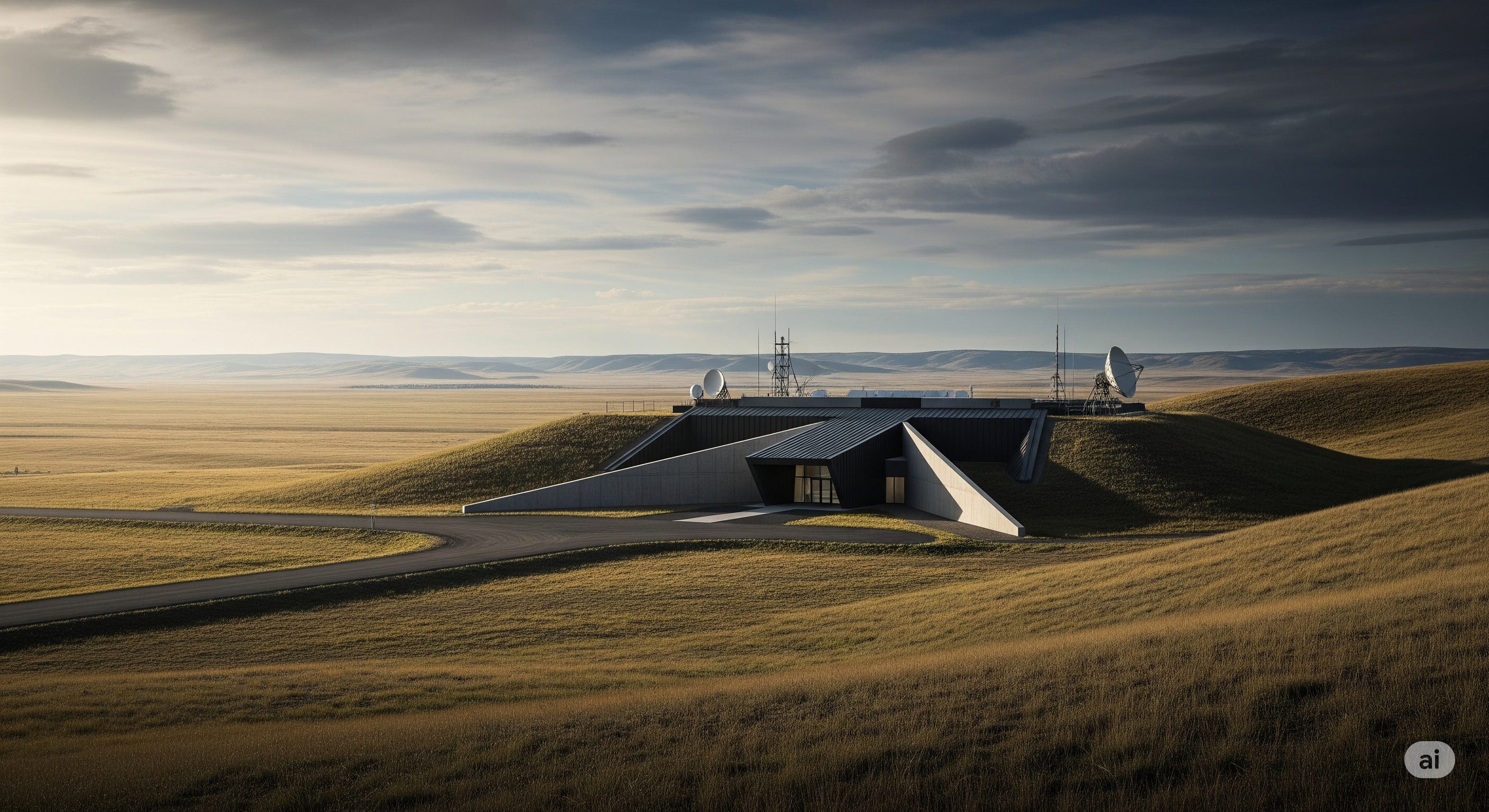
Did you know that hidden in plain sight on the Alberta prairie is a Canadian defence research facility larger than the country of Luxembourg? For over 80 years, Defence Research Establishment Suffield (DRES), now known as DRDC Suffield Research Centre, has been at the forefront of Canada's military science. Born out of the desperation of World War II, its story is one of innovation, resilience, and top-secret projects that have shaped Canada's defence capabilities. This is the story of how a vast, dry expanse of prairie became one of the most important scientific and military sites in the Western world.
A Desperate Search in a World at War
The story of DRES begins with the fall of France in 1940. With this defeat, the Allies lost a critical joint experimental station in the Sahara Desert used for chemical warfare research. At the time, the horrors of gas warfare from WWI were still fresh, and while nations had vowed not to use them first, everyone was preparing to retaliate if attacked. The United Kingdom, now standing nearly alone in Europe, was too densely populated for the large-scale testing required to maintain a credible defence.
Canada stepped up, offering to provide a new testing site. The search was like a real estate hunt on a national scale.
A site in Tracadie, New Brunswick, was too densely wooded.
Locations in Northern Quebec and Ontario were rejected for being too expensive to clear.
A spot near Brandon, Manitoba, was too close to an existing military camp.
An area near Maple Creek, Saskatchewan, was nearly perfect but would have required evacuating over 1,000 prosperous farms.
Finally, the choice fell on Suffield, Alberta. It was an enormous area of over 1,000 square miles of relatively flat, empty land. Critically, there were only 125 farms in the area, and most were not profitable. In 1941, the joint UK-Canadian project began, and Suffield was thrust into the centre of the Allied war effort.
From Barren Prairie to Bustling Base
When the first Canadian scientists arrived in July 1941, there was almost nothing there. They found scattered tents, a few bulldozers, and surveyors at work. Their initial headquarters was in the Medicine Hat armouries, and the first labs on-site didn't even have doors or windows when they moved in. The early years were defined by rugged conditions.
Did You Know? In the early 1940s, the road from the base to Medicine Hat was so treacherous that travel was often uncertain. During one period of extreme mud, the administration gave up on road transport and hired a train to ferry staff back and forth.
Despite the hardships, a unique community spirit formed. The base was essential, and by the end of the war, it employed 584 people, including dozens of scientists trained in everything from chemistry and physics to meteorology and pharmacology. To house the growing permanent staff after the war, the government approved the construction of 60 prefabricated homes in 1947. This was the beginning of the village of Ralston, a thriving community that still exists today, named after the Minister of Defence who first initiated the project, Col. J. L. Ralston.
A Mission Evolved: Gas, Germs, and Giant Explosions
After WWII, the station became an all-Canadian enterprise and its mission evolved. Research on offensive weapons stopped, but work on the defensive aspects of chemical and biological warfare continued and remains active to this day. The unique, wide-open space of the Suffield range allowed for research that was impossible anywhere else.
In the 1950s and 60s, with the world in the grip of the Cold War, DRES turned its attention to nuclear explosions. While other nations tested actual nuclear devices, Canada took a different approach. Scientists at Suffield simulated the physics of nuclear blasts by detonating massive amounts of conventional explosives, sometimes up to 500 tons of TNT at once. This groundbreaking work on shock and blast physics gave DRES unique expertise, which unexpectedly became vital to the Royal Canadian Navy. Starting in the late 1960s, DRES began helping the Navy determine the effects of missile and gun blasts on their own ships, a partnership that continues today.
The Fight for Survival: The "Blue Years"
In the mid-1970s, DRES faced its greatest threat, not from a foreign power, but from a government decision. It was decided that DRES, an expensive facility to operate, would be closed to finance a new establishment in Winnipeg. This kicked off a period known as the "blue years". Morale plummeted, the budget was slashed, and many highly skilled personnel left.
But some employees and supporters decided to fight back. They campaigned to save the base, highlighting its unique and irreplaceable value to Canada's defence. And they won. In 1977, the decision was reversed; DRES would not close. In fact, its research programs were slated to expand. It was a remarkable turnaround that proved the resilience and importance of the Suffield community.
Conclusion
From its urgent beginnings in WWII, through the tense years of the Cold War, and past a near-death experience in the 1970s, DRES has transformed into a world-class research centre. Today, DRDC Suffield is vital to the Canadian Armed Forces. Its scientists develop better protective equipment, test the resilience of military vehicles like the CF-18, and devise new ways to detect threats on the battlefield.
The story of DRES is a powerful reminder of how Canadian innovation, born from necessity, continues to play a quiet but crucial role in national and global security. Understanding the role of institutions like this is a key part of being an informed citizen.
Sources Defence Research Establishment Suffield. (1986, May). A Brief History of DRES 1941-1985 (U) (Suffield Special Publication No. 100). Retrieved from user-provided document DR52-2-7-1986-eng.pdf.
National Defence. (2024, August 20). DRDC Suffield Research Centre. Canada.ca. Retrieved from https://www.canada.ca/en/defence-research-development-canada/corporate-information/drdc-suffield-research-centre.html
Good article, Hansard. Your subject is another article that shows important budgetary significance of many institutions vital to Canada. I live near one of the updated doppler radar sites vital to Canada’s weather safety. I don’t believe all Canadians know and acknowledge the costs of such important systems. Good taxpayers’ money well spent.