


When you think of nuclear energy, the question of waste is never far behind. The image of glowing green rods and concrete bunkers often comes to mind, sparking concerns about safety and long-term responsibility. While the challenge is real, Canada's approach to managing its nuclear waste is a story of meticulous planning, advanced science, and a deep commitment to protecting people and the environment for generations to come.
The reality of nuclear waste management is far more nuanced than the stereotypes suggest. It is a highly regulated field involving different types of waste, multiple stages of storage, and innovative final disposal solutions that are decades in the making. Understanding this complex system reveals a fascinating intersection of engineering, geology, and social responsibility.
Let's explore seven of the most surprising facts about how Canada manages its radioactive waste, moving beyond the myths to see the detailed science and strategy at work.
1. It Is Not All the Same: The Four Classes of Radioactive Waste
Most people think of spent fuel rods when they hear "nuclear waste." In reality, Canada categorizes radioactive waste into four distinct classes. Each class requires a different management strategy based on its specific characteristics and how long it remains hazardous.
High-Level Radioactive Waste (HLW): This is the category you probably picture. It is primarily used nuclear fuel from reactors. It is highly radioactive, generates significant heat, and requires heavy shielding and long-term isolation deep underground.
Intermediate-Level Radioactive Waste (ILW): This waste is less radioactive than spent fuel and generates very little heat. It includes items like used reactor components and resins from water purification systems. It contains long-lived radionuclides that require containment for many centuries.
Low-Level Radioactive Waste (LLW): This is the largest category by volume. It includes items like contaminated work clothes, paper towels, and equipment from reactor operations and other industrial or medical uses. It generally has limited amounts of long-lived radioactivity and requires isolation for up to a few hundred years in near-surface facilities.
Uranium Mine and Mill Tailings: This is the waste rock and processed ore left over from mining uranium. It contains naturally occurring, long-lived radionuclides and is generated in massive volumes. Because of the volume, near-surface disposal at the mine site is the only practical option.
This careful classification system shows that managing radioactive waste is not a one-size-fits-all problem. Each type of waste presents unique challenges that demand tailored, scientific solutions to protect people and the environment for the appropriate timescale.
2. Used Nuclear Fuel First Takes a Long Swim
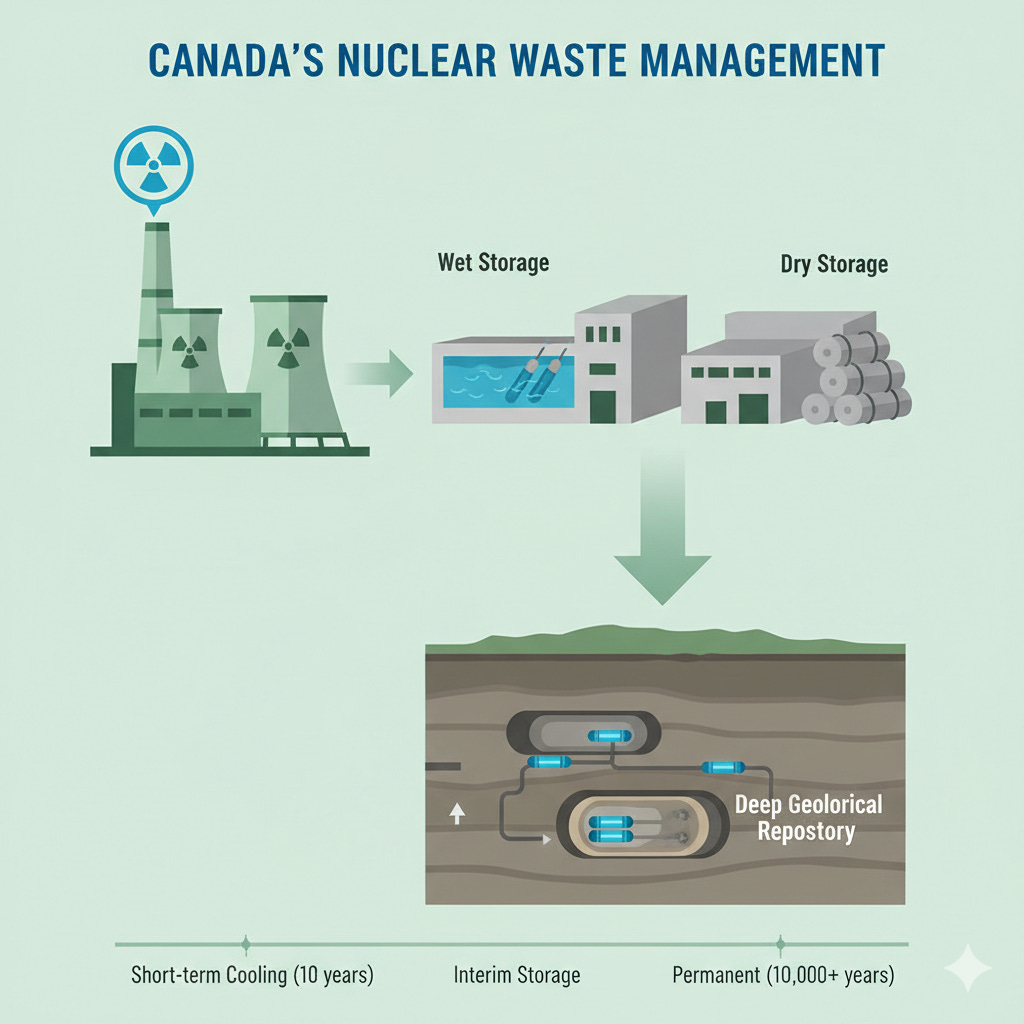
Before it can be stored for the long term, used fuel from a nuclear reactor is intensely hot and radioactive. The first step in safely managing it is a lengthy cooling-off period, which happens in a large, steel-lined concrete pool of water located at the reactor site.
This "wet storage" looks like a high-tech swimming pool. The water serves two critical purposes. First, it cools the fuel assemblies, which continue to generate heat from radioactive decay. Second, the water acts as a highly effective radiation shield, allowing for the safe handling of the fuel using remote systems. The fuel bundles stay in these bays for about six to ten years.
Only after the heat and radioactivity have diminished significantly can the fuel be transferred to "dry storage." This involves placing the bundles into massive, robust containers made of reinforced concrete and steel. These containers are then moved to a separate licensed facility, still on the reactor site, for safe interim storage. This two-step process is a critical safety measure, ensuring the fuel is cool and stable enough for passive, long-term monitoring until a permanent disposal solution is ready.
3. Canada Is Still Cleaning Up Waste from the 1930s
Canada's nuclear story began long before its first power reactors. In the 1930s, mining operations in places like Port Hope, Ontario, processed ore for radium and later uranium. The waste management practices of that era were not up to modern standards, leaving a legacy of contaminated sites.
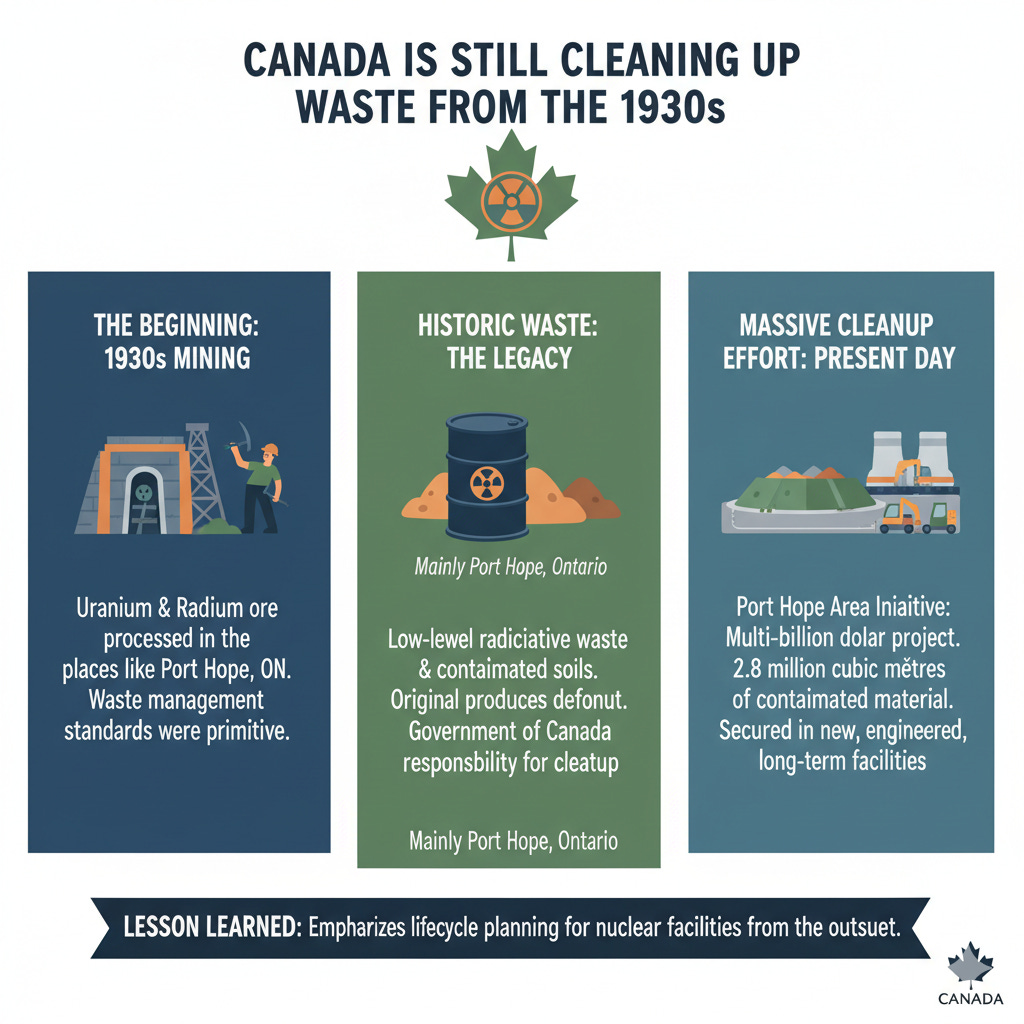
This has created what is known as "historic waste." It is mainly low-level radioactive waste and contaminated soils for which the original corporate producers no longer exist. The Government of Canada has accepted responsibility for cleaning up these sites to protect local communities and the environment.
The largest of these efforts is the Port Hope Area Initiative. This is a multi-billion dollar project to clean up an estimated 2.8 million cubic metres of contaminated material and secure it in new, engineered, long-term waste management facilities. This massive cleanup demonstrates the immense responsibility associated with nuclear materials and highlights the importance of planning for a facility's entire lifecycle from the very beginning.
4. The Final Destination: A Vault Half a Kilometre Underground
While current storage methods are safe for the interim, they are not the final answer. Canada's plan for the permanent disposal of its used nuclear fuel is a project of massive scale and multi-generational scope: a Deep Geological Repository (DGR).
The plan, managed by the Nuclear Waste Management Organization (NWMO), is to build a facility more than 500 metres underground in a stable rock formation, such as the Canadian Shield. Inside the repository, the used fuel will be sealed in corrosion-resistant containers, surrounded by bentonite clay, and placed in a network of underground tunnels. This multi-barrier system is designed to contain and isolate the waste from people and the environment for hundreds of thousands of years.
A critical part of this plan is social, not just technical. The NWMO has spent over a decade in a consent-based process to find an informed and willing host community for the facility, with a final site selection decision expected in 2024. The DGR represents a profound commitment to future generations. The goal is to implement a passive, safe, and permanent solution that does not require future societies to actively manage the waste from our time.
5. Modern Uranium Mines Are Designed to Become Containment Systems
Uranium mining produces enormous quantities of waste rock and tailings. The modern approach to managing this waste is a sophisticated example of environmental engineering that plans for the end from the very beginning.
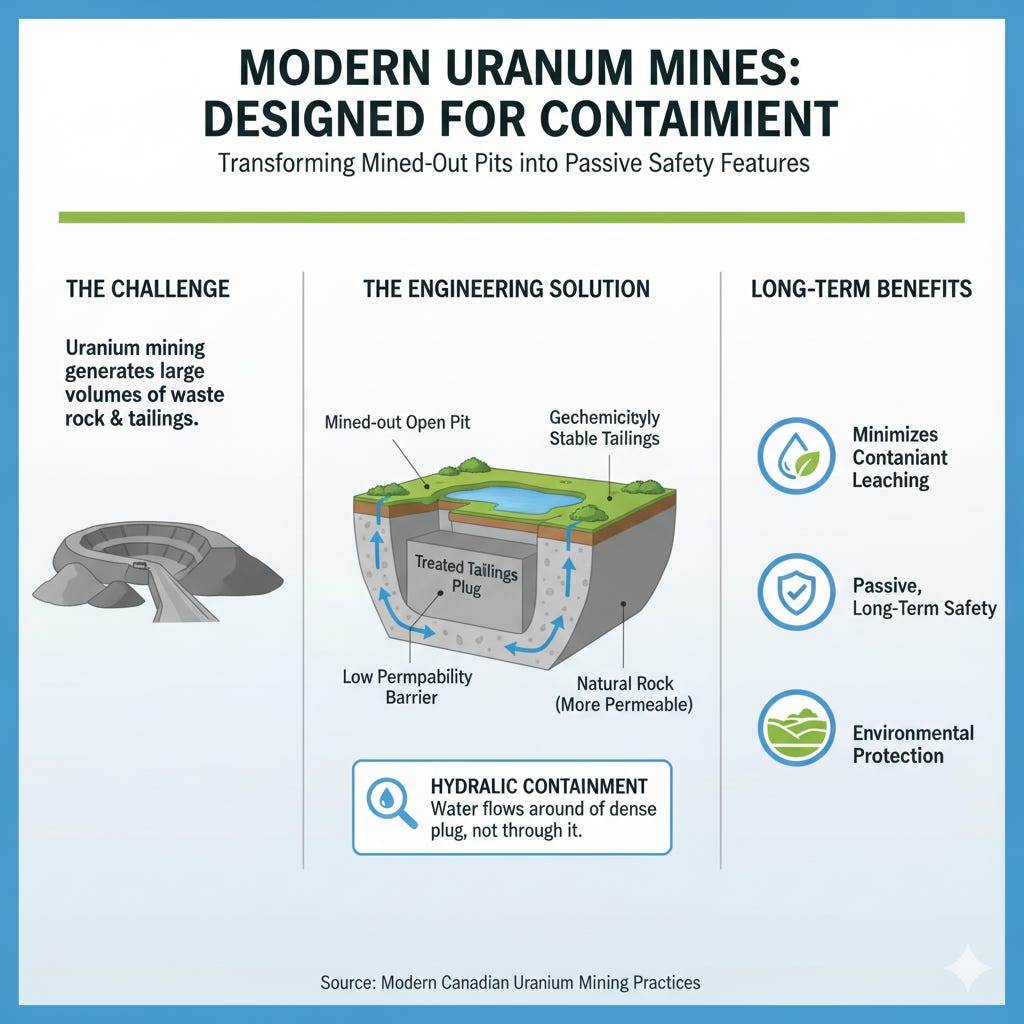
Instead of creating new surface mounds, many modern mines in Canada repurpose the mined-out open pits as engineered Tailings Management Facilities. The tailings, a slurry of finely ground rock left over after the uranium is extracted, are treated to be geochemically stable and are then placed into the pit.
The design relies on a concept called "hydraulic containment." The consolidated tailings form a dense plug with very low permeability. The surrounding natural rock is much more permeable. After the site is closed and the groundwater table returns to its natural level, the water will flow around the dense plug of tailings rather than through it. This path of least resistance minimizes the potential for contaminants to leach into the environment. This strategy turns a former industrial site into a long-term passive safety feature.
6. Every High-Risk Radioactive Source Is Tracked Nationally
Radioactive materials are not just found in nuclear power plants. Small, sealed radioactive sources are essential in many industries and in medicine, used for everything from cancer therapy to industrial imaging. While useful, these sources could be dangerous if lost or stolen.
To prevent this, Canada maintains a robust national tracking system. The National Sealed Source Registry and the Sealed Source Tracking System monitor all high-risk radioactive sources across the country, from their creation or import to their final disposal. Licensees must report every time a source is created, moved, or received.
This meticulous "cradle-to-grave" oversight is critical for safety and security. The system ensures that all sources remain accounted for and prevents them from becoming "orphan sources" that could pose a risk to the public. This detailed level of control illustrates the seriousness with which all nuclear substances are managed, no matter how small.
7. Canada's Nuclear Safety Is Regularly Checked by Global Experts
How can you be sure that Canada's nuclear safety standards are effective? One way is by inviting international experts to review them. Canada regularly participates in peer reviews conducted by organizations like the International Atomic Energy Agency (IAEA).
These reviews, such as the Integrated Regulatory Review Service mission, involve a team of international specialists who assess Canada's regulatory framework and practices against global safety standards. They examine everything from waste management policies and facility design to emergency preparedness.
These missions provide an independent, external check on the system. The final reports identify areas of strength and good practices, but also offer recommendations and suggestions for improvement. This process of international collaboration and scrutiny helps ensure Canada's approach remains aligned with global best practices and builds public confidence in the work of the national regulator, the Canadian Nuclear Safety Commission.
Conclusion
Managing nuclear waste is an undertaking of immense complexity and long-term responsibility. The Canadian approach is built on a foundation of rigorous science, strict regulation, and a commitment to transparency. From classifying different types of waste to designing multi-generational disposal solutions, every step is guided by the core principle of protecting human health and the environment.
The journey from a hot fuel bundle fresh from a reactor to its final resting place deep underground is a long and carefully managed process. It is a testament to our ability to plan for a future far beyond our own lifetimes. As we continue to rely on diverse energy sources, the central question remains: how do we best balance our present needs with our permanent responsibilities to the generations that will follow?
Sources:
Government of Canada. (2024). Canadian National Report for the Joint Convention on the Safety of Spent Fuel Management and on the Safety of Radioactive Waste Management: Eighth Report. Canadian Nuclear Safety Commission.