


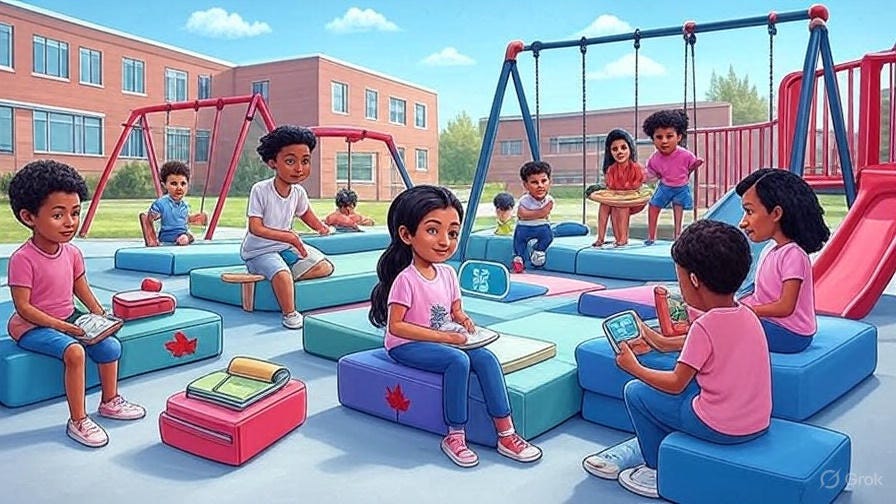
As back-to-school activities resume, consider that a playground mishap or home tumble could cost Canadian families and taxpayers $658 million annually. This figure represents the economic impact of childhood falls, the primary cause of injuries among children in Canada, affecting thousands through deaths, hospitalizations, and emergency department visits. The Public Health Agency of Canada's 2025 report highlights declining rates due to enhanced awareness, making this analysis particularly relevant now as outdoor play intensifies, informing parents, educators, and policymakers on prevention strategies.
Breaking Down the Basics: What Are Childhood Falls?
Childhood falls encompass unintentional descents from elevations or slips on level surfaces, often resulting in injuries ranging from minor abrasions to severe conditions such as fractures or traumatic brain injuries. Comparable to the initial stages of vehicle operation where minor faults can escalate, these incidents are most prevalent in children aged 0 to 9 during periods of physical development and exploration. The report draws from data spanning 2010 to 2023, sourced from the Canadian Vital Statistics Death Database, Discharge Abstract Database, and National Ambulatory Care Reporting System (excluding certain Quebec data for hospitalizations), supplemented by narrative insights from the Canadian Hospitals Injury Reporting and Prevention Program.
Data Sources Overview: Deaths are recorded via Statistics Canada; hospitalizations through the Canadian Institute for Health Information's Discharge Abstract Database; emergency visits via the National Ambulatory Care Reporting System in select provinces.
Analytical Approach: Rates are expressed per 100,000 population, with traumatic brain injuries identified using standardized medical codes, including concussions and cranial fractures.
This framework underscores the real-world implications for communities across Canada.
The Shocking Numbers: Deaths, Hospital Stays, and ER Rushes
Falls constitute a significant public health concern, with data indicating 1,859 unintentional injury-related deaths among children under 10 from 2010 to 2023, of which 48 were fall-related—equivalent to the loss of a small classroom over this period, predominantly from descents involving buildings or structures.
Annually, falls account for approximately 4,590 hospitalizations and 187,709 emergency department visits, imposing $451 million in direct healthcare costs. Males exhibit elevated rates across age groups, potentially attributable to differences in activity patterns.
Did You Know?
Hospitalization rates for falls have declined, reflecting an average annual percent change of -2.3% over the period.
Emergency department visit rates show a -1.8% average annual percent change, likely influenced by safety interventions such as improved playground materials.
Among infants, 69.5% of falls from items like baby carriers in those aged 0-4 months result in traumatic brain injuries.
These statistics, derived through indirect standardization, equate to substantial resource allocation that could otherwise support educational initiatives. Consider sharing this insight if it resonates with your experiences as a parent or caregiver.
Age Matters: How Falls Change as Kids Grow
The nature of falls varies by developmental stage, akin to evolving preferences in activities as children mature.
0-4 Months: Predominantly occur while being carried by caregivers, with elevated traumatic brain injury risks (69.5% in specific scenarios).
5-11 Months: Involve furniture, beds, or infant products, yielding 68.0% traumatic brain injuries.
1-4 Years: Feature playground equipment, stairs, and level-surface slips, with increased fracture incidence.
5-9 Years: Include sports, tree climbing, trampolines, and playgrounds, where fractures affect nearly 50% of cases from trees or trampolines.
Narrative data reveal seasonal patterns—outdoor in summer, indoor in winter—and highlight high-severity incidents like window or balcony falls. Such details emphasize the need for age-appropriate safeguards.
Prevention Wins: But Is Over-Regulation Killing Play?
Declining rates correlate with initiatives such as soft playground surfacing, which studies indicate can reduce injuries by up to 50%. The Public Health Agency of Canada advocates for standards like CSA Z614, focusing on equipment height and materials.
However, a fact-based perspective highlights potential drawbacks: Regulations may curtail "risky play," essential for building resilience and skills, as evidenced by the Canadian Paediatric Society's 2024 position on balancing injury prevention with development. Indigenous communities face disparities in access to safe play areas, exacerbating health inequities according to society reports. A 2005 study demonstrated halved injury rates from updated equipment, yet a 2014 analysis of similar U.S.-influenced standards critiqued them for insufficient evidence on head injury mitigation, potentially stifling innovative play designs.
Proponents argue for evidence-based rules to save lives; critics, supported by playground advocacy data, contend over-caution fosters dependency. This tension underscores the importance of equitable, balanced policies.
The Bigger Picture: Costs, Policies, and Your Role
The $658 million annual cost encompasses parental productivity losses and varies provincially, with falls ranking as a top hospitalization cause in regions like Saskatchewan. Social determinants, including socioeconomic status and environmental factors like winter conditions, influence incidence, as verified in paediatric literature.
Controversially, insufficient emphasis on these factors—such as poverty-linked home hazards or cultural barriers for Indigenous families—may perpetuate gaps, per verified society and health agency reports.
Wrapping Up: Stay Safe, Stay Informed
In summary, falls result in 48 deaths, thousands of hospitalizations, and substantial costs, with declining trends attributable to prevention efforts. Risks are higher for males and infants, varying by age, and require balanced approaches to avoid over-regulation while addressing equities.
Share this article if it prompts reflection on child safety in your community. Follow @OnHansard for further policy analyses, and explore onhansard.substack.com for in-depth discussions—empowering informed participation in public health matters.
Sources: Public Health Agency of Canada. (2025). Injury in review, 2025 edition: Spotlight on children's falls. https://publications.gc.ca/collections/collection_2025/aspc-phac/HP15-14-2025-eng.pdf
Canadian Paediatric Society. (2024). Healthy childhood development through outdoor risky play: Navigating the balance with injury prevention. https://cps.ca/en/documents/position/outdoor-risky-play
Howard, A. W., MacArthur, C., Willan, A., Rothman, L., Moses-McKeag, A., & MacPherson, A. K. (2005). The effect of safer play equipment on playground injury rates among school children. CMAJ, 172(11), 1443-1446. https://www.cmaj.ca/content/172/11/1443
National Recreation and Park Association. (2014). New playground criteria adopted amid controversy. Parks & Recreation Magazine. https://www.nrpa.org/parks-recreation-magazine/2014/december/new-playground-criteria-adopted-amid-controversy/