


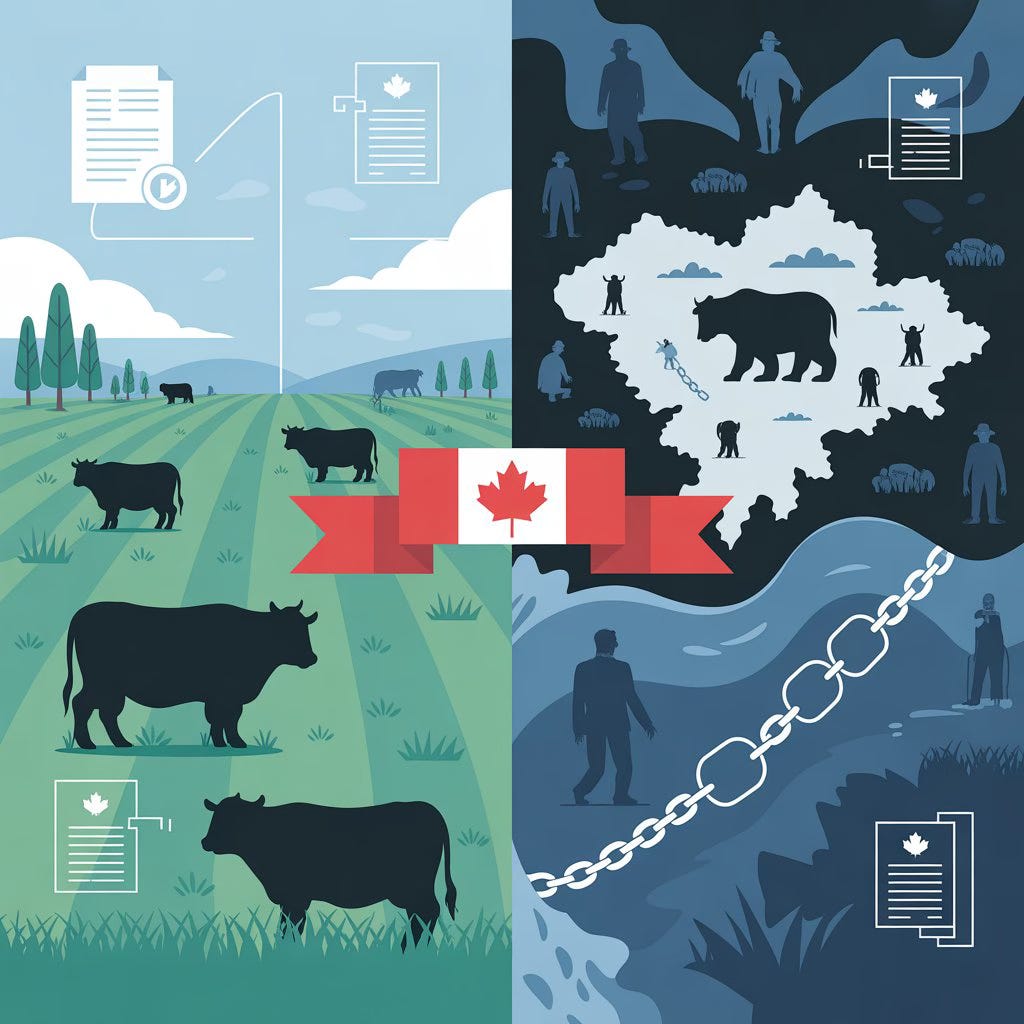
Have you ever wondered how a tweak in cattle definitions could ripple through your grocery bill, or why Canada is slapping sanctions on folks in a tiny European nation? On September 10, 2025, the Canada Gazette dropped updates that touch on homegrown agriculture and far-flung geopolitics. These aren't just bureaucratic blips. They matter to Canadians because they influence farm economics, which ties into food costs, and reinforce our stance against Russian interference abroad, echoing the Ukraine conflict. Think of it as Ottawa quietly steering the ship while we sip our morning coffee, with a dash of international intrigue to spice things up.
Inside the Beef Levy Overhaul: Redefining Cows to Streamline Farmer Fees
Let's break down SOR/2025-162, the Order Amending the Beef Cattle Research, Market Development and Promotion Levies Order. At its core, this is about updating how fees are collected from beef sales to fund research and marketing. Imagine the beef industry as a giant potluck where everyone chips in a small fee per dish (or cow) to keep the party going stronger. These amendments refine the guest list, so to speak, ensuring the right contributions without double-dipping.
Key changes include:
New and Tweaked Definitions: Terms like "bob calf" (young dairy calves under 68 kg in Ontario or 109 kg in Quebec), "cull cow" (older animals headed for slaughter), and "fed cattle" (finished beef ready for market) get precise updates. A new category, "feeder cattle," covers animals prepped for finishing but not the tiniest calves. This clarifies dairy-beef crossbreeds, which blend milk-focused and meat-focused genetics, preventing confusion in a mixed industry.
Payment Clarity: Levies must now be paid within 15 calendar days of the invoice date via negotiable instrument in Canadian dollars. No more vague timelines; it's like setting a strict due date on your utility bill to avoid late fees.
Why the Updates? The explanatory note states these changes establish and amend cattle classes, refining dairy-beef composites and payment dates. It's administrative housekeeping, but it ensures fair funding for the Canadian Beef Cattle Research, Market Development and Promotion Agency's work on market growth and innovation.
For farmers, this could mean smoother operations, but here's a potentially polarizing angle grounded in industry chatter: some producers argue these levies disproportionately burden small operations, acting as a hidden tax that favors big players. Verified from agency reports, the national check-off (levy) has hovered around $2.50 per head historically, funding exports and sustainability research. If mishandled, it might squeeze margins in a sector already hit by rising feed costs, though official sources emphasize benefits like boosted exports worth billions annually.
Did You Know? Canada's beef industry supports over 228,000 jobs and contributes $21.6 billion to GDP, per government stats. These tweaks aim to keep that engine humming.
Moldova Sanctions Ramp-Up: Targeting Russian Influence in a Fragile Democracy
Shifting gears to SOR/2025-163, the Regulations Amending the Special Economic Measures (Moldova) Regulations. This adds 16 individuals and 2 entities to Canada's sanctions list, freezing assets and banning dealings. Picture Moldova as a small backyard caught in a neighborhood feud: Russia, via proxies, is accused of stirring the pot to undermine its pro-EU government, especially amid the Ukraine war.
The additions include:
Individuals: Names like Evghenia Gutul (a pro-Russian politician in Gagauzia), Irina Vlah (former regional leader), and others tied to destabilization efforts. They're accused of coordinating with Russia to interfere in Moldova's elections and spread disinformation.
Entities: The Victory/Pobeda Political Bloc (a pro-Russian alliance) and the Public Association – Association of People with Epaulettes “Scutul Poporului” (a movement linked to ex-military figures pushing Russian agendas).
The regulatory impact statement ties this to Russia's 2022 Ukraine invasion, noting Moldova's vulnerability with 1,500 Russian "peacekeepers" in its separatist Transnistria region. Canada views this as a "grave breach of international peace," justifying sanctions to curb malign activities.
Critics, including some international observers, question if these sanctions unfairly target ethnic minorities in Moldova's Gagauzia region, potentially fueling division rather than unity. Yet, verified from Global Affairs Canada, these listings stem from evidence of coordinated disinformation and election meddling, with Russia spending millions to sway votes. It's part of broader Western efforts, as the U.S. and EU have similar measures, but it raises debates on whether sanctions truly deter superpowers or just hurt locals.
Did You Know? Since 2023, Canada has sanctioned over 2,300 Russian-linked entities globally. This Moldova batch, effective August 26, 2025, underscores our $15 billion+ aid to Ukraine, linking regional stability to our security interests.
Broader Implications: From Farm Gates to Foreign Gates
These Gazette entries aren't isolated; they reflect Ottawa's dual focus on domestic resilience and global ethics. The beef amendments support an industry facing climate and trade pressures, while Moldova sanctions align with NATO allies against hybrid threats. Together, they show how policy threads connect your dinner plate to distant diplomacy.
In an era of food inflation (beef prices up 10% year-over-year per StatsCan), levy tweaks might subtly influence costs, while sanctions could indirectly affect energy prices if Russian instability escalates. It's like Ottawa playing chess, where a pawn move in agriculture or foreign affairs sets up the endgame.
Wrapping Up: Why These Updates Deserve Your Attention
The beef levy amendments streamline definitions and payments for fairer industry funding, potentially easing admin for farmers but sparking debates on equity. The Moldova sanctions target Russian proxies, bolstering a democracy under siege, though they highlight the thorny ethics of international intervention. Both underscore Canada's proactive governance in uncertain times.
Share this if it cleared the Ottawa fog for you, and subscribe to OnHansard at onhansard.substack.com for more breakdowns. Being informed isn't just smart; it's your secret weapon in a world where policies shape everything from your wallet to world peace. After all, who knew cows and covert ops could share a page?
Sources: Canada Gazette. (2025). Canada Gazette, Part II, Vol. 159, No. 19. https://www.gazette.gc.ca/rp-pr/p2/2025/2025-09-10/html/index-eng.html
Global Affairs Canada. (2025, August 28). Minister Anand announces additional sanctions in response to Russia's malign interference activities in Moldova. https://www.canada.ca/en/global-affairs/news/2025/08/minister-anand-announces-additional-sanctions-in-response-to-russias-malign-interference-activities-in-moldova.html
Global Affairs Canada. (2025, August 28). Backgrounder: Sanctions against individuals and entities in Moldova. https://www.canada.ca/en/global-affairs/news/2025/08/backgrounder-sanctions-against-individuals-and-entities-in-moldova.html
Justice Laws Website. (2025). Beef Cattle Research, Market Development and Promotion Levies Order (SOR/2016-236). https://laws-lois.justice.gc.ca/eng/regulations/SOR-2016-236/index.html
Canadian Beef Check-Off Agency. (2025, March 31). 2025/26 Business plan approved by Agency. https://www.cdnbeefcheckoff.ca/news-releases/2025-26-business-plan-approved-by-agency/