


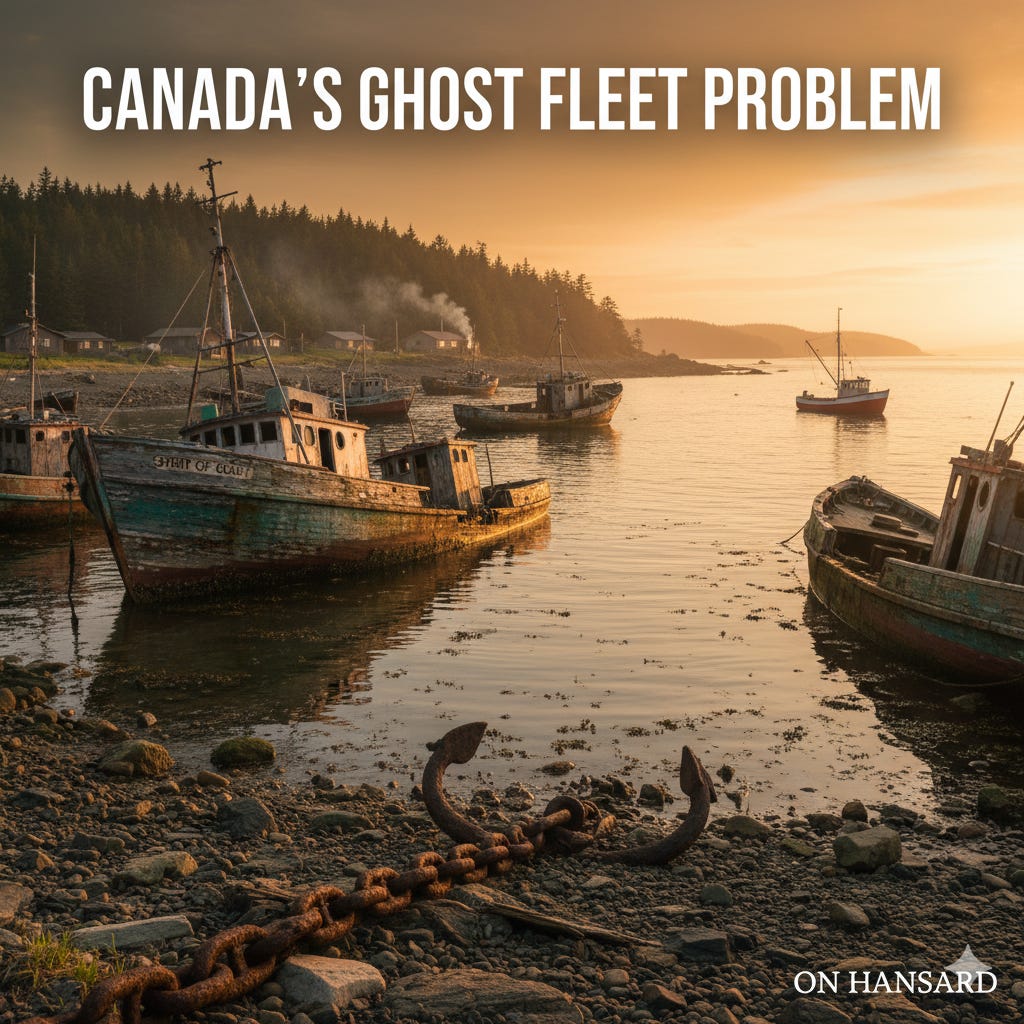
A new report from the House of Commons Standing Committee on Fisheries and Oceans paints a stark picture of Canada’s coastlines. They are littered with what witnesses call a “ghost fleet” of derelict and abandoned vessels, or DAVs. While the official national inventory lists 1,358 problem vessels, testimony suggests the true number is likely in the thousands. These are not just eyesores. They are active hazards, leaking fuel, plastics, and heavy metals into sensitive ecosystems, obstructing navigation, and threatening the cultural and economic lifelines of coastal communities, particularly First Nations. The report, titled Acting Together to Address Derelict and Abandoned Vessels in Canada, methodically unpacks a system failing to keep pace with a growing crisis.
The Scope of the Problem
The impact of these DAVs is multifaceted. Environmentally, they leach a cocktail of toxins, including oil, asbestos, and heavy metals from paint, which contaminates the food chain from clam beds to marine mammals. For First Nations, this is not an abstract threat. It directly compromises food sovereignty and traditional ways of life that have existed for millennia. Economically, these wrecks deter tourism, create navigational hazards for boaters, and saddle local port authorities with cleanup costs they often cannot afford. The problem is most acute in British Columbia, which accounts for 935 of the vessels on the national inventory, but it is a national issue affecting communities on the Atlantic and Arctic coasts as well.
Why Can’t We Just Clean Them Up?
If the problem is so clear, what makes the solution so difficult? The committee’s report points to a series of deep, systemic barriers that prevent swift and effective action.
The Ownership Black Hole
You can’t hold an owner accountable if you don’t know who they are. This is the central challenge. The report highlights a critically flawed vessel licensing system. Before 2010, many pleasure craft licenses were granted for life and were often not updated when a vessel was sold or decommissioned. This has created a massive database of “ghost” owners, making it nearly impossible for Transport Canada or the Coast Guard to enforce the law.
Proposed regulations aim to fix this by moving to a five-year renewal period, but even that has its critics. The Conservative Party’s supplementary opinion in the report argues the onus for registering a sale should be on the seller, not the buyer. Why? Because the seller has a clear financial incentive to sever their liability for the vessel.
A Maze of Jurisdiction
Even when a vessel is identified, a bureaucratic maze often slows action to a crawl. Witnesses described a frustrating tangle of overlapping jurisdictions. A floating vessel is a federal responsibility, managed by Transport Canada and the Canadian Coast Guard. But once that same vessel washes ashore, it becomes a provincial matter. As one witness explained, even a simple mooring buoy can touch on three different jurisdictions: the province (seabed), Fisheries and Oceans (water column), and the Coast Guard (surface). This confusion leads to delays, allowing vessels to deteriorate and cause more damage while agencies determine whose job it is to act.
The Prohibitive Cost
Removing a DAV is complex and expensive. Costs can range from $5,000 for a small pleasure craft to over $25 million for a large commercial vessel. The high cost of proper disposal is often what leads an owner to abandon their boat in the first place. Furthermore, Canada lacks the infrastructure for environmentally sound disposal, particularly for the thousands of aging fiberglass boats that end up in landfills.
Charting a New Course: Proposed Solutions
The report is not just a diagnosis of the problem; it is a collection of solutions offered by those on the front lines. The recommendations center on three key areas: funding, prevention, and empowerment.
Funding the Cleanup
A central proposal is the creation of a Vessel Remediation Fund (VRF), which would be financed by a fee paid by vessel owners when they register or license their craft. The idea is to create a pool of money to deal with legacy vessels where an owner cannot be found, shifting the burden from general taxpayers to the boating community itself. However, witnesses questioned whether the proposed fees, such as $10 every five years for a pleasure craft, are sufficient to tackle the scale of the problem.
A Proactive Approach
Many witnesses stressed that the government must shift from a reactive cleanup model to a proactive prevention strategy. This includes developing “turn-in” programs that would allow owners to dispose of their vessels responsibly before they become derelict. Another key idea is creating a “fast-track” process to remove at-risk vessels before they sink, break apart, and become a much more expensive environmental hazard.
Empowering Indigenous Guardians
A recurring theme throughout the testimony was the critical role of First Nations. Indigenous Guardian programs are already on the water, monitoring their territories and identifying problem vessels. However, they often lack the authority and funding to act. The report strongly recommends that the government provide long-term, sustainable funding for these programs and work with First Nations to co-manage the issue, leveraging their local knowledge and deep connection to the marine environment.
The Data Brief
The Standing Committee’s report provides a clear, evidence-based look at the challenge of derelict vessels. The core issues identified are not technical but systemic. A flawed ownership registry prevents accountability, jurisdictional confusion creates paralysis, and a lack of funding and infrastructure leaves communities to deal with the consequences. The proposed solutions shift the focus toward prevention, a “user-pay” funding model through the Vessel Remediation Fund, and greater collaboration with provincial, municipal, and, most critically, Indigenous governments.
The Real Cost of Neglect
Ultimately, the ghost fleet haunting Canada’s coasts is a physical manifestation of a deeper failure of accountability. The report makes clear that this is more than a waste management problem; it is a test of sovereignty. It challenges the ability of First Nations to exercise stewardship over their lands and waters, the capacity of local communities to protect their environments and economies, and the effectiveness of the federal government to enforce its own laws. Leaving these vessels to rot is not a passive act, it is an active choice that transfers the cost of neglect onto future generations and the fragile ecosystems they will inherit.
Source Documents
Standing Committee on Fisheries and Oceans. (2025, October). Acting together to address derelict and abandoned vessels in Canada. House of Commons.