


What does it mean to be a Canadian citizen, and how should that status be passed from one generation to the next? This fundamental question is at the heart of a debate currently taking place in the House of Commons. A piece of legislation, known as Bill C-3, proposes significant changes to the Citizenship Act. These changes would affect Canadians who have children abroad, families who adopt internationally, and a group of people who lost their citizenship due to outdated laws.
The bill has parts that all political parties appear to support. It offers solutions to long-standing issues that have been described as unfair. At the same time, the bill’s core proposal has rekindled a decade-old debate about national identity, the value of a Canadian passport, and the responsibilities that come with citizenship.
The discussion goes beyond legal technicalities. It touches on personal stories of families separated by legal hurdles and national events that have shaped public opinion. As members of Parliament debate the details, they are weighing the needs of an increasingly global Canadian population against concerns about security and the integrity of the citizenship process. Here are the key takeaways from the debate.
The End of the "First-Generation Cut-Off"
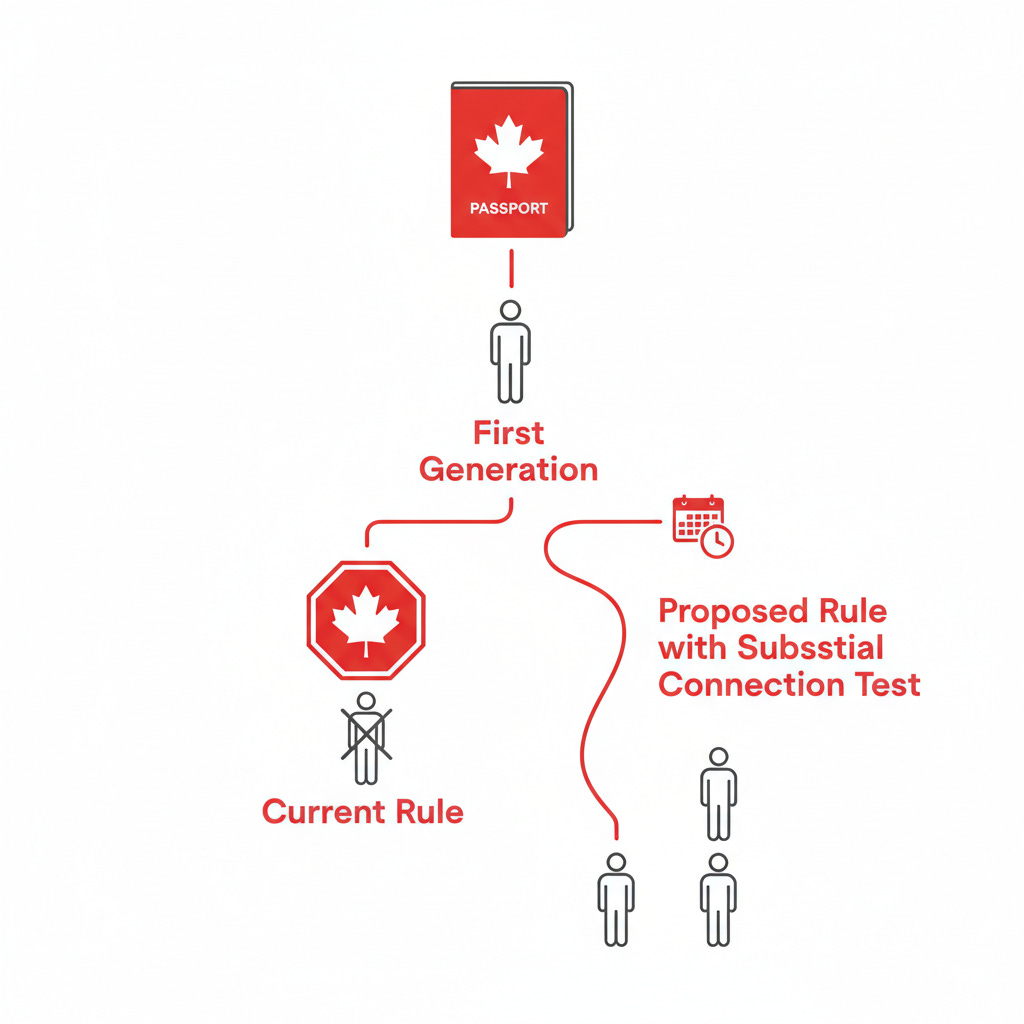
One of the most significant changes proposed in Bill C-3 is the elimination of the "first-generation limit" on citizenship by descent. The current law, put in place in 2009, states that a Canadian citizen born abroad cannot automatically pass on their citizenship to a child who is also born outside of Canada. This rule was intended to prevent citizenship from being passed down through endless generations of people who might have no meaningful connection to the country.
The new bill seeks to replace this rule with a "substantial connection test." Under this proposal, a Canadian parent born abroad could pass on citizenship to their child if they can prove they have spent a cumulative total of 1,095 days (three years) physically present in Canada before the child’s birth. The days do not need to be consecutive, meaning time spent in Canada for school, work, or travel throughout a person's life could count towards the total.
Supporters argue this change is necessary to accommodate the reality of modern Canadian families. Many citizens live, work, or study abroad for extended periods. They maintain deep ties to Canada and intend to return. Proponents believe the current law unfairly penalizes their children and is based on an outdated view of what it means to be Canadian. The government also notes that a court has found the existing rule to be unconstitutional, making a legislative change necessary.
"The first-generation limit on citizenship by descent has created unfairness and has been found unconstitutional. This bill addresses those issues."
Critics, however, argue that the proposed 1,095-day requirement is a weak and "flimsy" standard. They suggest that spending a few weeks or months in Canada spread out over decades does not constitute a genuine, life-long commitment to the country. They believe this new rule will devalue citizenship by making it too easy to obtain for those with only a brief connection to Canada.
"The proposed 1,095-day rule is a flimsy connection test that will allow citizenship to be passed down by individuals with very little actual connection to Canada."
The "Canadians of Convenience" Debate Returns
The debate over the first-generation limit is not new. It is directly linked to an event that shaped Canada's citizenship policy nearly two decades ago. In 2006, during a conflict in Lebanon, the Canadian government spent $94 million to evacuate approximately 15,000 Canadian citizens to safety. It was later reported that many of these individuals had been living in Lebanon full-time with little prior connection to Canada, and many returned to Lebanon as soon as the conflict subsided.
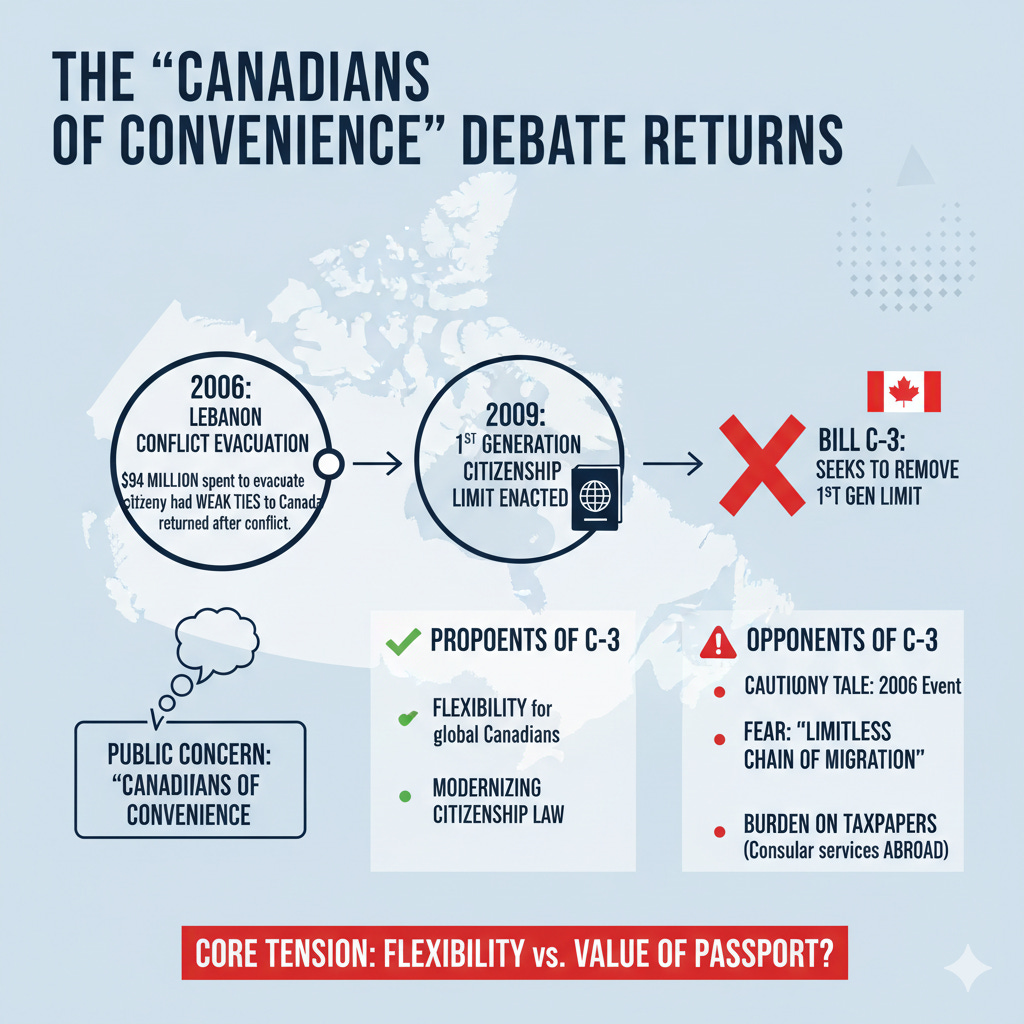
This event led to public concern about "Canadians of convenience," a term used to describe people who hold a Canadian passport primarily as an insurance policy without actively participating in Canadian society or contributing through taxes. It was this public sentiment that directly led the government in 2009 to implement the first-generation limit that Bill C-3 now seeks to remove.
Opponents of the new bill raise this history as a cautionary tale. They argue that replacing the first-generation limit with the substantial connection test reopens the door to the same issues. They express concern that the new rule could create a "limitless chain of migration" and place a potential burden on Canadian taxpayers for services like consular assistance abroad without any corresponding contribution from those receiving the benefit. The core tension is clear: how to offer flexibility to global Canadians without cheapening the passport they hold.
Equal Rights for Adopted Children
While the debate over citizenship by descent is divisive, other parts of Bill C-3 have received broad, all-party support. One of these is a provision to streamline the citizenship process for children adopted by Canadians from other countries.
Under the current system, Canadian parents who adopt a child born outside of Canada must often go through a long and complicated process. This process can involve applying for the child’s permanent residence before they can even begin the citizenship application. This creates an unnecessary burden on families and treats adopted children differently from biological children born to Canadians abroad.
Bill C-3 proposes to fix this disparity. It would allow Canadian parents to pass on citizenship directly to their adopted children, treating them as if they were born in Canada. This change would provide equal treatment for adopted children and simplify the process for parents who are trying to unite their families. This common-sense reform is seen by all sides as a fair and long-overdue correction to the law.
"This measure ensures that adopted children are treated fairly and equally, providing a direct path to citizenship for Canadian families."
Correcting a Decades-Old Mistake for "Lost Canadians"
Another widely supported part of the bill aims to restore citizenship to a group known as "lost Canadians." Due to a series of complex and overlapping changes to the Citizenship Act over the years, a specific group of people lost their citizenship without even knowing it.
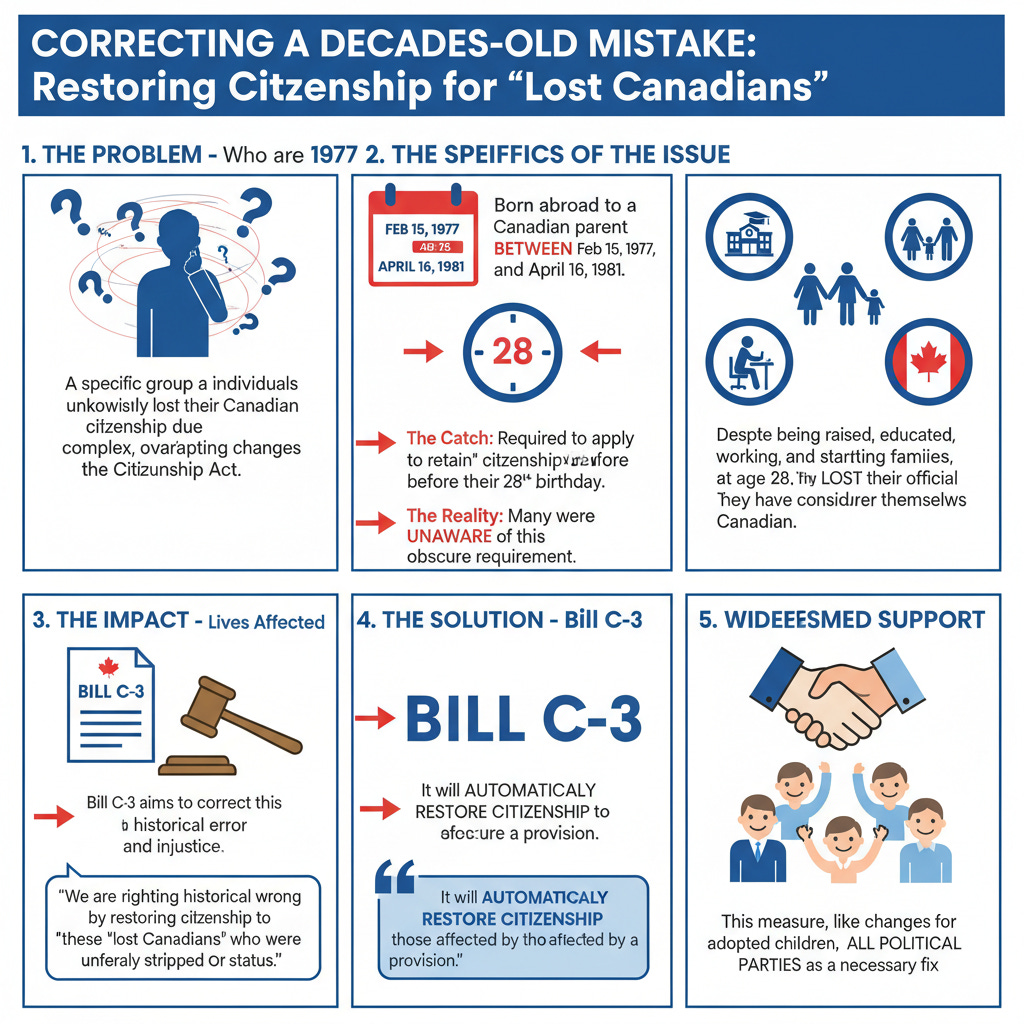
These are individuals who were born abroad to a Canadian parent between February 15, 1977, and April 16, 1981. Under the law at the time, they were required to apply to retain their citizenship before their 28th birthday. Many were unaware of this requirement. Despite being raised in Canada, attending school here, working, and starting their own families as Canadians, they lost their official status when they turned 28.
Bill C-3 seeks to correct this historical error. It will automatically restore citizenship to those who were affected by this obscure provision. Like the changes for adopted children, this measure is viewed by all parties as a necessary fix to an injustice that negatively affected people who, for all intents and purposes, have always been Canadian.
"We are righting a historical wrong by restoring citizenship to these 'lost Canadians' who were unfairly stripped of their status."
Concerns Over Security and Unknown Numbers
Beyond the philosophical debate about the meaning of citizenship, critics of Bill C-3 have raised practical concerns about security and logistics. They point out that the legislation, as written, does not appear to require a criminal record check or security screening for individuals who would automatically gain citizenship through the new substantial connection test. This, they argue, could open the door to individuals with serious criminal records in other countries becoming Canadian citizens without proper vetting.
"There is no security screening built into the automatic citizenship process for individuals who qualify under the new substantial connection test. This is a significant oversight."
Another major point of contention is the uncertainty surrounding the number of people who will be affected. The government has not provided a clear estimate of how many individuals abroad would instantly become eligible for citizenship if the bill passes. The Parliamentary Budget Officer has estimated that as many as 115,000 new citizens could be created, but critics say the real number is unknown.
This lack of clarity raises concerns about the ability of Immigration, Refugees and Citizenship Canada (IRCC) to handle a potential influx of applications and requests for documentation, such as passports. The department is already facing significant backlogs in many areas. Adding a large, unknown number of new citizens to the system without a clear plan or sufficient resources could create further delays and strain an already overburdened system. These practical concerns form a significant part of the opposition to the bill's proposed changes.
"The government has no idea how many people will become eligible for citizenship overnight. This lack of data makes it impossible to assess the true impact on our immigration system."
Bill C-3 is a complex piece of legislation that tries to solve multiple problems at once. Its proposals to restore status to "lost Canadians" and ensure equal rights for adopted children are seen as necessary and just. The bill’s attempt to modernize the rules for passing on citizenship to children born abroad, however, has proven far more controversial.
The debate forces a difficult conversation. It asks Canadians to consider how to define a genuine connection to the country in an era of global mobility. It pits the desire for fairness and flexibility against the need to maintain the security and value of one of the world's most sought-after citizenships. As the bill makes its way through Parliament, the final outcome will depend on which of these principles carries the day. The result will shape the meaning of being Canadian for generations to come.
Sources:
House of Commons. (2025, September 19). House of Commons Debates (Hansard), 152(025). 45th Parliament, 1st Session.