


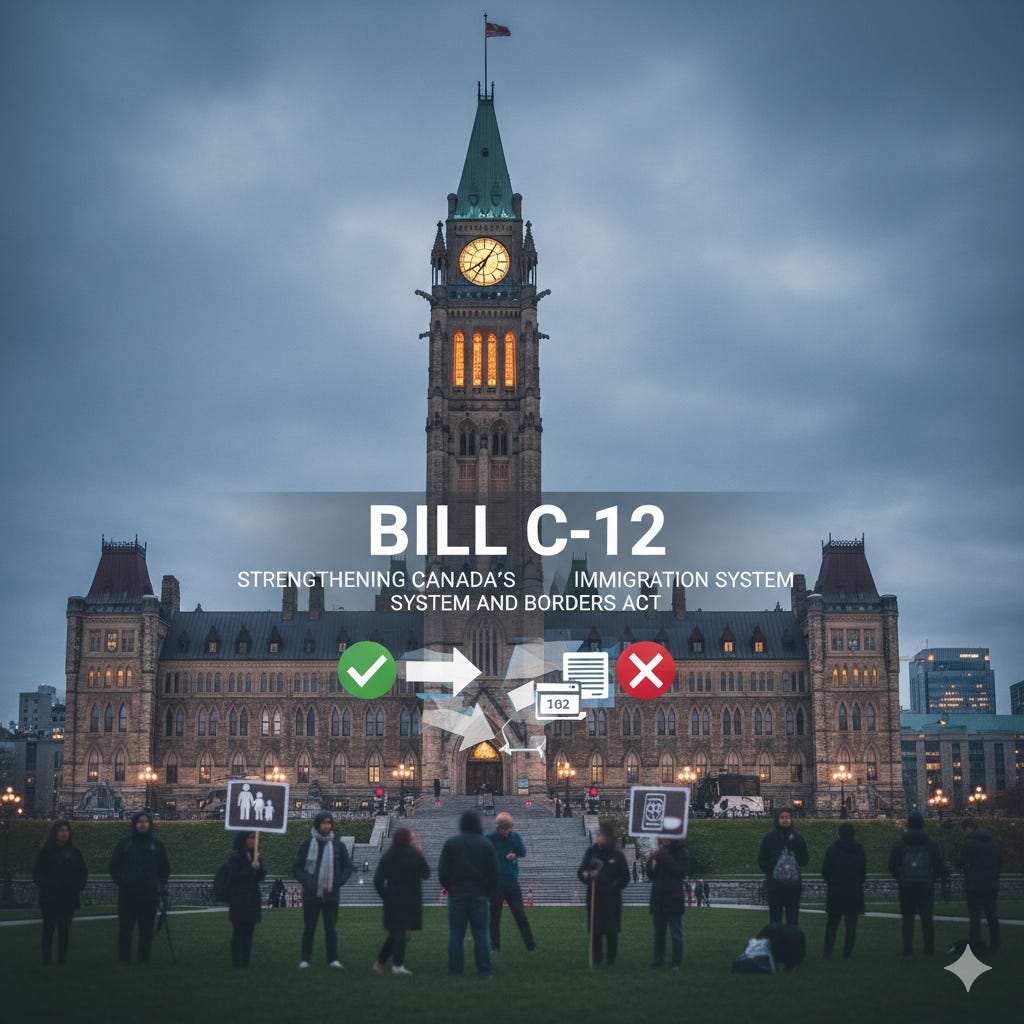
The main event in the House of Commons yesterday was the continued debate on Bill C-12, titled the Strengthening Canada’s Immigration System and Borders Act. This is the government’s second attempt at a major security and immigration overhaul in this Parliament. It follows the controversial introduction of Bill C-2, which faced widespread opposition for its privacy implications. Bill C-12 is a streamlined version, but it still proposes significant changes to how Canada manages its asylum system, border controls, and information sharing. The debate reveals a deep divide on whether these changes are necessary reforms or a flawed response to a crisis of the government’s own making.
The Government’s Case for Reform
The government argues that Bill C-12 is a necessary and timely response to immense pressure on Canada’s asylum system. Liberal MP Aslam Rana, speaking on the bill, pointed to a sharp rise in the number of people seeking asylum, noting that claims nearly doubled in just two years, from 91,000 in 2022 to over 171,000 in 2024. This surge, he stated, has strained the system, causing long backlogs and “prolonged uncertainty for claimants”.
So, what does the government propose to fix this? The bill focuses on streamlining the process.
A single online application would be used for all asylum claims, regardless of where they are made, to allow for easier information sharing between the CBSA, Immigration, Refugees and Citizenship Canada (IRCC), and the Immigration and Refugee Board (IRB).
A new “hearing-ready” requirement would ensure a claim is complete before it’s referred to the IRB, a move intended to reduce postponements and inefficiencies.
New ineligibility rules would be created to deter what the government calls misuse of the asylum system. Claims made more than one year after a person first arrives in Canada would be ineligible to be referred to the IRB. A similar rule would apply to those who cross irregularly from the U.S. and wait more than 14 days to make a claim.
The government’s position is that these measures will restore balance and trust, making the system “fair and compassionate for those who are seeking our protection, while being effective, orderly and reliable for the country as a whole”.
Opposition Concerns and Critiques
While the government frames the bill as a sensible modernization, opposition parties see it very differently. Their critiques vary, but they share a common theme: the bill is a reaction to problems the Liberals themselves created.
A Self-Made Crisis
For the Conservatives, the legislation is simply “damage control”. MP Chris Lewis argued that the immigration system “was broken by years of Liberal mismanagement” and that the government is now scrambling to fix a system it dismantled. Conservatives also raised concerns that the bill grants “sweeping new powers to the government... with limited parliamentary oversight” and could unintentionally harm Canadian exporters with added costs and delays. MP Costas Menegakis contrasted the current situation with that of 2014, when fewer than 10,000 asylum claims were pending, compared to “hundreds of thousands” today.
Too Little, Too Late for Quebec
The Bloc Québécois, while seeing the bill as a “step in the right direction,” was quick to point out that it comes after a decade of Liberal inaction. MP Xavier Barsalou-Duval highlighted that during the Liberals’ time in power, the number of asylum seekers crossing the border “skyrocketed,” leaving Quebec’s resources “stretched thin”. The Bloc noted that Quebec is currently handling roughly 40% of Canada’s asylum seekers despite representing only 20% of the population. The core of their argument is that while the bill might help, it fails to address the disproportionate burden Quebec has carried for years.
Protecting the Vulnerable
The NDP and Green Party raised more fundamental concerns about the rights and dignity of refugees. NDP MP Alexandre Boulerice questioned whether the government could assure the House that Bill C-12 complies with international conventions that Canada has committed to upholding. Green Party leader Elizabeth May was more direct, calling both Bill C-12 and its predecessor, Bill C-2, “unacceptable” and arguing they should be withdrawn. She suggested the bill’s tough language is primarily about “pleasing President Trump”.
A Flurry of New Legislation
Beyond the debate on Bill C-12, Tuesday was a busy day for new legislation being introduced by individual MPs. These bills offer a snapshot of other pressing issues on Parliament’s radar.
Employment Insurance (Bill C-249): The NDP introduced a bill to fix what they call “ridiculous” situations in the EI system, particularly for women returning from maternity leave who lose their jobs and for family caregivers who receive fewer weeks of benefits than the sick person they are caring for.
Flight Attendant Pay (Bill C-250): Another NDP bill aims to end the “widespread practice of having flight attendants do unpaid work”. It would require airlines to compensate flight attendants for all hours, including pre-flight, post-flight, and training time.
Forced Labour (Bill C-251): The Bloc Québécois tabled a bill to strengthen rules against importing goods made with forced or child labour. It would emulate the U.S. model by putting the burden of proof on the importer to show that goods from certain entities were not produced with forced labour.
The Data Brief
Bill C-12 is the government’s new legislative attempt to reform Canada’s border security and immigration systems after its first attempt, Bill C-2, was met with heavy opposition.
The government’s core proposals include creating a single online application for asylum seekers and establishing new ineligibility rules. Claims made more than a year after arrival in Canada or more than 14 days after an irregular crossing from the U.S. would no longer be referred to the Immigration and Refugee Board.
The Conservative opposition views the bill as a reactive measure to fix a crisis of the government’s own making, arguing it grants excessive power to ministers with little oversight.
The Bloc Québécois sees the bill as a necessary but long-overdue step that fails to address the disproportionate strain placed on Quebec’s public services by the influx of asylum seekers.
The NDP and Greens raised concerns about whether the bill respects the rights and dignity of refugees, with the Greens calling for its complete withdrawal.
Other new legislation introduced includes private members’ bills to reform Employment Insurance (C-249), ensure fair pay for flight attendants (C-250), and crack down on imports made with forced labour (C-251).
Source Documents
House of Commons. (2025, October 21). House of Commons Debates (Hansard), 152(040). 45th Parliament, 1st Session.