


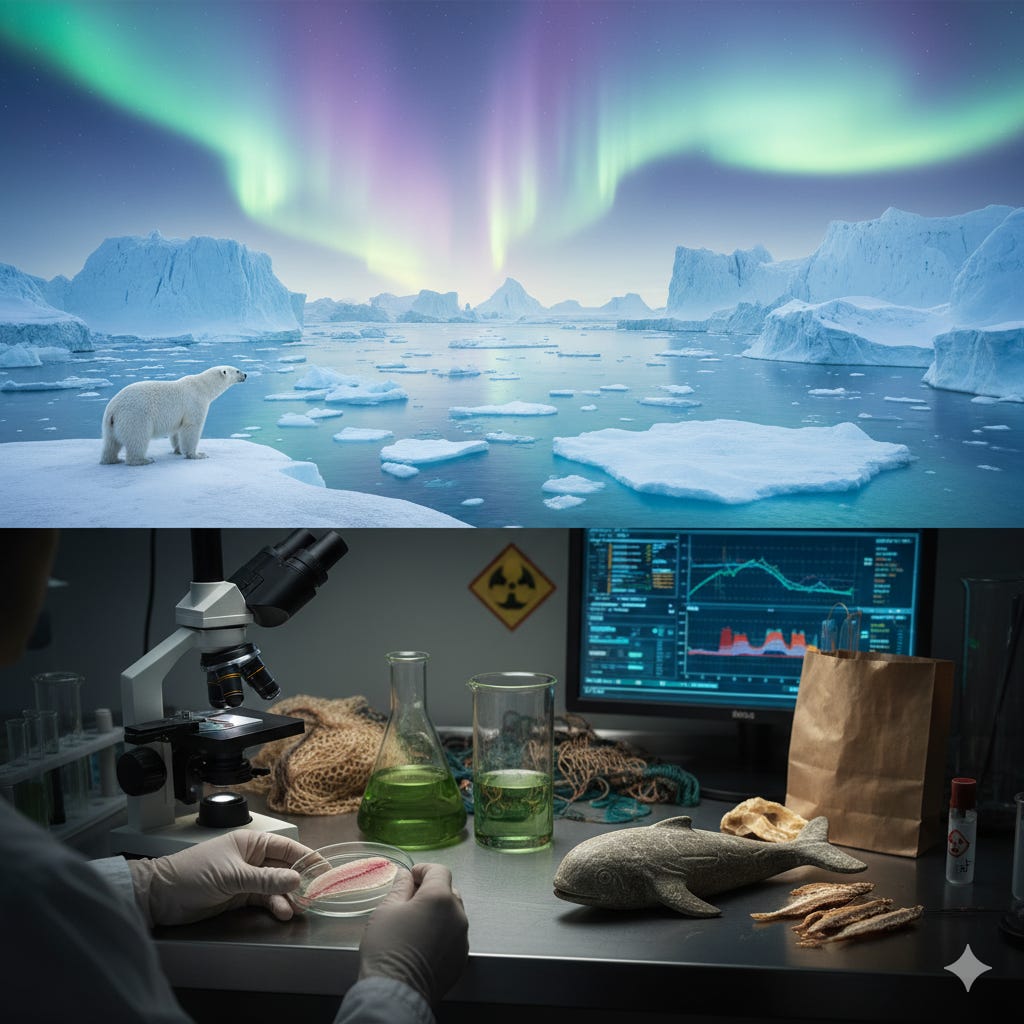
A major Canadian government assessment provides a stark look into the health of Canada’s North. At first glance, the Arctic appears to be one of the world’s last pristine environments. But the data reveals a troubling paradox. The very air, water, and wildlife that sustain northern communities are collecting contaminants from thousands of kilometers away. What does this actually mean for the environment and the people who call it home? This deep dive breaks down the assessment’s findings, relying exclusively on the evidence it presents.
The Source of the Problem: A Global Dilemma
The contaminants found in the Canadian North do not, for the most part, originate there. The primary sources are agricultural and industrial activities in southern Canada and other countries across the Northern Hemisphere. How do they get there? The answer lies in global weather and ocean patterns.
Atmospheric and Oceanic Highways
The main contaminants studied fall into three categories: Persistent Organic Pollutants (POPs), which are human-made chemicals like PCBs and DDT; heavy metals like mercury and lead; and radionuclides. The vast majority of these substances arrive in the Arctic via long-range atmospheric and oceanic currents.
What this looks like in practice is a “grasshopper effect,” where pollutants evaporate in warmer southern climates, travel on air currents to the colder North, and then condense and fall to the earth. Because the Arctic is so cold, these contaminants persist longer than they would in southern regions, accumulating in the snow, ice, water, and soil. While ocean transport is slower, taking years instead of days, it is becoming recognized as an increasingly important pathway, particularly for pesticides like HCHs that are now arriving through the Bering Strait.
A Contaminated Ecosystem
While contaminant levels in the physical environment are generally low, they pose a threat because they build up in the food web. This process, known as bioaccumulation (building up in an individual animal over time) and biomagnification (becoming more concentrated at higher levels of the food chain), has profound consequences for Arctic wildlife.
Troubling Trends in Arctic Wildlife
The report shows mixed but concerning trends for contaminants in northern species.
Persistent Organic Pollutants (POPs): For “legacy” POPs like PCBs and DDT, international controls appear to be working. Levels have dropped significantly in key species like ringed seals and polar bears since the 1970s. However, new contaminants, like the brominated flame retardants (PBDEs), are now being detected and their levels are rising.
Heavy Metals: The story for heavy metals is more alarming. While levels of most POPs are declining, mercury levels are increasing in some populations of beluga whales, seabirds, and freshwater fish. In belugas from the Beaufort coast, mercury levels have increased four-fold in the last 15-20 years. Scientists suspect climate change may be a factor, as melting permafrost could be releasing naturally occurring mercury into the ecosystem.
Top Predators at Risk: Animals at the top of the food web carry the heaviest burden. Scientists are most concerned about polar bears, whose diet of seal blubber makes them particularly vulnerable to accumulating high levels of POPs. Studies show PCBs are linked to problems with vitamin A and thyroid hormone levels in polar bears. Greenland sharks also show incredibly high contaminant loads, with DDT levels being the highest found in any northern Canadian animal.
The Human Connection: A Difficult Balance
For the Inuit, Dene, Métis, and Yukon First Nations, the findings present a difficult challenge. Traditional/country food is not just a source of nutrition; it is central to cultural identity, social well-being, and economic necessity. Yet this vital food source is the primary pathway through which people are exposed to contaminants.
Benefits vs. Risks
The official message from the Northern Contaminants Program (NCP) is that the nutritional, social, and cultural benefits of consuming traditional/country foods are believed to outweigh the currently known risks. A traditional diet is far healthier than a typical market-food diet available in the North, containing more iron, zinc, and healthy fats, and less sugar. Replacing traditional food is often not an option, as nutritious store-bought food can be prohibitively expensive.
However, the risks are not insignificant. In several regions, particularly among the Inuit of Baffin, Kivalliq, and Nunavik, a significant portion of the population is consuming contaminants like mercury, chlordane, and toxaphene at levels above the Tolerable Daily Intake (TDI). Mercury levels in some mothers’ blood fall into Health Canada’s “increasing risk” category, and PCB levels are above the “level of concern” for nearly half the mothers in Baffin, Kivalliq, and Nunavik. The long-term health effects, particularly on child development, are still being studied, but early evidence from Nunavik suggests elevated PCB levels in mothers are linked to slightly smaller birth weights in infants.
Knowledge into Action
The entire body of research was coordinated by the Northern Contaminants Program (NCP), a partnership involving federal and territorial governments and, crucially, northern Aboriginal organizations. This partnership model has been central to the program’s success, ensuring that research is not only scientifically sound but also socially and culturally responsible.
The NCP’s research has done more than just identify the problem; it has provided the scientific evidence needed for global action. Data generated by the NCP was instrumental in influencing international agreements to control and eliminate POPs, most notably the 2001 Stockholm Convention. This treaty, which Canada was the first country to ratify, specifically acknowledges the unique risks faced by Arctic and Indigenous peoples. This represents a direct line from scientific research in the Canadian North to tangible international policy aimed at protecting it.
The Data Brief
Source: Most contaminants in the Canadian Arctic originate from southern industrial and agricultural activities, transported by air and ocean currents.
POPs: Levels of legacy POPs like PCBs and DDT are generally decreasing in wildlife, but newly identified contaminants like PBDEs (flame retardants) are on the rise.
Mercury: Mercury levels are increasing in some key species, including beluga whales, seabirds, and certain freshwater fish populations.
Human Exposure: The primary pathway for human exposure is the consumption of traditional/country food. In some Inuit regions, over 25% of the population has mercury intakes above the Tolerable Daily Intake (TDI). Similarly, intake levels for chlordane and toxaphene exceed the TDI in four Inuit regions.
The Message: The nutritional, cultural, and economic benefits of consuming traditional/country foods are currently considered to outweigh the known risks from contaminants.
A Global Responsibility
The findings of the government’s assessment crystallize a complex and sobering truth. The health of the northern ecosystem and its peoples is inextricably linked to activities occurring thousands of kilometers away. While international agreements offer long-term hope, the Arctic remains a barometer for the planet’s environmental health, reminding us that in a connected world, there is no true “away” to throw things. The responsibility for its future is one we all share.
Source Documents
Indian and Northern Affairs Canada. (2003). Canadian Arctic Contaminants Assessment Report II: Contaminant Levels, Trends and Effects in the Biological Environment. Ottawa, ON: Author.
Indian and Northern Affairs Canada. (2003). Canadian Arctic Contaminants Assessment Report II: Highlights. Ottawa, ON: Author.
Indian and Northern Affairs Canada. (2003). Canadian Arctic Contaminants Assessment Report II: Human Health. Ottawa, ON: Author.
Indian and Northern Affairs Canada. (2003). Canadian Arctic Contaminants Assessment Report II: Knowledge in Action. Ottawa, ON: Author.
Indian and Northern Affairs Canada. (2003). Canadian Arctic Contaminants Assessment Report II: Sources, Occurrence, Trends and Pathways in the Physical Environment. Ottawa, ON: Author.