


Let’s be honest. When you hear the words “22-page government departmental plan,” your eyes probably glaze over. You imagine gray paragraphs, impenetrable jargon, and charts only an accountant could love. And you’re usually right. These documents are typically bureaucratic exercises, not thrilling reads.
But every so often, you find one that’s different. Every so often, a government plan can serve as an accidental crystal ball. I found one of those this week. It’s the 2025-26 Departmental Plan from the Canadian Centre for Occupational Health and Safety (CCOHS), and buried in its formal language is a remarkably clear story about the future of work in Canada.
We all feel it—the ground is shifting under our feet. The nature of our jobs, the people we work with, and the very definition of a "workplace" are changing faster than ever. This document doesn't just acknowledge that change; it provides a detailed map of the new landscape.
So, I read the whole thing. And the story it tells is about a future that is more complex, more human, and more demanding than ever before. This is what the Canadian workplace of 2026 looks like, and what it means for every single one of us.
The New Foundation: Safety is Psychological, Not Just Physical
For decades, "workplace safety" meant one thing: preventing physical harm. We thought of hard hats on construction sites, goggles in laboratories, and bright yellow signs warning of a wet floor. That world is not gone, but it’s no longer the whole story.
The story of the 2026 workplace is built on a new foundation. The CCOHS plan makes it clear that the most urgent modern challenges are the invisible ones. The agency’s President, Anne Tennier, notes their focus is on addressing the "complex health and safety challenges that workers in Canada face every day". The plan explicitly targets developing guidance and resources for positive mental health, psychological health and safety, and the prevention of harassment, bullying, and violence.
Think of it like building a house. The old model focused on making sure the walls were strong and the roof didn't leak. The new model understands that if the foundation is psychologically unstable, the whole structure will eventually crumble, no matter how strong the walls are. This is the single biggest shift: the future of a "safe" workplace is one where mental and psychological well-being is treated with the same seriousness as physical security.
The People Inside: A Workplace Built for Everyone
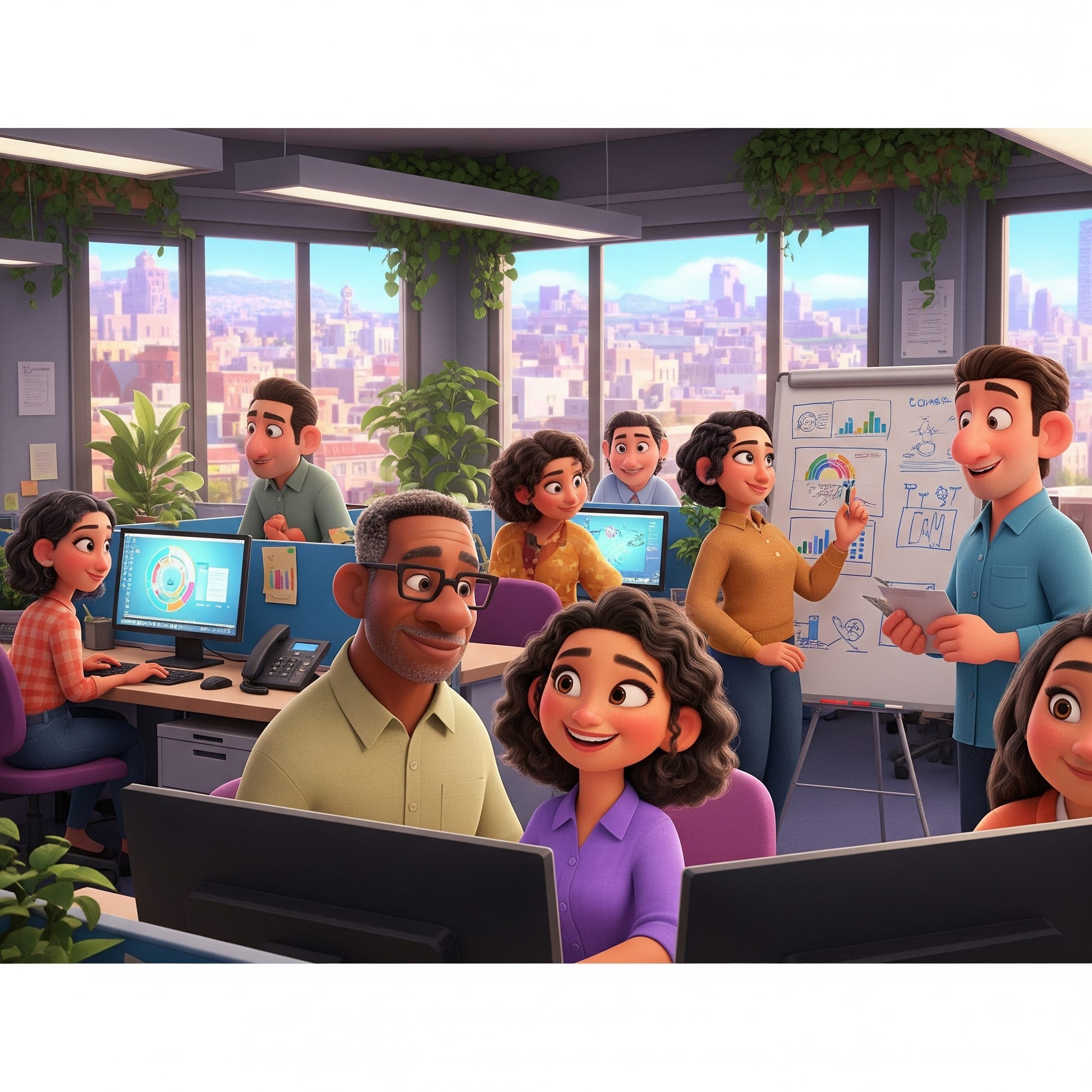
The next chapter in the story is about who is actually in the workplace. The one-size-fits-all model of an office designed for a homogenous workforce is officially obsolete.
The CCOHS plan tells a story about a workplace designed for a far more diverse reality. It places a huge emphasis on producing guidance for workers with specific vulnerabilities, including:
Newcomers to Canada.
Young and new workers just entering the workforce.
Gig workers, acknowledging the changing nature of employment itself.
The plan explores the "intersectionality of psychological health and safety... with human rights, [and] diversity in all its forms". It’s not just about adding a line in a handbook; it's about fundamentally rethinking who we’re protecting and what they need. This is reinforced by a commitment to Gender-based Analysis Plus (GBA Plus), ensuring that initiatives are tailored to meet the diverse needs of the people most impacted.
This story is also about true accessibility. The plan details a push to deliver information in a host of new formats—videos with closed captions, podcasts with transcripts, and even the introduction of American Sign Language (ASL) where possible. The goal is simple but profound: to ensure that everyone has access to the tools they need to be safe, regardless of ability, language, or background.
The Environment Itself: Adapting to New Realities
No workplace is an island. The story of the 2026 workplace is also a story of adapting to massive external forces that are reshaping our world.
First and foremost, the plan directly confronts the impacts of climate change on workers. This isn't an abstract environmental goal; it's a practical safety issue. Think of outdoor workers exposed to extreme heat, the air quality effects of wildfire smoke on entire cities, or the psychological stress that comes from climate-related uncertainty. A safe workplace in 2026 must be a climate-resilient one.
Second, the plan acknowledges the immense risk of the digital environment. As CCOHS delivers most of its services electronically, it must protect itself against the "increasing threat from unauthorized exploitation of systems, networks and technologies". This mirrors the reality in every business. Cyber-security is no longer just an IT problem; it is a fundamental threat to a company's operations and, by extension, a core workplace safety issue.
The Toolkit for Tomorrow
After painting this picture of a complex future, the CCOHS plan doesn't just leave us with the challenge—it offers a toolkit. This is the practical part of the story, the "how-to" guide for navigating this new world.
For small and medium-sized businesses, the hero of this chapter is the new Business Safety Portal. The document describes it as a hub that allows business owners to build their own health and safety program using a guided process. It provides curated resources, tools, and even an "electronic file cabinet" to store and organize safety records. This isn’t just another website; it’s a direct response to the needs of smaller enterprises that lack dedicated safety departments.
Beyond the portal, the toolkit is filled with other practical resources:
E-courses, topic-specific microsites, and informational podcasts.
Free, downloadable infographics, posters, and "fast fact" cards.
A free and confidential person-to-person service where any worker, employer, or government official in Canada can get their health and safety questions answered by an expert.
The story ends on a hopeful and empowering note. The future of work is complicated, but we are not being asked to face it empty-handed.
A New Perspective
Reading a government plan as a story reveals a deeper truth. This document is more than a set of priorities and spending plans. It’s a reflection of our society's evolving understanding of what it means to be safe, productive, and well at work.
The workplace of 2026 that emerges from these pages is one that takes mental health as seriously as physical health. It's a place built with intention for a truly diverse human workforce. And it's a workplace that is resilient, ready to adapt to the immense environmental and technological shifts already underway. This isn't just a plan for a government agency; it's a glimpse into the new social contract of work itself.